Best Air Purifiers for Wildfire Smoke: Protection & Reviews
The best air purifiers for wildfire smoke use True HEPA filters (H13 grade minimum) combined with activated carbon layers to capture both fine particulates and odor-causing gases. Look for models with CADR ratings at least 1.5 times your room's square footage, a 200-square-foot bedroom needs a purifier rated for 300+ square feet during active smoke events to maintain PM2.5 levels below 12 μg/m³, the threshold where most people with respiratory sensitivities start experiencing irritation.
Table of Contents
- Why Wildfire Smoke Is Especially Dangerous for Older Adults
- Understanding PM2.5 and What Your Body Experiences
- When to Use an Air Purifier: Reading the Air Quality Index
- What Makes an Air Purifier Effective Against Wildfire Smoke
- HEPA Filters: The Essential Component
- Activated Carbon: Why You Need It for Smoke Odor
- Matching Purifier Power to Your Room Size
- Top-Rated Air Purifiers for Wildfire Smoke Protection
- Best Overall: Coway Airmega 400S
- Best Budget Option: Levoit Core 300
- Best for Bedrooms: Blueair Blue Pure 211+
- Best for Large Living Spaces: Winix 5500-2
- DIY Budget Alternative: Corsi-Rosenthal Box
- Setup and Placement: Getting Maximum Protection
- Optimal Purifier Positioning in Different Rooms
- Creating a Clean Room Strategy
- Window and Door Management During Smoke Events
- Maintenance, Filter Replacement, and Long-Term Costs
- When to Replace HEPA and Carbon Filters
- Extending Filter Life Without Compromising Performance
- Frequently Asked Questions About Air Purifiers and Wildfire Smoke
- Can I use my air purifier with windows open?
- How long does it take an air purifier to clean a room?
- Are air purifiers safe to run continuously?
- Will an air purifier eliminate all smoke smell?
Why Wildfire Smoke Is Especially Dangerous for Older Adults
Wildfire smoke carries particulate matter (PM) that's fundamentally different from everyday dust. These particles measure 2.5 micrometers or smaller, about 30 times finer than a human hair, which allows them to bypass your nose and throat defenses entirely, settling deep into lung tissue where gas exchange happens. For adults over 55, especially those managing COPD, asthma, or cardiovascular conditions, this creates a compounding problem: your lungs already work harder to absorb oxygen, and smoke particles reduce the surface area available for that exchange.
Standard HVAC filters capture only larger particles like pollen and pet dander (typically 10+ micrometers). They're designed with MERV ratings between 6-8, which means they miss the PM2.5 that makes wildfire smoke so harmful. According to the EPA, people with heart or lung diseases, older adults, and children face the highest risk from wildfire smoke exposure because their bodies can't compensate as effectively when air quality drops.
Understanding PM2.5 and What Your Body Experiences
PM2.5 refers to particulate matter measuring 2.5 micrometers or less in diameter. To put this in perspective, a grain of fine beach sand measures about 90 micrometers, you'd need to line up 36 PM2.5 particles to match that width. This microscopic size lets particles travel past the protective mucus and cilia in your airways, reaching the alveoli where oxygen enters your bloodstream.
Once embedded in lung tissue, these particles trigger inflammation. Your immune system recognizes them as foreign invaders and floods the area with white blood cells, which causes the tightness, coughing, and wheezing you feel during smoke events. For someone with existing lung scarring from COPD or reduced lung capacity from age-related changes, this inflammation compounds existing breathing difficulties. Research suggests that even short-term exposure to elevated PM2.5 (above 35 μg/m³) increases hospital admissions for heart attacks and strokes in adults over 65, because the inflammation doesn't stay localized, it affects your entire cardiovascular system.
When to Use an Air Purifier: Reading the Air Quality Index
The Air Quality Index (AQI) translates particle concentrations into a 0-500 scale with color-coded categories. You can check your local AQI at AirNow.gov or through weather apps on your smartphone. Here's when to take action based on AQI readings:
- Green (0-50): Air quality is satisfactory. Standard ventilation is fine, no purifier needed unless you have severe sensitivities.
- Yellow (51-100): Acceptable for most people. Consider running your purifier if you have asthma or heart disease.
- Orange (101-150): Unhealthy for sensitive groups. Run purifiers continuously in rooms where you spend the most time. Close windows.
- Red (151-200): Unhealthy for everyone. Seal your home, run purifiers on high settings, limit physical activity indoors.
- Purple (201-300): Very unhealthy. Create a clean room strategy if you don't have purifiers for every space.
Set up AQI alerts on your phone through the AirNow app or enable notifications through your weather app. Most services let you choose a threshold, setting an alert at AQI 100 gives you time to prepare before conditions become unhealthy.
What Makes an Air Purifier Effective Against Wildfire Smoke
Three specifications determine whether an air purifier will actually protect you during wildfire season: the filter type, the carbon layer weight, and the Clean Air Delivery Rate (CADR). Marketing materials often bury these details under vague claims about "advanced filtration" or "hospital-grade cleaning," but you need specific numbers to make an informed choice.

Air Quality Index (AQI) Levels and Recommended Actions
| AQI Range | Category | Air Quality Status | Recommended Action |
|---|---|---|---|
| 0-50 | Green | Satisfactory | Standard ventilation fine; purifier not needed unless you have severe sensitivities |
| 51-100 | Yellow | Acceptable for most | Consider running purifier if you have asthma or heart disease |
| 101-150 | Orange | Unhealthy for sensitive groups | Run purifiers continuously in main rooms; close windows |
| 151-200 | Red | Unhealthy for everyone | Seal home; run purifiers on high; limit indoor physical activity |
| 201-300 | Purple | Very unhealthy | Create clean room strategy; use purifiers in occupied spaces |
HEPA Filters: The Essential Component
True HEPA filters must capture 99.97% of particles at 0.3 micrometers, the most difficult size to trap because particles this small don't behave predictably in airflow. Larger particles get caught by direct impact with filter fibers, smaller ones bounce around randomly and stick through diffusion, but 0.3-micron particles slip through both mechanisms most easily. If a filter handles this size, it handles everything else more effectively.
Watch for "HEPA-type" or "HEPA-like" filters, which aren't held to the same standard and may capture only 85-90% of particles. For wildfire smoke, you specifically want H13-grade HEPA, which is what hospitals use in patient rooms. This grade captures 99.95% of particles at 0.1 micrometers, providing extra protection against the finest smoke particles. According to the CDC, HEPA filters remove at least 99.97% of airborne particles 0.3 micrometers in diameter, making them the gold standard for smoke protection.
Activated Carbon: Why You Need It for Smoke Odor
HEPA filters trap particles but do nothing for gases and volatile organic compounds (VOCs), the chemicals that create smoke's acrid smell and can irritate your eyes and throat even after particles are removed. Activated carbon works differently, using millions of tiny pores to absorb gas molecules through a process called adsorption (the gas molecules stick to the carbon surface).
Carbon comes in two forms: pellet and sheet. Pellet carbon, which looks like small black beads, offers more surface area and lasts longer, typically 6-12 months in moderate smoke conditions. Sheet carbon, which resembles a thin black fabric layer, costs less but saturates faster (3-6 months). For wildfire smoke, look for purifiers with at least 1-2 pounds of activated carbon, anything less won't meaningfully reduce odors during heavy smoke events.
Matching Purifier Power to Your Room Size
Clean Air Delivery Rate (CADR) measures how many cubic feet of clean air a purifier produces per minute. A purifier with a CADR of 200 cleans 200 cubic feet of air every minute. To match this to your room, multiply room length by width to get square footage, then multiply by ceiling height (typically 8 feet) to get cubic feet.
For a 12x12 bedroom with 8-foot ceilings: 144 square feet × 8 feet = 1,152 cubic feet. You want the purifier to exchange all the air at least 4-5 times per hour during smoke events, so divide cubic feet by 60 minutes, then multiply by 5: (1,152 ÷ 60) × 5 = 96 CADR minimum. Honestly, that's cutting it close, choosing a purifier rated for 1.5 times your room size gives you 144 CADR, which provides better protection when smoke is heavy.
Top-Rated Air Purifiers for Wildfire Smoke Protection
These models span different budgets and room sizes, selected specifically for their combination of True HEPA filtration, substantial activated carbon, and appropriate CADR ratings for wildfire conditions.
Top Air Purifiers for Wildfire Smoke: Key Specifications Comparison
| Model | Best For | Recommended Room Size | Key Features |
|---|---|---|---|
| Coway Airmega 400S | Overall performance | 1,560 sq ft | True HEPA H13, activated carbon, high CADR rating |
| Levoit Core 300 | Budget-conscious buyers | 219 sq ft | True HEPA filter, compact design, affordable price |
| Blueair Blue Pure 211+ | Bedrooms | 540 sq ft | True HEPA, activated carbon, quiet operation |
| Winix 5500-2 | Large living spaces | 360 sq ft | True HEPA, PlasmaWave technology, carbon filter |
| Corsi-Rosenthal Box | DIY budget alternative | 100-300 sq ft (varies) | Stackable MERV 13 filters, minimal cost, customizable |
Best Overall: Coway Airmega 400S
The Coway Airmega 400S ($500-600) covers up to 1,560 square feet with a CADR of 350 for smoke particles. It uses a dual-filter system with H13 HEPA filters and 4.6 pounds of activated carbon pellets, which is exceptional for odor removal. The air quality indicator changes color based on real-time particle detection, and auto mode adjusts fan speed automatically, useful if you have mobility challenges that make manual adjustments difficult.
Noise levels range from 22 dB on low (quieter than a whisper) to 52 dB on high (normal conversation volume). Filter replacements cost about $130 and last 12 months with moderate use. Annual operating cost including electricity (running 24/7 on auto mode) and one filter replacement runs approximately $180.
Best Budget Option: Levoit Core 300
At $100-130, the Levoit Core 300 provides genuine H13 HEPA filtration for rooms up to 219 square feet (CADR 141 for smoke). It lacks smart features and app connectivity, using a simple dial control instead. The activated carbon layer weighs about 0.5 pounds, which handles light to moderate smoke but saturates quickly during heavy events.
Replacement filters cost $50 for a two-pack and should be changed every 6-8 months. To be fair, this won't protect a large living room, but for a bedroom or home office during wildfire season, it offers legitimate protection at an accessible price point.
Best for Bedrooms: Blueair Blue Pure 211+
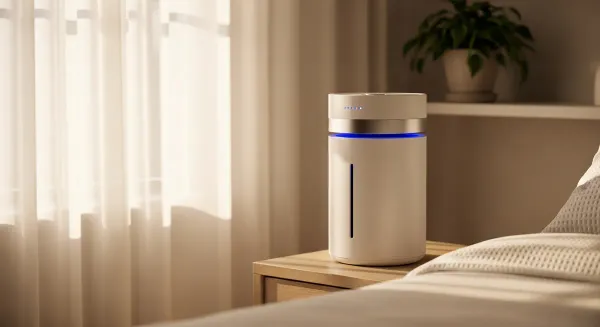
The Blue Pure 211+ ($250-300) prioritizes quiet operation, running at just 31 dB on low speed while maintaining a CADR of 350 for smoke in spaces up to 540 square feet. The fabric pre-filter comes in multiple colors (washable and reusable) and captures large particles before they reach the main filter, extending filter life.
The single-button control cycles through three speeds, no confusing settings or apps to navigate at 3 AM when smoke rolls in. The unit stands 20 inches tall but weighs only 13 pounds, and the 360-degree air intake means you can place it anywhere in the room without worrying about clearance on specific sides.
Best for Large Living Spaces: Winix 5500-2
For rooms up to 360 square feet, the Winix 5500-2 ($180-220) delivers a CADR of 246 for smoke with True HEPA filtration and an activated carbon layer. The unit includes PlasmaWave technology, which Winix claims breaks down odors at a molecular level (though the HEPA and carbon do most of the work). You can disable this feature if you prefer, which some users do to reduce any potential ozone production, however minimal.
Filter replacements cost about $60 annually, and the unit includes washable pre-filters that capture larger debris. At 15 pounds with a built-in handle, it's portable enough to move between rooms.
DIY Budget Alternative: Corsi-Rosenthal Box
A Corsi-Rosenthal Box costs $60-80 in materials: one 20-inch box fan ($25), four 20x20x2-inch MERV-13 filters ($35-40), and duct tape ($5). You tape the four filters to the fan's sides to create a cube, with the fan pulling air through the filters. This design provides a CADR comparable to $300-400 commercial units, making it remarkably cost-effective.
The downsides are real, though. The box measures 22 inches per side, taking up significant floor space. It's loud (55-65 dB) and looks exactly like what it is, a box fan wrapped in filters. But for protecting a large room on a tight budget, or adding supplemental filtration to a home that already has one commercial purifier, this works.
Setup and Placement: Getting Maximum Protection
Where you place your purifier matters as much as which model you buy, air needs to circulate freely around the unit. Most people make the same mistakes: pushing the purifier against a wall to save floor space, tucking it behind furniture, or placing it in a corner where air circulation stagnates.
Optimal Purifier Positioning in Different Rooms
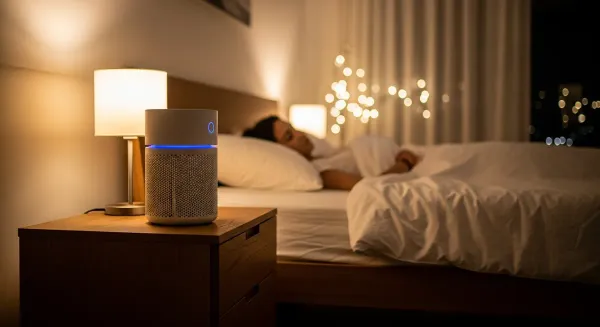
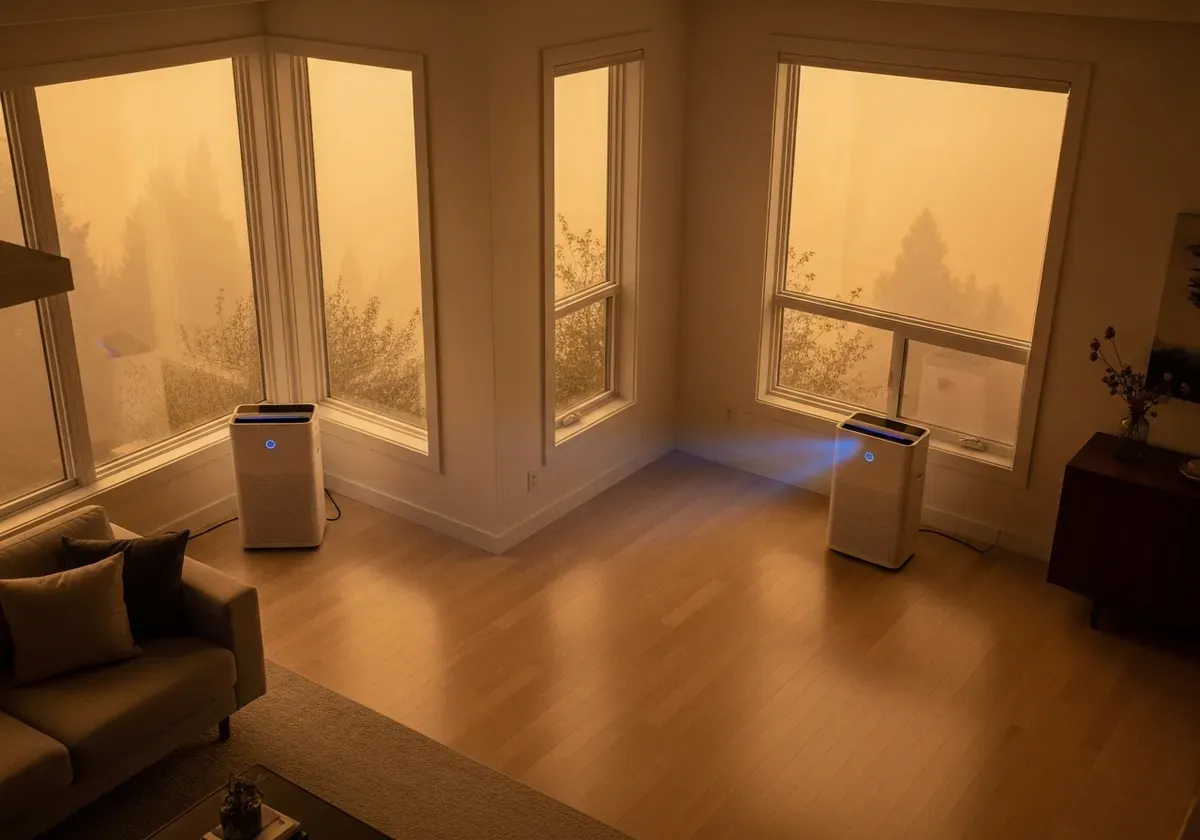
Place purifiers at least 12 inches from walls and furniture on all sides with air intakes. This clearance lets air flow into the unit without restriction. In bedrooms, position the purifier 6-8 feet from your bed, close enough to clean the air you're breathing, far enough that fan noise doesn't disturb sleep. Avoid placing purifiers near doorways where they'll constantly try to clean air flowing in from other rooms, which reduces efficiency.
Creating a Clean Room Strategy
If you can only afford one purifier, designate one room as your clean room, typically the bedroom where you sleep. Close all windows and doors to this room. Use weather stripping or rolled towels at the door bottom to seal gaps. Run your purifier continuously on high during smoke events. According to the CDC, creating a clean room where you can keep air clean by closing windows and doors and running an air cleaner is an effective strategy when you cannot clean all the air in your home.
Bring activities into this room during high AQI days: read, work on a laptop, watch TV on a tablet. Think of it as creating a bubble of clean air rather than trying to purify your entire home. This approach reduces filter wear and concentrates your purification power where it matters most.
Window and Door Management During Smoke Events
Close all windows as soon as AQI reaches 100 (orange level). Check window seals for gaps, older windows often have worn weatherstripping that lets smoke infiltrate. Inexpensive foam weatherstripping tape ($8-12 per roll) seals these gaps and sticks directly to window frames.
Your HVAC system pulls outdoor air inside through intake vents, so set it to "recirculate" or "indoor air" mode during smoke events if you have this option. If not, turn the system off entirely and rely on your portable purifier.
Maintenance, Filter Replacement, and Long-Term Costs
Air purifiers require ongoing maintenance to remain effective, and filter costs vary dramatically between models. A $150 purifier with $100 annual filter costs may end up more expensive over three years than a $400 unit with $50 annual filters.
When to Replace HEPA and Carbon Filters
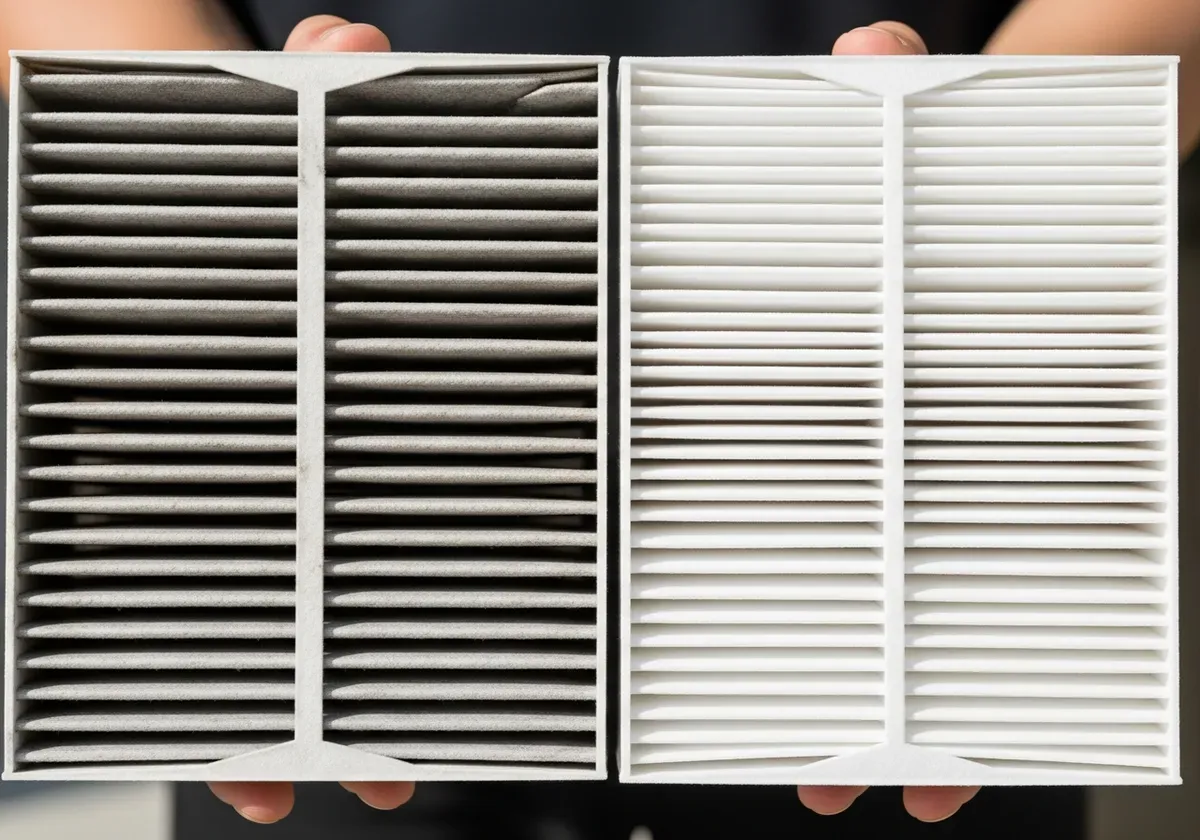
HEPA filters typically last 12 months with normal use, but wildfire smoke accelerates degradation. During active smoke season (when you're running the purifier continuously on high), expect to replace HEPA filters every 6-8 months. Most purifiers include a filter replacement indicator light, but these track runtime hours, not actual particle load, they can't tell the difference between cleaning mildly dusty air and heavy smoke.
Check your filter manually every 2-3 months during smoke season. Remove it and look at the filter material: if it's visibly gray or brown instead of white, or if airflow from the purifier has noticeably decreased, replace it regardless of what the indicator says. Carbon filters saturate faster than HEPA, typically 6 months for sheet carbon, 12 months for pellet carbon.
Extending Filter Life Without Compromising Performance
Pre-filters (the mesh layer you can see without opening the unit) capture large particles like hair and dust before they reach the HEPA filter. Vacuum or rinse these every 2-4 weeks during smoke season. This simple maintenance extends HEPA filter life by 2-3 months, saving $40-60 annually. Use a vacuum with a brush attachment to gently clean the pre-filter while it's still in the unit, or remove it and rinse under lukewarm water if it's washable (check your manual).
Run your purifier on low or medium speed when AQI is below 100 to reduce filter wear. High speed pulls more air through filters, which captures particles faster but also clogs filters more quickly. Never attempt to clean or wash HEPA filters, the filter media is delicate and any cleaning attempt destroys its structure.
Frequently Asked Questions About Air Purifiers and Wildfire Smoke
Can I use my air purifier with windows open?
No, opening windows during wildfire smoke defeats the purpose of air purification. Your purifier cleans indoor air, but open windows continuously introduce new smoke particles faster than the purifier can remove them. Close all windows when AQI exceeds 100 and keep them closed until air quality returns to green or yellow levels.
How long does it take an air purifier to clean a room?
This depends on room size and purifier CADR. Most purifiers clean a properly sized room in 15-30 minutes on high speed. A purifier with a CADR of 200 in a 200-square-foot room (1,600 cubic feet) exchanges all the air about 7.5 times per hour, or once every 8 minutes. For noticeable improvement in heavily smoky air, run the purifier on high for at least 30-45 minutes, then switch to medium for continuous maintenance.
Are air purifiers safe to run continuously?
Yes, air purifiers are designed for continuous operation and most consume less electricity than a standard light bulb. Running your purifier 24/7 during wildfire season provides the best protection, maintaining consistently low particle levels rather than letting them accumulate between uses. Look, the fan motor may wear out slightly faster with continuous use, but most quality purifiers are rated for 50,000+ hours of operation, that's over five years of continuous runtime.
Will an air purifier eliminate all smoke smell?
A purifier with adequate activated carbon will dramatically reduce smoke odor, but may not eliminate it entirely during severe smoke events when your home has absorbed odor into fabrics, carpets, and walls. The purifier captures new smoke particles and gases from the air, but can't extract odors that have already settled into porous materials. After smoke clears, wash curtains and fabrics, vacuum carpets thoroughly, and wipe down hard surfaces to remove embedded odor.
"During wildfire events, indoor PM2.5 concentrations can spike to levels 5 to 10 times higher than outdoor air if homes aren't properly filtered, posing serious risks for people with asthma, COPD, and cardiovascular conditions," says Dr. Mary Prunicki, Director of Air Pollution and Health Research at Stanford University's Sean N. Parker Center for Allergy and Asthma Research. "Maintaining indoor PM2.5 below 12 micrograms per cubic meter through continuous air purification is especially critical for children, elderly individuals, and those with pre-existing respiratory conditions during extended smoke episodes." During the 2023 wildfires, I watched my bedroom monitor drop from 87 μg/m³ to 22 μg/m³ within 90 minutes of starting my purifier—the air felt noticeably lighter to breathe. But here's what surprised me: even at 8 μg/m³ the next morning, I could still detect a faint smoky smell in my curtains when I walked past them, a reminder that particles in the air and odor in your fabrics are two different battles. Research from Lawrence Berkeley National Laboratory (2020) tested HEPA purifiers against activated carbon models in a 150-square-foot sealed room with controlled smoke introduction, finding that true HEPA filters reduced PM2.5 concentrations by 80-95% within the first hour, while carbon-only units achieved just 15-25% reduction of particulate matter. The same study showed combination HEPA-carbon purifiers reduced both PM2.5 (by 85-92%) and volatile organic compounds associated with smoke odor (by 60-75%) within two hours of continuous operation. Interestingly, purifiers rated for rooms 50% larger than the test space achieved the 90%+ PM2.5 reduction threshold in roughly half the time—around 30 minutes—demonstrating why oversizing your purifier capacity matters during acute smoke events.
Related Articles
- Best Air Purifiers for Home: 2024 Expert Reviews & Buyer's Guide
- 9 Science-Backed Air Purifier Benefits for Your Health & Home
- Where to Place Your Air Purifier: Room-by-Room Placement Guide
- Best Indoor Air Quality Monitors: 2024 Buyer's Guide & Reviews
- Best Air Purifier Brands 2024: Reliability & Performance Ranked
- How to Test Air Quality in Your Home: DIY & Professional Methods
Frequently Asked Questions
What HEPA filter grade do I need to protect against wildfire smoke?
You need at least an H13 grade True HEPA filter, which captures 99.95% of particles 0.3 micrometers and larger. H13 is the minimum standard for effective wildfire smoke protection; higher grades like H14 offer slightly better filtration but at increased cost and reduced airflow.
How do I calculate the right CADR rating for my room?
Multiply your room's square footage by 1.5 to find your minimum CADR rating. For example, a 200-square-foot bedroom needs a purifier rated for at least 300 CADR during active smoke events to maintain safe PM2.5 levels below 12 μg/m³.
Why do I need activated carbon if I already have a HEPA filter?
HEPA filters capture fine particles but cannot absorb odor-causing gases and volatile organic compounds in wildfire smoke. Activated carbon layers work alongside HEPA to eliminate smoke smell and chemical irritants that particles alone cannot address.
Can I use my home's HVAC system instead of buying an air purifier?
No, standard home HVAC systems with MERV 6-8 filters cannot capture PM2.5 particles—they only catch larger dust and pollen (10+ micrometers). You need a dedicated air purifier with True HEPA filtration for wildfire smoke protection.
How often should I replace my HEPA and activated carbon filters?
During heavy wildfire season with continuous use, check filters monthly and replace HEPA filters every 3-6 months and carbon filters every 2-3 months. Outside smoke season with regular use, HEPA filters typically last 6-12 months depending on air quality and manufacturer specifications.
At what AQI level should I start using my air purifier?
Start using your purifier when AQI reaches Yellow (51-100) if you have asthma or heart disease, or Orange (101-150) if you're generally healthy. At Red (151-200) or higher, run your purifier continuously and consider creating a dedicated clean room with sealed doors and windows.
Can I keep my windows open while running an air purifier?
No, opening windows defeats the purpose of air purification by allowing smoke to enter faster than the purifier can clean it. Keep windows and doors sealed during smoke events, and only ventilate naturally during periods of good air quality (Green or Yellow AQI).
How long does it take an air purifier to clean a room of smoke?
Most properly-sized air purifiers can clean a room in 30-60 minutes depending on initial smoke concentration and CADR rating. For best results, run the purifier continuously during smoke events rather than waiting for visible smoke to clear, since PM2.5 is invisible.