MERV Rating Guide: Best Filter for Your Home HVAC System
MERV ratings measure how well your HVAC filter traps airborne particles, with the scale running from 1 to 16 for home use, but the best rating for your space depends on your system's age and your household's specific health needs, not just picking the highest number available. Most homes perform best with MERV 8-13 filters, balancing particle capture with airflow that won't strain your heating and cooling equipment (According to ASHRAE).
Table of Contents
- Understanding MERV Ratings: What They Mean for Your Home
- The MERV Scale Explained Simply
- What Different MERV Ratings Actually Filter
- Can Your HVAC System Handle Higher MERV Ratings?
- HVAC System Age and Filter Compatibility
- Warning Signs Your Filter MERV Rating Is Too High
- Choosing the Best MERV Rating for Your Specific Needs
- MERV 8: When Basic Filtration Is Enough
- MERV 11-12: The Sweet Spot for Most Homes
- MERV 13: When You Need Maximum Protection
- Installation, Maintenance, and Maximizing Filter Performance
- How to Install Your HVAC Filter Correctly
- Filter Change Frequency by MERV Rating
- Cost Comparison and Where to Buy Quality Filters
- Subscription Services vs. One-Time Purchases
- When to Invest in Washable Filters
- Avoiding Counterfeit and Mislabeled Filters
Choosing the wrong MERV rating creates real problems: too low and you're not filtering allergens that trigger symptoms, too high and you risk damaging your HVAC system while driving up energy bills. Let's break down exactly which rating works for your situation.
Understanding MERV Ratings: What They Mean for Your Home
MERV stands for Minimum Efficiency Reporting Value, a standardized measurement developed by ASHRAE (the American Society of Heating, Refrigerating and Air-Conditioning Engineers) that tells you what percentage of particles a filter captures during testing. The rating focuses on particle size measured in microns, one micron equals one-millionth of a meter, roughly 100 times smaller than a human hair width.
Higher numbers mean tighter filtration that catches smaller particles, but also create more resistance to airflow through your system. This trade-off between filtration quality and system compatibility drives every decision about which filter to install in your home.
The MERV Scale Explained Simply
The practical MERV scale breaks into four ranges. MERV 1-4 filters provide basic protection, catching only the largest particles like carpet fibers and dust you can see floating in sunlight, these are essentially what came standard in homes built before 1990.
MERV 5-8 filters represent standard residential filtration, trapping mold spores, pet dander, and dust mite debris in the 3-10 micron range. For example, these filters would catch the dust that settles on your bookshelves or the dander from a cat that seems to coat every surface.
MERV 9-12 filters offer superior residential performance, capturing smaller particles down to 1-3 microns including Legionella bacteria and auto emissions that drift indoors (According to ASHRAE). This means they handle things like the fine dust that accumulates in your curtains and the pollutants that sneak in from nearby traffic.
MERV 13-16 filters deliver hospital-grade filtration, catching particles as small as 0.3-1.0 microns with at least 50% efficiency, this includes bacteria, tobacco smoke, and virus-carrying droplets. MERV 17-20 exists primarily for specialized commercial settings like pharmaceutical manufacturing, well beyond what home systems can accommodate.
Most residential HVAC systems were originally designed for MERV 1-4 filters, which means upgrading requires careful consideration of your equipment's capabilities (According to the EPA).
What Different MERV Ratings Actually Filter
MERV 8 filters catch what you'd recognize as household dust: pollen grains, mold spores, dust mite fragments, and pet dander. If you see dust settling on furniture or notice seasonal allergy symptoms indoors, a MERV 8 captures these 3-10 micron particles that trigger most respiratory irritation.
MERV 11-12 filters step down to smaller particles you can't see but definitely breathe. These ratings trap fine dust from humidifiers, most bacteria, and the smaller mold spore varieties that penetrate deeper into lungs. You'll notice less frequent dusting needed and reduced musty odors in basements or bathrooms.
MERV 13 filters target particles in smoke, both from wildfires and tobacco, these 0.3-1.0 micron particles carry the compounds that smell and irritate airways. They also capture the droplet nuclei that can carry viruses, which became particularly relevant during respiratory illness seasons. The difference between MERV 12 and 13 matters most if you live in wildfire-prone areas or someone in your household has compromised immunity.
Can Your HVAC System Handle Higher MERV Ratings?
Here's what most homeowners miss: installing a MERV 13 filter in a system designed for MERV 6 forces your equipment to pull air through a much denser material, like trying to breathe through a thick blanket instead of a screen door. This restriction increases static pressure, the resistance air encounters moving through your ducts, which makes your blower motor work harder, run longer, and potentially fail earlier.
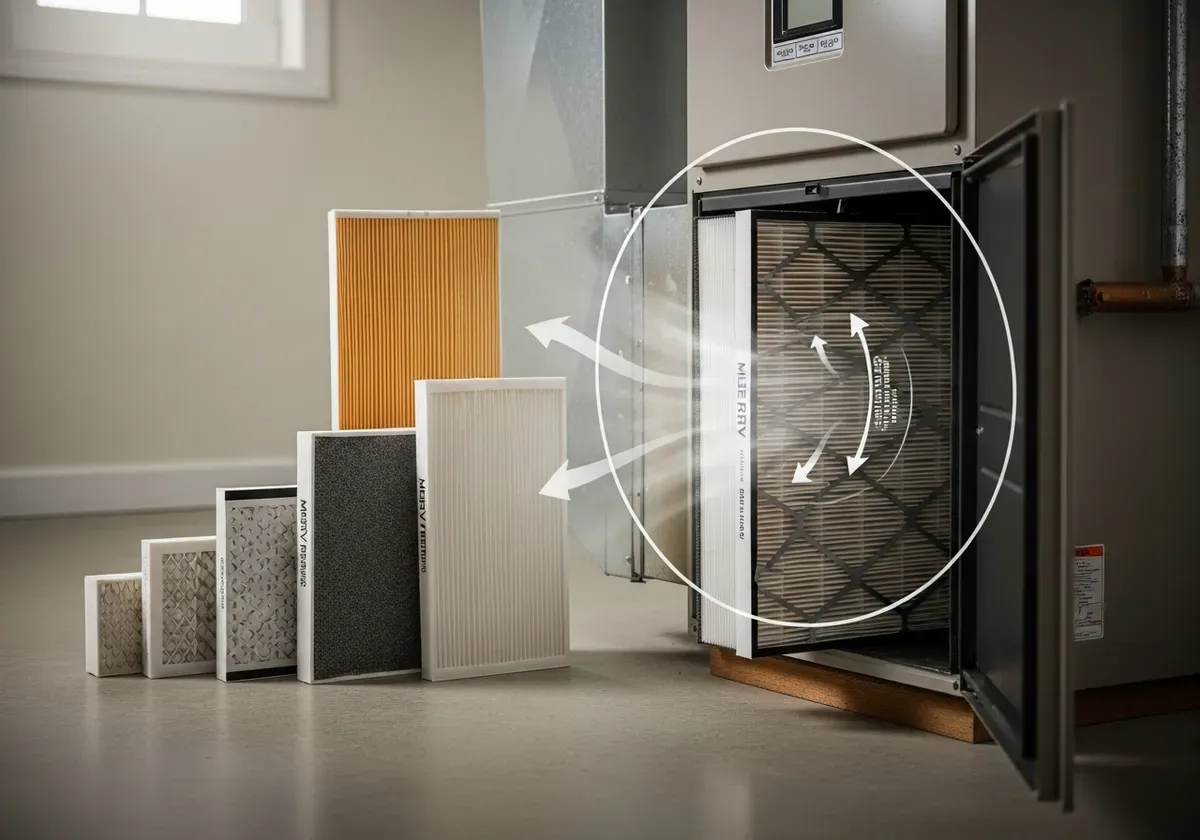
MERV Rating Comparison: Filtration Performance and Particle Size
| MERV Rating Range | Particle Size Captured | Common Particles Filtered | Best For | System Strain Risk |
|---|---|---|---|---|
| MERV 1-4 | 10+ microns | Carpet fibers, visible dust | Pre-1990 homes, basic protection only | None |
| MERV 5-8 | 3-10 microns | Pollen, mold spores, pet dander, dust mites | Standard residential use, most homes | Low |
| MERV 9-12 | 1-3 microns | Fine dust, Legionella bacteria, auto emissions | Superior filtration, allergy sufferers | Moderate |
| MERV 13-16 | 0.3-1.0 microns | Bacteria, tobacco smoke, virus-carrying droplets | Hospital-grade, wildfire areas, compromised immunity | High |
The National Institute of Standards and Technology found that high-efficiency filters increase static pressure enough to damage HVAC components in systems not designed for them. You'll pay for this mistake twice: first in higher electricity bills as your system strains, then in repair costs when components wear out prematurely.
HVAC System Age and Filter Compatibility
Systems installed before 2000 typically have blower motors sized for minimal filter resistance. Stick with MERV 8-10 maximum in these older units, the energy savings and equipment longevity outweigh the marginal filtration improvement you'd get from higher ratings.
Equipment from 2000-2010 sits in a transitional period. Many builders started specifying stronger blower motors during this decade, but not universally. MERV 11 is likely safe, but watch for the warning signs we'll cover below.
Systems installed after 2010 often accommodate MERV 13 filters, especially if you have a variable-speed blower motor. These newer systems were designed during the energy efficiency push that coincided with awareness about indoor air quality. Check your installation paperwork or owner's manual for filter specifications before upgrading.
Warning Signs Your Filter MERV Rating Is Too High
Your system tells you when it's struggling. Rooms taking noticeably longer to reach thermostat settings indicate restricted airflow, your equipment can't move enough conditioned air through the filter to maintain comfort efficiently.
Energy bills jumping 10-15% without seasonal explanation signal your blower motor is working overtime (According to the Department of Energy). Strange whistling or humming noises near return vents mean air is being forced through gaps around the filter rather than through it, completely bypassing filtration.
System short-cycling, turning on and off rapidly rather than running steady cycles, often results from overheating caused by inadequate airflow. In cooling mode, you might see ice forming on refrigerant lines or the evaporator coil. Any of these symptoms means downgrade your filter MERV rating immediately, before you damage expensive components.
Choosing the Best MERV Rating for Your Specific Needs
The right filter balances three factors: what you need to remove from your air, what your system can handle, and what you're willing to spend on replacement filters. Well, honestly, most people overestimate what they need, if you're healthy and your system is older, chasing MERV 13 creates problems without meaningful benefits.

MERV Rating Selection Guide by Household Needs
| MERV Rating | Recommended For | Key Benefits | Maintenance Frequency | Energy Cost Impact |
|---|---|---|---|---|
| MERV 8 | Basic household filtration, no allergies | Catches visible dust, pollen, pet dander | Every 90 days | Minimal |
| MERV 11-12 | Most homes (sweet spot), mild allergies | Reduces dusting, traps fine dust and bacteria | Every 60-90 days | Low |
| MERV 13 | Wildfire areas, immunocompromised residents, smoke concerns | Captures smoke particles and virus droplets | Every 30-60 days | Moderate to High |
MERV 8: When Basic Filtration Is Enough
MERV 8 filters work well for households without specific respiratory concerns, pets that shed minimally, or older HVAC systems where equipment protection matters more than maximum filtration. These filters catch the visible particles that make your home feel dusty while maintaining excellent airflow that keeps energy costs down.
You'll spend $15-25 for a three-month supply, making this the most economical option long-term. The trade-off is accepting that smaller particles, smoke, bacteria, fine mold spores, pass through into your living space. If nobody in your household notices respiratory symptoms and you're not in a wildfire zone, MERV 8 delivers practical filtration without system stress.
MERV 11-12: The Sweet Spot for Most Homes
MERV 11-12 filters represent the best compromise for modern homes built after 2000, especially with pets or family members who have seasonal allergies. These ratings capture pet dander completely, trap most pollen varieties, and remove the mold spores that trigger allergic reactions without creating significant airflow restriction in properly-sized systems.
Consumer Reports recommends this range specifically for households with pets or allergy sufferers, based on testing that shows meaningful improvement in particle capture compared to MERV 8. You'll notice less frequent vacuuming needed, reduced allergy symptoms during high-pollen seasons, and better odor control if you have cats or dogs indoors.
Expect to pay $20-35 per filter and change them every two months rather than quarterly. The increased cost and maintenance frequency buy you noticeably cleaner air without the system compatibility concerns that come with MERV 13.
MERV 13: When You Need Maximum Protection
MERV 13 filters make sense in specific situations: severe asthma or COPD, compromised immune systems from illness or treatment, homes in wildfire-prone regions where smoke infiltration happens seasonally, or households with newborns whose developing lungs are particularly vulnerable to fine particles.
These filters capture at least 50% of particles down to 0.3 microns, including virus-carrying droplets and wildfire smoke that penetrates standard filtration (According to ASHRAE). The protection comes with requirements: your HVAC system needs sufficient blower capacity, you'll change filters monthly to bi-monthly to prevent excessive restriction, and you should consult an HVAC professional before installing them to verify compatibility.
Some homes solve the compatibility problem by installing larger filter grilles, a 20x25 filter has more surface area than a 16x20, so air moves through with less resistance even at MERV 13. This modification costs $200-400 but allows high-efficiency filtration without stressing your system.
Installation, Maintenance, and Maximizing Filter Performance
Even the best filter fails if you install it backward or let it clog with debris. Proper installation takes three minutes and prevents the bypass problem where unfiltered air sneaks around the filter edges, defeating the entire purpose of upgrading your MERV rating.
How to Install Your HVAC Filter Correctly
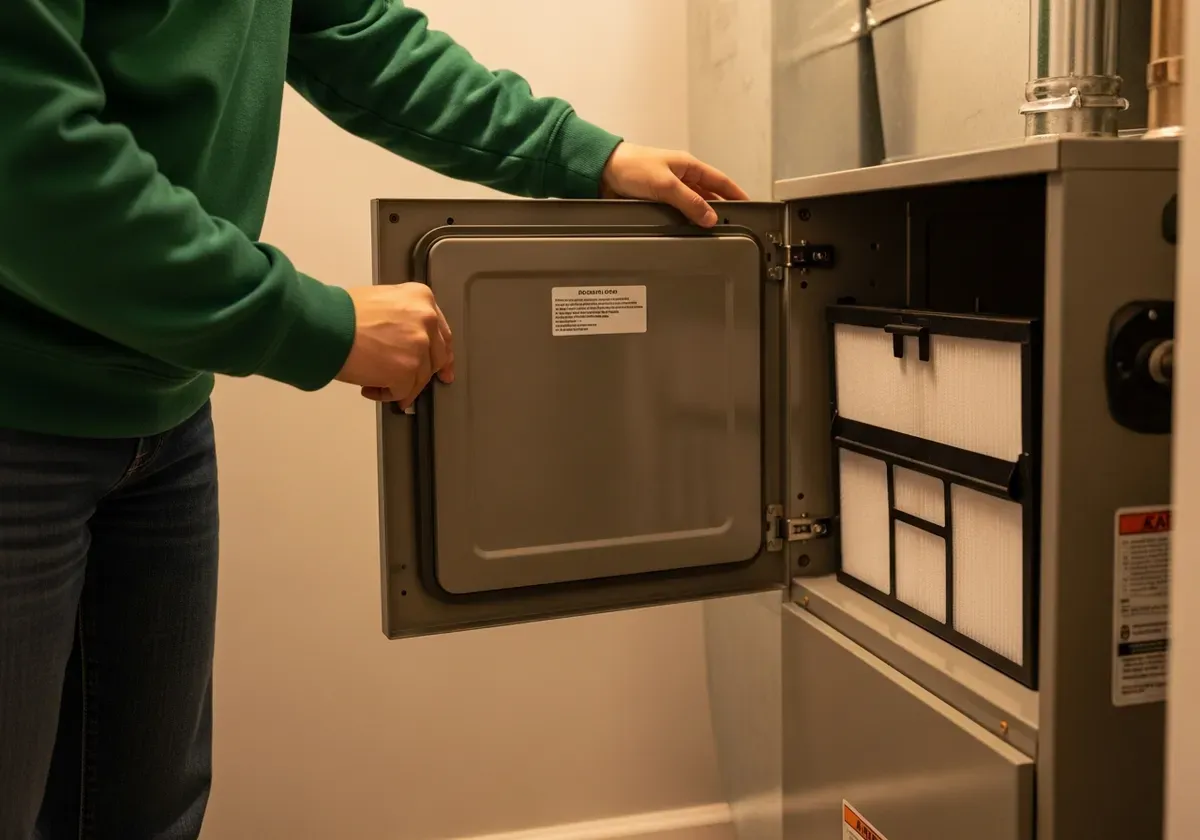
Locate your filter slot, typically in the return air duct before air enters your furnace or air handler. Some systems have filters at individual return vents instead, check all return grilles in your home if you don't find a central filter location.
Every filter has airflow direction arrows printed on the cardboard frame. These arrows must point toward your furnace/air handler, showing the direction air travels through your system. Installing the filter backward dramatically reduces efficiency because the filter material is designed with directional fibers.
Slide the filter fully into the slot until it seats against the back stop. Check all four edges to ensure the filter frame sits flush against the opening with no gaps. Even quarter-inch gaps let unfiltered air bypass the filter entirely, which is why you sometimes see black streaks on walls near return vents, that's dust-laden air sneaking around a poorly-fitted filter.
Filter Change Frequency by MERV Rating
MERV 8 filters typically last three months in average households, but check them monthly by holding them up to light, if you can't see light through the pleats, change the filter regardless of schedule. MERV 11 filters need replacement every two months because their tighter weave catches more particles that build up faster.
MERV 13 filters require monthly changes in most homes, sometimes more frequently if you run your system constantly or live with multiple pets. The Department of Energy recommends checking filters monthly during heavy-use seasons regardless of MERV rating, since a clogged filter can reduce system efficiency by 5-15%.
Set phone calendar reminders rather than relying on memory. Buy filters in bulk packs of 6-12 to ensure you have replacements available, forgetting to order filters and running a clogged filter for weeks causes more indoor air quality problems than using a lower MERV rating consistently.
I learned this lesson the expensive way when I ignored a MERV 11 filter for three months—my energy bill jumped $40 that quarter, and when I finally pulled the filter out, it was so packed with gray dust that I could barely see light through it. Now I keep a stack of six filters in my basement closet and swap them on the first Sunday of each month, which takes maybe two minutes but saves me from that musty smell I used to notice when the system kicked on with a clogged filter.
Cost Comparison and Where to Buy Quality Filters
Filter costs vary dramatically based on MERV rating, brand, and where you purchase. MERV 8 filters run $5-8 each at home improvement stores, while MERV 13 filters from the same brands cost $15-25. Buying directly from manufacturers online often cuts costs 30-40% compared to retail stores, especially when purchasing bulk packs.
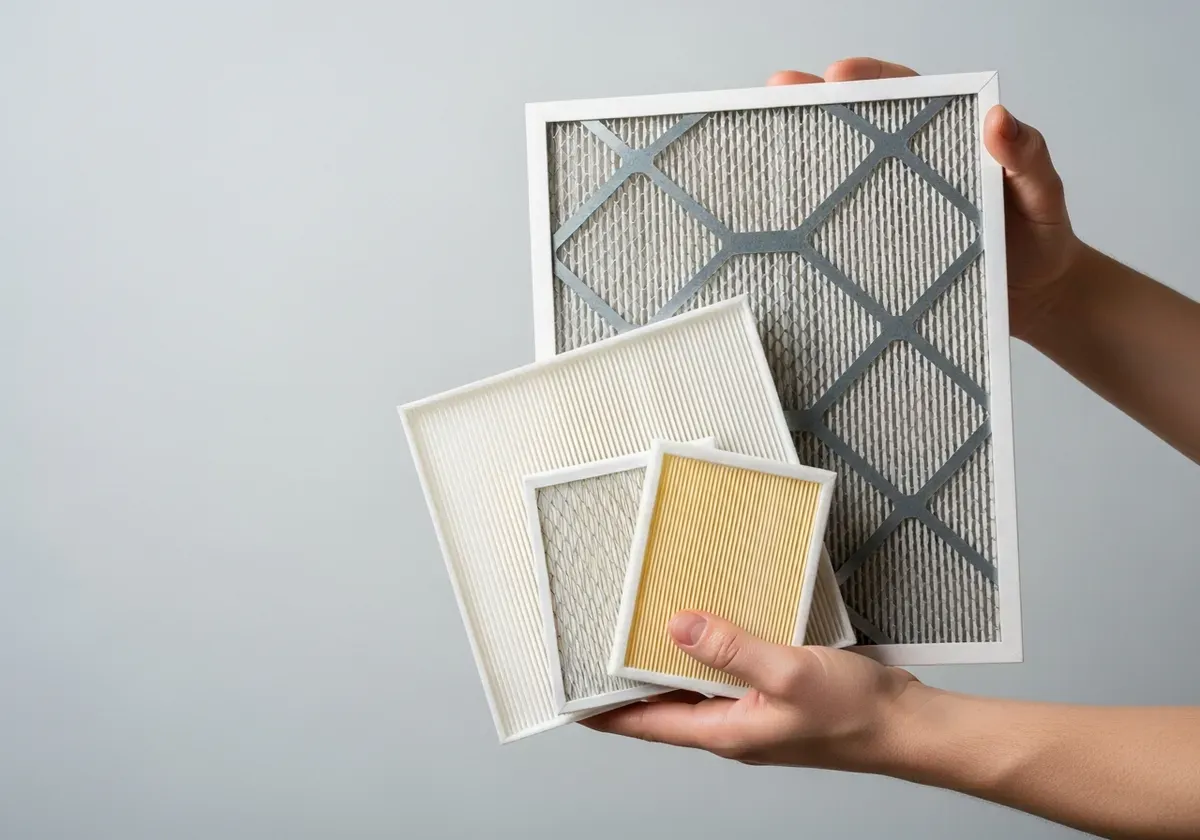
Annual costs tell the real story. MERV 8 filters changed quarterly cost roughly $20-30 yearly. MERV 11 filters changed every two months run $60-90 annually. MERV 13 filters replaced monthly cost $120-180 per year. These calculations assume standard 16x20 or 20x25 sizes, larger or custom sizes increase costs proportionally.
Look, the cheapest filter isn't always the best value. Generic brands sometimes use lower-quality materials that compress quickly, reducing effective filter area and increasing resistance. Established brands like Filtrete, Nordic Pure, and Honeywell maintain consistent pleat spacing and use materials that hold their shape throughout the filter's lifespan.
Subscription Services vs. One-Time Purchases
Filter subscription services deliver replacements automatically on schedules you set, typically offering 10-15% discounts compared to one-time purchases. Services like FilterBuy, Filter King, and manufacturer-direct programs from 3M work well if you want the convenience of never forgetting filter changes.
The downside is inflexibility, you're locked into specific change intervals that might not match your actual usage. Homes with pets or in dusty areas often need more frequent changes than subscriptions anticipate. One-time bulk purchases from Amazon or home improvement stores give you control to change filters based on actual condition rather than arbitrary schedules.
When to Invest in Washable Filters
Washable permanent filters cost $50-100 upfront but last 5-10 years with monthly cleaning. They typically perform equivalent to MERV 8 filters when clean, making them economical for basic filtration needs in homes with older HVAC systems.
The catch is maintenance commitment. You must remove, wash, dry completely, and reinstall the filter monthly. Any moisture remaining when you reinstall promotes mold growth directly in your air stream. Most people find the hassle outweighs the cost savings, especially since disposable MERV 8 filters are already inexpensive.
"The reality is that most homeowners don't maintain washable filters properly—they either don't clean them frequently enough or reinstall them while still damp," says Jeffrey Siegel, Professor of Civil Engineering at the University of Toronto who studies indoor air quality. "That creates conditions for biological growth that can actually make your indoor air worse than having a dirty disposable filter."
Avoiding Counterfeit and Mislabeled Filters
The filter market includes products claiming MERV ratings they don't actually achieve. Genuine MERV ratings require testing according to ASHRAE Standard 52.2, but manufacturers can print any number on packaging without certification. Filters sold at dollar stores or from unknown online sellers often exaggerate performance significantly.
Purchase filters from established retailers or directly from recognized manufacturers. Check that packaging includes the ASHRAE 52.2 testing standard reference. Suspiciously cheap prices for high MERV ratings usually indicate counterfeit or mislabeled products, legitimate MERV 13 filters simply cost more to manufacture than MERV 8 filters.
To be fair, even accurately-rated filters lose efficiency as they load with particles. A MERV 11 filter near the end of its service life might perform closer to MERV 8, which is why change frequency matters as much as initial rating. Regular replacement with correctly-rated filters delivers better results than occasionally changing a higher-rated filter.
Start by identifying your HVAC system's age and capabilities, then choose the highest MERV rating your equipment can handle without strain. For most homes with systems built after 2000, MERV 11 delivers excellent particle capture without the compatibility concerns of MERV 13. Monitor your system's performance after any filter upgrade, and don't hesitate to downgrade if you notice longer run times or increased energy costs. Your indoor air quality depends on consistent filter changes more than chasing the highest possible MERV rating.
A 2019 investigation by the National Air Filtration Association found that approximately 30% of HVAC filters sold through third-party online marketplaces carried inaccurate MERV ratings, with some products labeled MERV 13 testing closer to MERV 6 in independent laboratory analysis. The problem stems from minimal enforcement of ASHRAE testing standards in overseas manufacturing and unregulated reseller channels. To protect your investment, purchase filters directly from manufacturers or authorized retailers who provide batch testing documentation, and look for products bearing the ASHRAE 52.2 test standard notation on the packaging itself—not just in marketing materials. If a MERV 13 filter costs less than half the price of established brands, the rating is likely aspirational rather than verified.
Related Articles
- Indoor Air Quality Testing: Complete Guide to Testing Your Home
- 9 Science-Backed Air Purifier Benefits for Your Health & Home
- Best Air Purifiers for Home: 2024 Expert Reviews & Buyer's Guide
- Best Indoor Air Quality Monitors: 2024 Buyer's Guide & Reviews
- Best Air Purifiers for Wildfire Smoke: Protection & Reviews
- Home Air Quality Monitoring System: Complete Setup Guide
Frequently Asked Questions
What MERV rating should I choose if I have pets and allergies?
MERV 11-12 is ideal for pet owners with allergies, as it effectively captures pet dander, dust mites, and pollen in the 1-3 micron range. If someone in your household has severe allergies or asthma, consider MERV 13 for maximum protection, but first verify your HVAC system can handle it without airflow restrictions.
Can I use a MERV 13 filter in an older HVAC system?
Older systems (pre-1990) designed for MERV 1-4 filters may struggle with MERV 13, potentially causing reduced airflow, higher energy bills, and equipment strain. Start with MERV 8-11 and monitor your system for warning signs like reduced cooling/heating performance or increased noise before upgrading further.
How often should I change filters at different MERV ratings?
The article indicates filter change frequency varies by MERV rating, with higher-rated filters typically needing more frequent changes due to increased particle capture. Check your specific filter's recommendations, but generally expect to change MERV 13 filters more often than MERV 8 filters.
Will a higher MERV rating actually improve my home's air quality?
Only if your HVAC system can handle it. A MERV rating that's too high for your equipment reduces airflow and may actually decrease overall air quality while damaging your system. The best choice balances your household's health needs with your system's capabilities, typically MERV 8-13 for most homes.
What's the difference between MERV 12 and MERV 13 filters?
MERV 13 filters capture smaller particles (0.3-1.0 microns) including smoke and virus-carrying droplets, while MERV 12 stops at slightly larger particles. Choose MERV 13 if you live in wildfire-prone areas, someone has compromised immunity, or tobacco smoke is a concern; otherwise MERV 12 provides excellent filtration.
Are washable filters better than disposable ones?
The article mentions washable filters as an option worth considering based on cost factors. Washable filters can save money long-term but require consistent maintenance and may not maintain their MERV rating as effectively as disposable filters over time.
How do I know if my current MERV rating is too high for my system?
Warning signs include reduced heating or cooling performance, increased energy bills, unusual system noise, or the system running constantly. If you notice these issues after upgrading your filter, lower to a MERV 8-11 rating and consult your HVAC technician.