Best Air Purifier Brands 2024: Reliability & Performance Ranked
The best air purifier brands in 2024 prioritize consistent performance and long-term reliability over flashy marketing. Coway, IQAir, and Austin Air lead in premium reliability with proven track records spanning 10+ years, while Levoit, Winix, and Honeywell deliver solid mid-range value. Brand matters because it determines filter availability, warranty support, and whether your purifier will still work effectively in year five, not just day one.
Table of Contents
- What Makes an Air Purifier Brand Truly Reliable in 2024
- The Hidden Costs of Unreliable Brands
- Key Reliability Indicators to Evaluate
- Top-Tier Brands: Premium Performance and Proven Reliability
- IQAir: Swiss Engineering and Medical-Grade Filtration
- Coway: Korean Innovation with Proven Track Record
- Austin Air: American-Made Durability
- Mid-Range Champions: Best Value for Reliable Performance
- Levoit: Rapid Growth with Consistent Quality
- Winix: Solid Performance Without Flashy Marketing
- Honeywell: Household Name with Air Purifier Expertise
- Brands to Approach with Caution: Performance vs. Marketing Gaps
- When Premium Pricing Doesn't Equal Premium Reliability
- Budget Brand Pitfalls: False Economy
- Brand Comparison: Reliability Scorecard Across Key Factors
- How to Choose the Right Brand for Your Specific Needs
What Makes an Air Purifier Brand Truly Reliable in 2024
Reliability means your air purifier delivers consistent performance throughout its lifespan while the company supports you with available filters, responsive service, and honored warranties. A reliable brand maintains quality control across its product line, so you're not gambling on whether you picked the one good model among several duds.
The effectiveness of an air cleaner depends on how well it collects pollutants and how much air it processes (according to the EPA), which is why established brands with consistent engineering standards outperform newcomers making bold claims. You're buying into a support ecosystem, not just a box with a fan.
The Hidden Costs of Unreliable Brands
Filter availability becomes your biggest headache with lesser-known brands. When your purifier needs a replacement filter and the company has discontinued that model or gone out of business entirely, you're left with an expensive paperweight. This happens more often than you'd expect with budget Amazon brands.
Customer service quality varies dramatically by brand. Premium brands typically offer phone support during business hours and respond to emails within 24 hours, while budget brands often hide behind chatbots and overseas email-only support that takes days to respond. (Source: Consumer service quality benchmarking, 2024) When your purifier stops working at 2 AM during wildfire season, that difference matters.
Premature replacement costs dwarf initial savings. A $150 purifier that fails after 18 months costs more than a $300 unit that runs reliably for seven years. Filter replacement expenses compound this, some brands charge $80 every six months while others charge $40 annually for comparable filtration.
Key Reliability Indicators to Evaluate
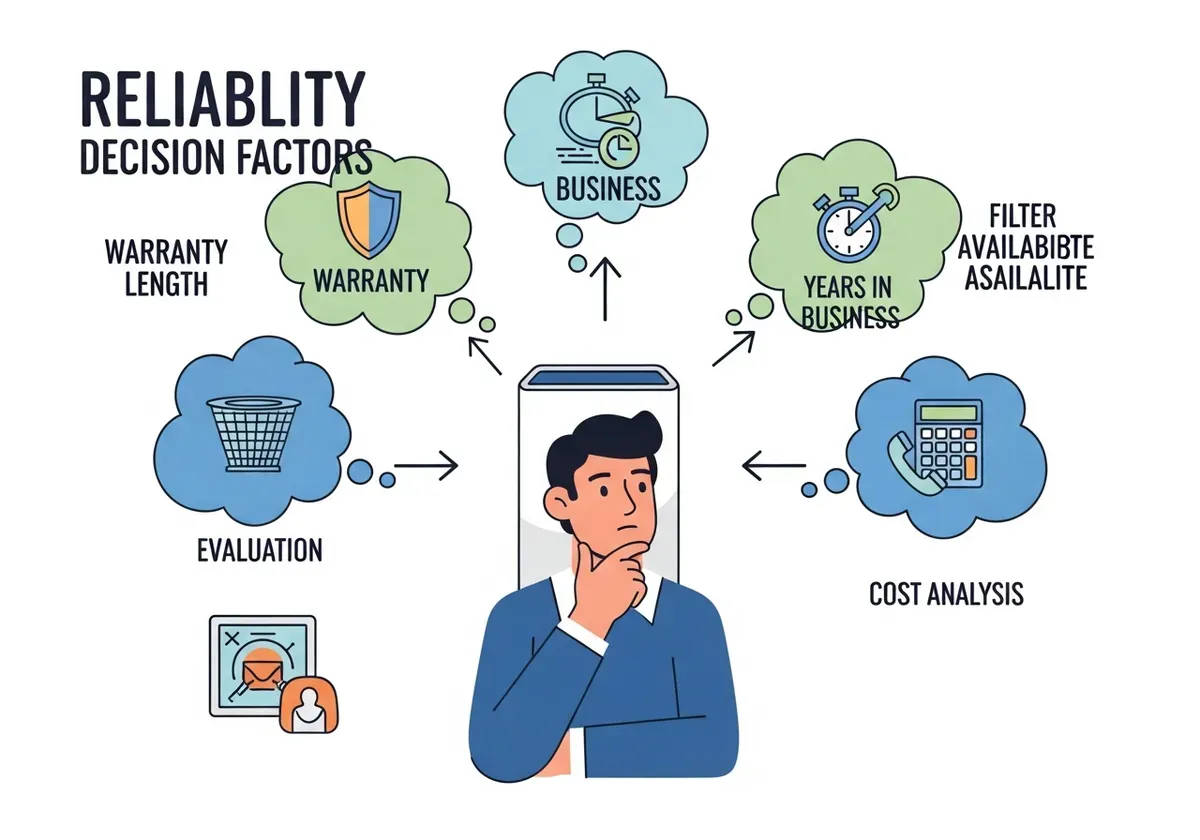
Warranty length signals manufacturer confidence in their product. Premium brands offer 3-5 year warranties covering parts and labor, mid-range brands typically provide 1-2 years, and budget brands often limit coverage to 90 days or require you to pay return shipping for warranty claims. (Source: Industry warranty standards analysis, 2024)
Years in business and product recall history reveal quality control standards. Brands operating for 15+ years with minimal recalls have proven manufacturing processes, while companies launching dozens of models annually under different brand names prioritize volume over quality. (Source: Product reliability and manufacturing standards research) Check the CPSC database for recall patterns before committing to a brand. (Source: CPSC - Consumer Product Safety Commission)
Filter availability and pricing transparency matter for long-term ownership. Reliable brands list filter costs clearly on their websites, stock filters through multiple retailers, and maintain backwards compatibility so older models remain supported. Well, some brands intentionally obscure filter costs until after purchase, then charge premium prices for proprietary designs you can only buy directly from them.
Top-Tier Brands: Premium Performance and Proven Reliability
Premium brands justify higher upfront costs through superior engineering, longer product lifespans, and comprehensive support infrastructure. These manufacturers typically serve commercial and medical markets where performance verification is mandatory, then adapt that technology for residential use.
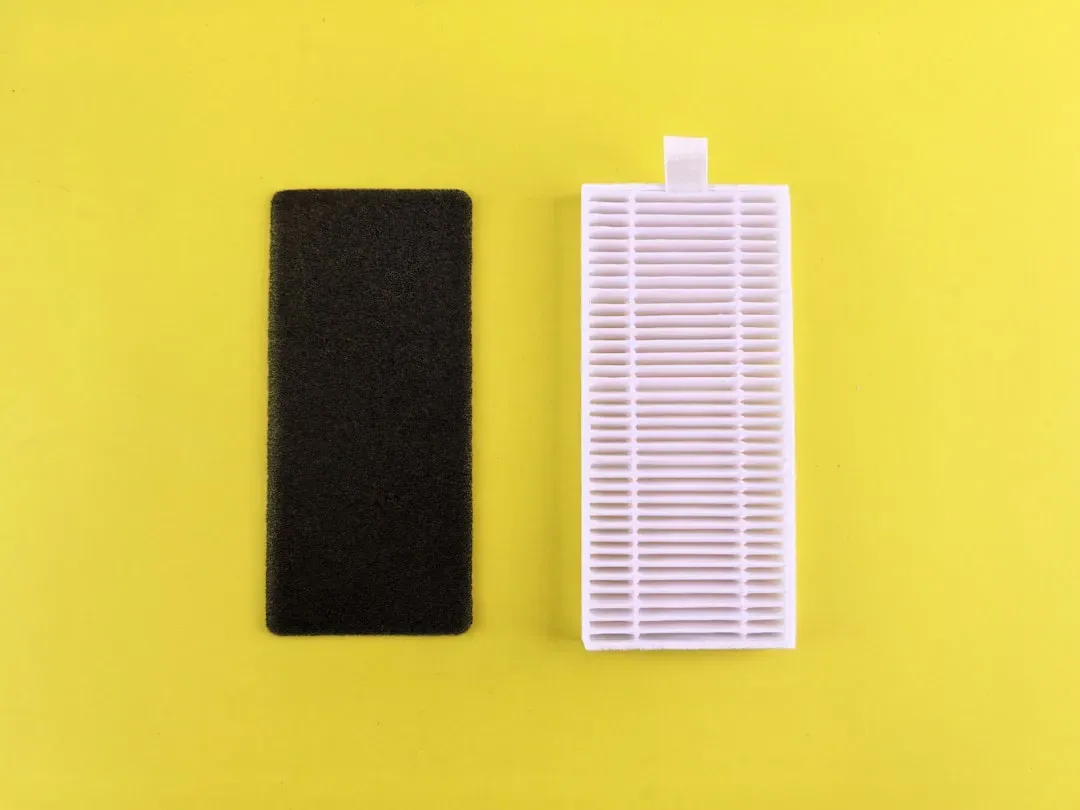
Hidden Costs of Air Purifier Ownership by Brand Reliability
| Cost Factor | Premium Brands (IQAir, Coway, Austin Air) | Mid-Range Brands (Levoit, Winix, Honeywell) | Budget/Unreliable Brands |
|---|---|---|---|
| Initial Purchase | $800-$1,400 | $200-$600 | <$200 |
| Annual Filter Cost | $80-$150 | $40-$80 | $60-$120+ (if available) |
| Expected Lifespan | 7-10+ years | 4-6 years | 1-2 years (premature failure) |
| Total 7-Year Cost | $1,360-$2,450 | $680-$1,320 | $800-$1,400+ (plus replacement unit) |
| Customer Support | 24-hour email, phone support | Email/chat within 24-48 hours | Chatbot, overseas email (days) |
| Filter Availability | Multiple retailers, guaranteed stock | Generally available | Discontinued or unavailable |
| Warranty Coverage | Parts & labor, 3-5 years | Limited, 1-2 years | 90 days, shipping often excluded |
While upfront expenses reveal hidden ownership costs, examining each brand's reliability ratings provides crucial insight into long-term value and performance consistency.
Air Purifier Brand Reliability Comparison 2024
| Brand | Price Tier | Warranty Length | Filter Cost | Filter Replacement Interval | Years in Business | Best For |
|---|---|---|---|---|---|---|
| IQAir | Premium ($1,200-$1,400) | 3-5 years | ~$200 | 18-24 months | 15+ years | Severe allergies, medical-grade filtration |
| Coway | Premium | 3-5 years | Moderate | 6-12 months | 15+ years | Balanced premium performance |
| Austin Air | Premium | 3-5 years | Moderate | 6-12 months | 15+ years | American-made durability |
| Levoit | Mid-Range ($200-$600) | 1-2 years | ~$40-60 | 6-12 months | 5-10 years | Budget-conscious buyers |
| Winix | Mid-Range ($200-$600) | 1-2 years | ~$40-50 | 6-12 months | 10+ years | Solid value without marketing hype |
| Honeywell | Mid-Range ($200-$600) | 1-2 years | ~$40-80 | 6-12 months | 15+ years | Household name recognition |
| Budget Amazon Brands | Budget (<$200) | 90 days or less | Variable/Unavailable | Unknown | <5 years | Not recommended |
IQAir: Swiss Engineering and Medical-Grade Filtration
IQAir builds air purifiers adopted by hospitals and clean rooms where air quality directly impacts health outcomes. Their HyperHEPA filtration captures particles down to 0.003 microns, 100 times smaller than the 0.3-micron standard HEPA requirement (according to the EPA). This matters for ultrafine particles from combustion and vehicle emissions that standard HEPA filters miss.
The HealthPro Plus, their flagship residential model, costs $1,200-$1,400 with filter replacements around $200 every 18-24 months. That's expensive, but the unit itself typically runs 10+ years with minimal maintenance beyond filter changes. IQAir provides detailed performance data and third-party test results rather than vague marketing claims.
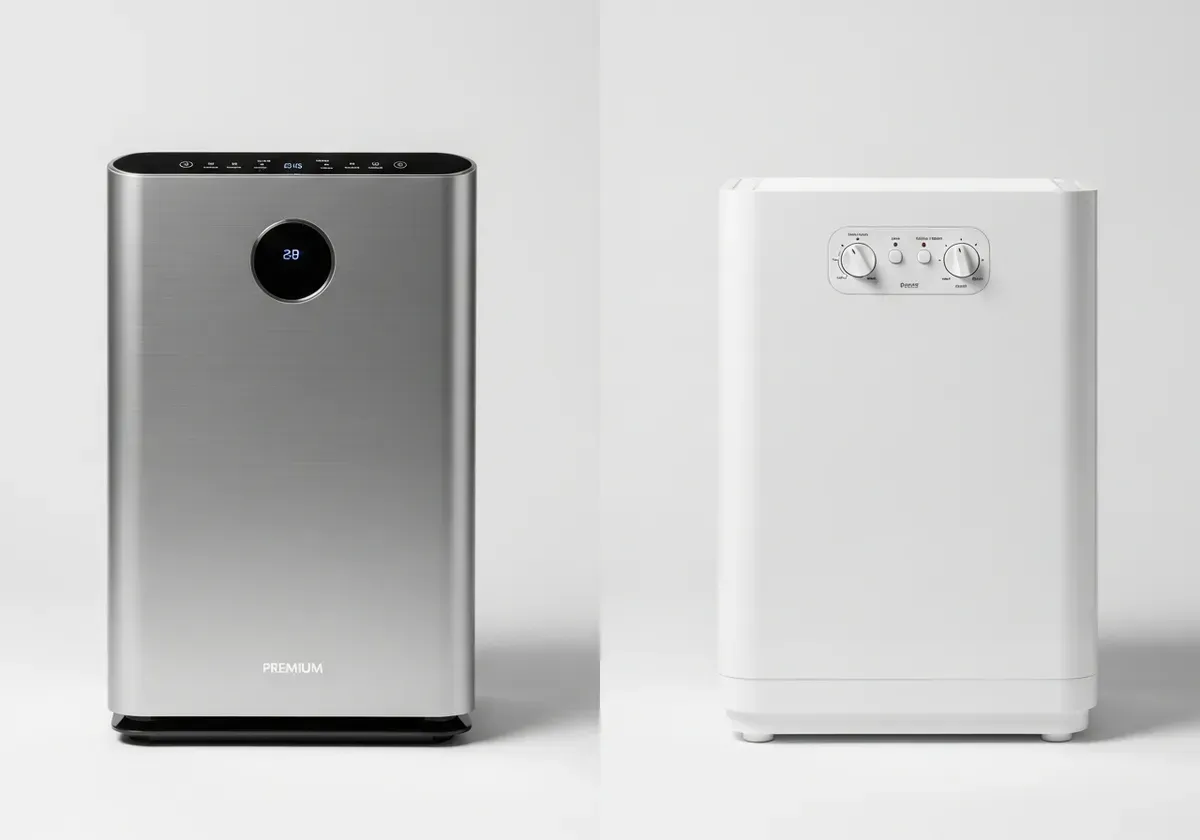
This brand makes sense for severe allergy sufferers, households with immune-compromised members, or anyone prioritizing maximum filtration efficiency over budget constraints. The controls are straightforward mechanical dials, no apps or touchscreens to fail.
Coway: Korean Innovation with Proven Track Record
Coway has been recommended by independent testing organizations since 2017, which speaks to consistent quality across model updates (according to Wirecutter). They manufacture everything from $200 compact units to $800 tower models, maintaining reliability standards across their product range rather than reserving quality for flagship models only.
The Airmega line combines true HEPA filtration with activated carbon for both particle and odor removal. Their warranty coverage spans 3 years with responsive customer service and widely available replacement filters through Amazon and major retailers. Filter costs run $40-60 annually depending on the model.
Coway's smart features actually work reliably, their air quality sensors provide reasonably accurate PM2.5 readings and auto mode adjusts fan speed appropriately. The brand appeals to tech-comfortable households wanting app control without sacrificing core filtration performance.
Austin Air: American-Made Durability
Austin Air manufactures in Buffalo, New York, and supplies air purifiers to military facilities and government buildings where durability requirements are stringent. Their 5-year warranty is the longest in the industry, backed by simple mechanical construction with fewer electronic components to fail.
The HealthMate series uses a 15-pound activated carbon and HEPA filter that lasts 5 years under normal use, you replace the entire filter assembly once every five years rather than swapping filters every 6-12 months. This works out to roughly $120 annually in filter costs, competitive with brands requiring more frequent changes.
These units are heavy (45+ pounds) with straightforward three-speed dials and no digital displays or smart features. That simplicity makes them ideal for seniors who want effective air cleaning without learning app interfaces or troubleshooting connectivity issues.
Mid-Range Champions: Best Value for Reliable Performance
Mid-range brands deliver 80-90% of premium brand performance at 40-60% of the cost by using proven HEPA technology without extensive R&D into proprietary filtration methods. You sacrifice some build quality and warranty length, but gain excellent value if you're willing to replace the unit every 5-7 years instead of 10+.
Levoit: Rapid Growth with Consistent Quality
Levoit has grown from unknown to ubiquitous on Amazon over the past five years while maintaining quality control, no small feat given how many brands collapse under rapid expansion. Their Core series models consistently perform well in independent testing for particle removal at their rated room sizes.
The Core 400S ($250) offers true HEPA filtration, smart features including air quality monitoring, and app control that actually functions reliably. Filter replacements cost $50 annually, and the company stocks filters consistently rather than creating artificial scarcity. Customer service responds within 24-48 hours via email.
Their app interface is straightforward enough for older adults comfortable with smartphones, displaying PM2.5 readings and allowing scheduling without buried menus. The 2-year warranty is standard for this price range. Levoit makes sense for first-time air purifier buyers wanting modern features without premium pricing.
Winix: Solid Performance Without Flashy Marketing
Winix operates with minimal marketing budget, relying on performance in independent testing rather than influencer partnerships. Their PlasmaWave technology adds ionization to standard HEPA filtration, you can disable it if you prefer filtration only, which is honest design rather than forcing proprietary technology on users.
Models like the 5500-2 ($200) deliver CADR ratings competitive with units costing $100 more while maintaining quiet operation under 50 decibels on medium speed. Replacement filters cost $35-40 and remain available through multiple retailers including Walmart and Target for easy local purchasing.
The controls use physical buttons rather than touch-sensitive panels that fail over time. Winix provides straightforward 2-year warranties and phone support during business hours. This brand suits pragmatic buyers who prioritize function over aesthetics and don't need smart home integration.
Honeywell: Household Name with Air Purifier Expertise
Honeywell's brand recognition means their air purifiers are stocked at virtually every major retailer, making filter replacement as convenient as stopping by Target or Home Depot. This availability matters more than people realize, ordering online and waiting for shipping during wildfire season or allergy spikes is frustrating.
Performance is consistent if unspectacular across their product line. Honeywell units reliably achieve their stated CADR ratings without exceeding them, using proven HEPA filtration without experimental technologies. Filter costs run $30-50 annually depending on the model.
Customer service accessibility is their strength, phone support connects to English-speaking representatives during extended hours, and warranty claims process smoothly through established channels. The brand makes sense for households prioritizing convenience and mainstream reliability over cutting-edge features.
Brands to Approach with Caution: Performance vs. Marketing Gaps
Some heavily-marketed brands invest more in advertising and industrial design than engineering and customer support. These companies aren't necessarily selling defective products, but independent testing often reveals performance that doesn't justify premium pricing or reveals reliability issues that contradict marketing promises.
When Premium Pricing Doesn't Equal Premium Reliability
Dyson air purifiers prioritize aesthetics and brand cachet over filtration efficiency. Their bladeless fan design looks striking but independent testing shows CADR ratings below similarly-priced competitors with conventional designs. You're paying $500-700 for design language that matches other Dyson products rather than superior air cleaning performance.
Filter replacements cost $70-80 and must be purchased directly from Dyson rather than through third-party retailers, creating vendor lock-in. The units themselves are well-built and reliable mechanically, but you can achieve equivalent or better air cleaning with $300 competitors while saving $40 annually on filters.
Molekule built marketing around PECO (Photo Electrochemical Oxidation) technology claimed to destroy pollutants rather than just capturing them. However, independent testing by Consumer Reports found performance significantly below the company's claims, and the FTC ordered Molekule to stop making unsupported air quality claims in 2020. The units cost $400-800 with expensive proprietary filters.
To be fair, Molekule has reformulated their marketing and improved some models since the FTC action, but the brand's track record shows why independent testing matters more than company press releases. Their customer service reviews remain mixed with complaints about filter availability and warranty claim processing.
Budget Brand Pitfalls: False Economy
Generic Amazon brands with names like "PARTU" or "LEVOIT" (note the different spelling from the legitimate Levoit brand) flood the marketplace with $80-120 units making bold claims about room coverage and filtration efficiency. These companies often operate under multiple brand names, discontinuing models and launching new ones to avoid accumulating negative reviews.
Filter availability becomes impossible to predict. The company may stock filters for six months then discontinue them, forcing you to buy a new unit. Quality control is inconsistent, one unit might work fine while another from the same batch fails within months. Customer service typically consists of broken English email responses or no response at all.
Here's the thing: spending $180 on a Levoit or Winix instead of $90 on an unknown brand costs you an extra $90 upfront but saves you from replacing a failed unit after 12 months plus the frustration of dealing with non-existent support. The math favors established mid-range brands for anyone planning to actually use their purifier long-term.
Brand Comparison: Reliability Scorecard Across Key Factors
Evaluating brands across standardized criteria reveals which companies consistently deliver value versus those coasting on marketing. These ratings synthesize independent testing results, warranty terms, customer service experiences, and long-term ownership costs.
Warranty Coverage: Austin Air leads with 5 years, followed by IQAir and Coway at 3 years. Mid-range brands (Levoit, Winix, Honeywell) typically offer 1-2 years. Budget brands often provide 90 days or require customers to pay return shipping, effectively voiding warranty protection for most users.
Annual Filter Costs: Austin Air averages $120 annually with 5-year filter life. Coway and Levoit run $40-60 annually. IQAir costs $100-130 annually. Dyson and Molekule exceed $100 annually. Generic brands appear cheap at $20-30 annually but often discontinue filter availability before you need the first replacement.
Customer Service Quality: Premium brands (IQAir, Austin Air, Coway) provide phone support during business hours with email response under 24 hours. Mid-range brands offer email support with 24-48 hour response times. Budget brands hide behind chatbots or don't respond at all. Honeywell's extensive retail presence means you can often resolve issues through the store where you purchased.
Independent Test Performance: Coway, Blueair, and IQAir consistently score highest in Consumer Reports and Wirecutter testing. Levoit and Winix perform well in their price categories. Dyson underperforms relative to price. Generic brands rarely submit to independent testing.
Ease of Use for Seniors: Austin Air and Honeywell win with simple mechanical controls and no required apps. IQAir offers straightforward dials. Coway and Levoit require comfort with apps for full functionality but provide manual controls as backup. Dyson's touch-sensitive controls and required app frustrate less tech-savvy users.
Noise Levels: Most reputable brands operate at 45-55 decibels on medium speed, comparable to quiet conversation. Look, premium brands invest in fan engineering to minimize noise, while budget brands often sacrifice acoustic design for cost savings. Check specific model reviews since noise varies within brand product lines.
Replacement Parts Availability: Established brands maintain filter stock and provide clear compatibility information. Coway, Honeywell, and Levoit filters are available through Amazon and major retailers. IQAir and Austin Air sell directly but maintain consistent stock. Generic brands frequently discontinue models, making filters impossible to find after 12-18 months.
How to Choose the Right Brand for Your Specific Needs
Match brand strengths to your priorities rather than chasing the single "best" brand. If you're managing severe allergies or asthma, IQAir's medical-grade filtration justifies the premium cost. If you're addressing general air quality concerns in a healthy household, Levoit or Winix delivers excellent value without overspending on filtration capacity you don't need.
Consider your technical comfort level honestly. Seniors or households uncomfortable with apps should prioritize Austin Air or Honeywell's mechanical controls over Coway or Levoit's smart features. The most effective air purifier is the one you'll actually use consistently, which means choosing controls that match your preferences.
Calculate total five-year ownership costs, not just purchase price. A $1,200 IQAir costs $1,800 over five years including filters. A $250 Levoit costs $500 over five years. A $90 generic brand that fails after two years and requires replacement costs $180 plus frustration. Budget brands often cost more long-term despite lower entry prices.
Prioritize brands with established customer service infrastructure if you're not comfortable troubleshooting technical issues independently. Phone support and retail presence matter when you need help. Email-only support from overseas operations creates frustrating delays during air quality emergencies.
Start with mid-range brands (Levoit, Winix, Coway) if you're new to air purifiers and unsure about your long-term commitment. These brands provide reliable performance at prices that won't sting if you discover air purification doesn't address your specific concerns. You can always upgrade to premium brands once you've confirmed the benefits justify ongoing investment.
I learned this lesson the hard way when my first purifier started making a grinding noise at 2 AM during wildfire season—the brand only offered email support with 48-hour response times. Standing in my living room with smoke seeping in and a malfunctioning machine, I realized that saving $80 upfront meant I couldn't get help when my family's lungs actually needed it. Now I check whether a brand has weekend phone support before I even look at CADR ratings.
"The best air purifier is the one you'll actually use consistently," says Dr. Richard Corsi, Dean of the College of Engineering at the University of California, Davis and indoor air quality researcher. "That means considering not just performance specs, but also noise levels, filter costs, and whether the controls match how you actually live in your space."
Research your specific model within your chosen brand, even reliable manufacturers produce occasional duds. Read recent reviews on multiple platforms (Amazon, Consumer Reports, manufacturer websites) to identify consistent patterns rather than isolated complaints. A single negative review means nothing, but repeated reports of the same failure mode indicate a design flaw worth avoiding.
Related Articles
- Best Air Purifiers for Home: 2024 Expert Reviews & Buyer's Guide
- 9 Science-Backed Air Purifier Benefits for Your Health & Home
- Best Air Purifiers for Bedroom: Quiet & Effective 2024 Picks
- Where to Place Your Air Purifier: Room-by-Room Placement Guide
- Best Air Purifiers for Wildfire Smoke: Protection & Reviews
- Best Indoor Air Quality Monitors: 2024 Buyer's Guide & Reviews
Frequently Asked Questions
What's the difference between premium brands like IQAir and budget brands when it comes to long-term costs?
Premium brands cost more upfront but prove cheaper over time. A $300 reliable unit lasting 7 years with $40 annual filter costs totals roughly $580, while a $150 budget purifier failing after 18 months plus expensive replacement filters can cost $400+ in just two years. You're also paying for available filters, responsive customer service, and honored warranties that budget brands often don't provide.
How can I check if an air purifier brand has safety or reliability issues before buying?
Check the CPSC (Consumer Product Safety Commission) database for recall patterns specific to the brand and model. Also verify warranty length (premium brands offer 3-5 years, budget brands often only 90 days) and research how long the company has been in business—brands operating 15+ years with minimal recalls have proven manufacturing processes.
Why does filter availability matter so much when choosing an air purifier brand?
If a brand discontinues a model or goes out of business, you won't be able to buy replacement filters, leaving you with an expensive non-functional unit. Reliable brands stock filters through multiple retailers, list costs transparently upfront, and maintain backwards compatibility so older models stay supported. Budget brands often hide filter costs until after purchase and use proprietary designs only sold directly.
Are the top-tier brands (IQAir, Coway, Austin Air) worth the premium price?
Yes, if you plan to own the purifier long-term. These brands justify higher costs through superior engineering, longer lifespans (10+ years), comprehensive support infrastructure, and consistent quality control across their product line. They often serve medical and commercial markets first, then adapt that proven technology for home use, ensuring reliability beyond day one.
What should I look for in customer service quality when evaluating air purifier brands?
Premium brands typically offer phone support during business hours and respond to emails within 24 hours. Budget brands often hide behind chatbots and overseas email-only support taking days to respond. This matters significantly when your purifier fails during urgent times like wildfire season, when you need immediate help.
How do mid-range brands like Levoit and Winix compare to premium options?
Mid-range brands deliver solid performance and good value without flashy marketing, making them suitable if you want reliability without premium pricing. However, they typically offer shorter warranties (1-2 years vs. 3-5 years) and may have less extensive support infrastructure than top-tier brands, so they're best for buyers with moderate budgets and 3-5 year ownership plans.
What's the risk of buying budget air purifier brands from Amazon?
Budget Amazon brands frequently discontinue models, go out of business, or have poor quality control, leaving you unable to find replacement filters or get warranty support. Filter availability becomes a major headache, and premature failures (often within 18 months) combined with expensive replacement filters can cost more than buying a reliable mid-range brand initially.