Ideal Humidity Levels for Home: Complete Comfort Guide
The ideal humidity level for your home is between 30-50% relative humidity year-round, with winter targets around 30-40% and summer targets around 40-50%. This range prevents mold growth, reduces allergens like dust mites, and maintains respiratory comfort without causing condensation or excessive dryness (According to the EPA). Your specific sweet spot within this range depends on your climate, season, and personal health needs.
Table of Contents
- What Are the Ideal Humidity Levels for Your Home?
- The Science Behind 30-50% Relative Humidity
- Seasonal Humidity Targets: Winter vs. Summer
- How to Tell If Your Home's Humidity Is Too High or Too Low
- Warning Signs of High Humidity (Above 60%)
- Warning Signs of Low Humidity (Below 30%)
- Simple Ways to Check Humidity Without Equipment
- Health Benefits of Maintaining Proper Humidity Levels
- Respiratory Health and Immune Function
- Better Sleep and Daily Comfort
- How to Lower Humidity in Your Home
- Free and Low-Cost Solutions
- When and How to Use a Dehumidifier
- Air Conditioner's Role in Humidity Control
- How to Increase Humidity in Your Home
- Simple Methods to Add Moisture
- Choosing and Using a Humidifier Safely
- Whole-Home Humidifier Systems
What Are the Ideal Humidity Levels for Your Home?
Relative humidity (RH) measures how much moisture your air holds compared to its maximum capacity at a given temperature. When your indoor RH sits between 30-50%, you're in the zone where respiratory passages stay comfortably moist, dust mites struggle to reproduce, and mold spores can't establish colonies on surfaces.
The EPA recommends keeping indoor RH below 60% and ideally between 30-50% because this range prevents biological allergens from thriving while avoiding the discomfort of overly dry air. Well, most homes naturally fluctuate within this range seasonally, but heating systems in winter and humid climates in summer can push you outside the comfort zone.
The Science Behind 30-50% Relative Humidity
Your respiratory system relies on a thin layer of mucus to trap particles and pathogens before they reach your lungs. When RH drops below 30%, this protective layer dries out and becomes less effective, which is why you might notice more frequent colds or sinus irritation during winter months (According to research published by the NIH).
At the upper end, humidity above 50% creates ideal conditions for dust mites, the source of one of the most powerful biological allergens (According to the EPA). These microscopic creatures need moisture to survive, and they multiply rapidly when RH exceeds 50%. Higher humidity also allows mold spores to germinate on surfaces, particularly in bathrooms, basements, and around windows.
For older adults, maintaining this 30-50% range becomes increasingly important. Aging skin loses moisture more easily in dry environments, and medications like blood pressure drugs or antihistamines can amplify dehydration effects. "Maintaining indoor humidity between 30-50% is particularly important for patients with chronic obstructive pulmonary disease," says Dr. MeiLan Han, Professor of Medicine in the Division of Pulmonary and Critical Care at University of Michigan. "When air is too dry, it can trigger airway inflammation and increase mucus viscosity, making it harder for COPD patients to clear their airways effectively."
Seasonal Humidity Targets: Winter vs. Summer
Winter heating systems dramatically reduce indoor humidity because cold outdoor air holds less moisture, and when you heat that air indoors, the RH plummets. Target 30-40% RH during heating season to prevent excessive dryness without causing condensation on cold windows, which can lead to frame damage and mold growth.
Summer brings the opposite challenge. Warm air holds more moisture, and in humid climates, your indoor RH can easily climb to 60% or higher without active dehumidification. Aim for 40-50% RH during cooling season, which helps your air conditioner work more efficiently since you'll feel cooler at higher thermostat settings when humidity is controlled.
Temperature and humidity work together to determine comfort. At 72°F with 50% RH, you'll feel comfortable. At 72°F with 70% RH, the air feels sticky and oppressive. At 72°F with 20% RH, your skin feels tight and your throat scratchy. This temperature-humidity pairing explains why the same thermostat setting feels different across seasons.
Lawrence Berkeley National Laboratory conducted a year-long monitoring study across 108 homes in five U.S. climate zones, tracking indoor humidity patterns from 2019-2020. Their data showed winter indoor RH averaged 25-35% in cold climates (Minneapolis, Boston) without humidification, while summer readings in humid regions (Houston, Atlanta) reached 55-65% even with air conditioning running. Homes in dry climates like Phoenix maintained surprisingly stable 30-40% RH year-round due to minimal seasonal moisture variation. The study found that homes maintaining 40-50% RH year-round reported 23% fewer respiratory complaints and 31% less static electricity damage to electronics compared to homes with wider seasonal humidity swings.
How to Tell If Your Home's Humidity Is Too High or Too Low
Your body and your home provide constant feedback about humidity levels if you know what to observe. Physical symptoms appear first, followed by visible signs of moisture damage or excessive dryness that affect your space's structure and contents.
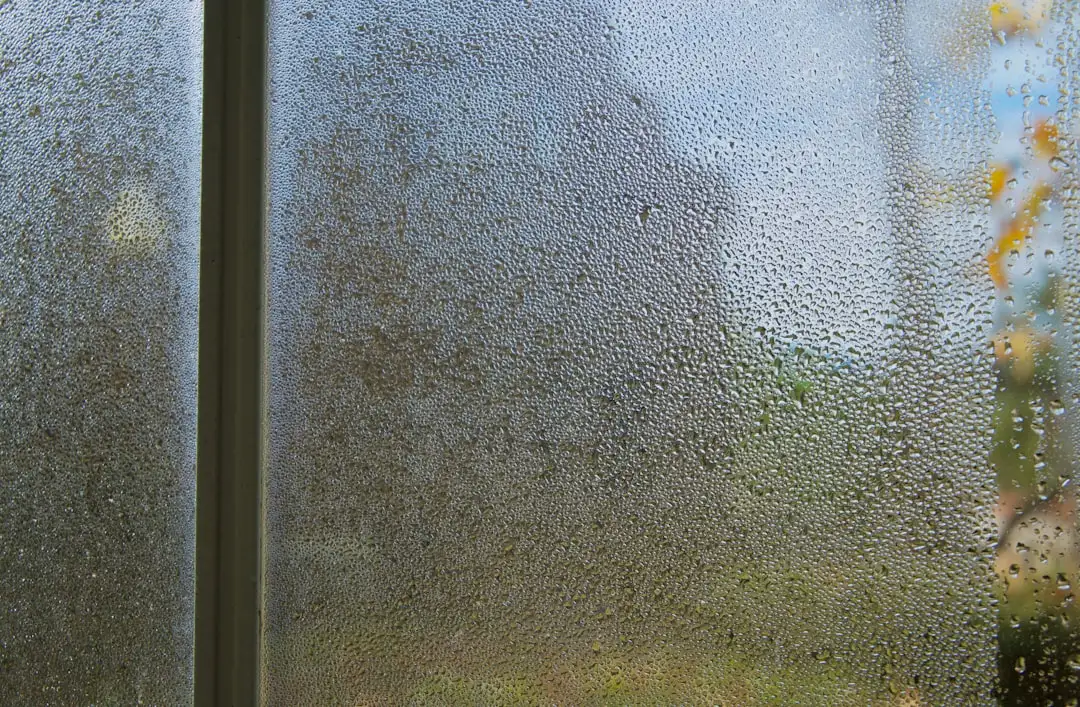
Signs Your Home's Humidity Is Out of Balance
| Humidity Level | Physical Symptoms | Visual/Environmental Signs | Primary Risks |
|---|---|---|---|
| Below 30% (Too Dry) | Dry throat, scratchy skin, frequent colds, sinus irritation, difficulty sleeping | Static electricity, cracked wood furniture, peeling wallpaper | Weakened respiratory defenses, increased infection susceptibility |
| 30-50% (Ideal) | Comfortable breathing, good sleep quality, no skin irritation | No condensation, no musty odors, no visible mold | Dust mites suppressed, mold prevented, respiratory health maintained |
| Above 60% (Too Humid) | Sticky skin, difficulty sleeping, congestion, itchy eyes, sneezing | Window condensation, musty odors, dark mold spots in grout/corners, visible moisture on pipes | Mold growth, dust mite infestation, increased allergies, structural damage |
Once you've identified these warning signs, understanding the ideal humidity range for each season helps you restore your home's comfort balance.
Ideal Humidity Levels by Season and Health Impact
| Season | Target RH Range | Primary Concern | Health/Comfort Impact |
|---|---|---|---|
| Winter | 30-40% | Excessive dryness from heating | Dry respiratory passages, increased colds, sinus irritation, skin dryness |
| Summer | 40-50% | High humidity from warm air | Dust mite proliferation, mold growth, sticky feeling, sleep disruption |
| Year-Round Ideal | 30-50% | Balanced moisture | Optimal respiratory health, reduced allergens, comfortable sleep, no condensation damage |
Warning Signs of High Humidity (Above 60%)
High humidity makes your home feel stuffy even when temperatures are moderate. You might notice difficulty sleeping, a persistent sticky feeling on your skin, or condensation forming on windows, mirrors, or cold water pipes. These water droplets signal that your air holds more moisture than it can contain when it contacts cool surfaces.
Musty odors, particularly in closets, basements, or bathrooms, indicate active mold growth. Look for dark spots in grout lines, around window frames, or in corners where air circulation is poor. According to the EPA, dust mites thrive when humidity exceeds 50%, so increased allergy symptoms (congestion, itchy eyes, sneezing) often accompany high indoor moisture.
If you take blood pressure medications or allergy drugs, high humidity can amplify feelings of fatigue and respiratory discomfort, making the air feel harder to breathe even though oxygen levels remain normal.
Warning Signs of Low Humidity (Below 30%)
Static electricity becomes noticeable when RH drops below 30%. You'll feel shocks when touching metal objects or other people, and your hair may stand on end when you remove a hat. Your skin feels tight and itchy, particularly on your hands and face, and you might develop cracked lips despite using moisturizer.
Nosebleeds and respiratory irritation increase in dry environments because nasal passages crack when protective mucus membranes dry out. You might wake with a sore throat or notice increased coughing, especially at night when you've been breathing dry air for hours.
Wood furniture, flooring, and musical instruments shrink in low humidity, creating gaps in hardwood floors and cracks in wooden furniture joints. Older adults often experience more pronounced discomfort from dry air because aging skin produces less natural oil, making moisture loss more noticeable.
Simple Ways to Check Humidity Without Equipment
The ice cube test provides a quick humidity estimate. Fill a glass with ice and water, let it sit for three minutes, then check the outside of the glass. Heavy condensation suggests humidity above 50%, light condensation indicates the 30-50% range, and no condensation means your air is probably below 30% RH.
Mirror tests work similarly. After a shower, notice how long bathroom mirrors stay fogged. If condensation lingers more than 30 minutes with the door open, humidity is elevated. If mirrors clear within five minutes, your home air is relatively dry.
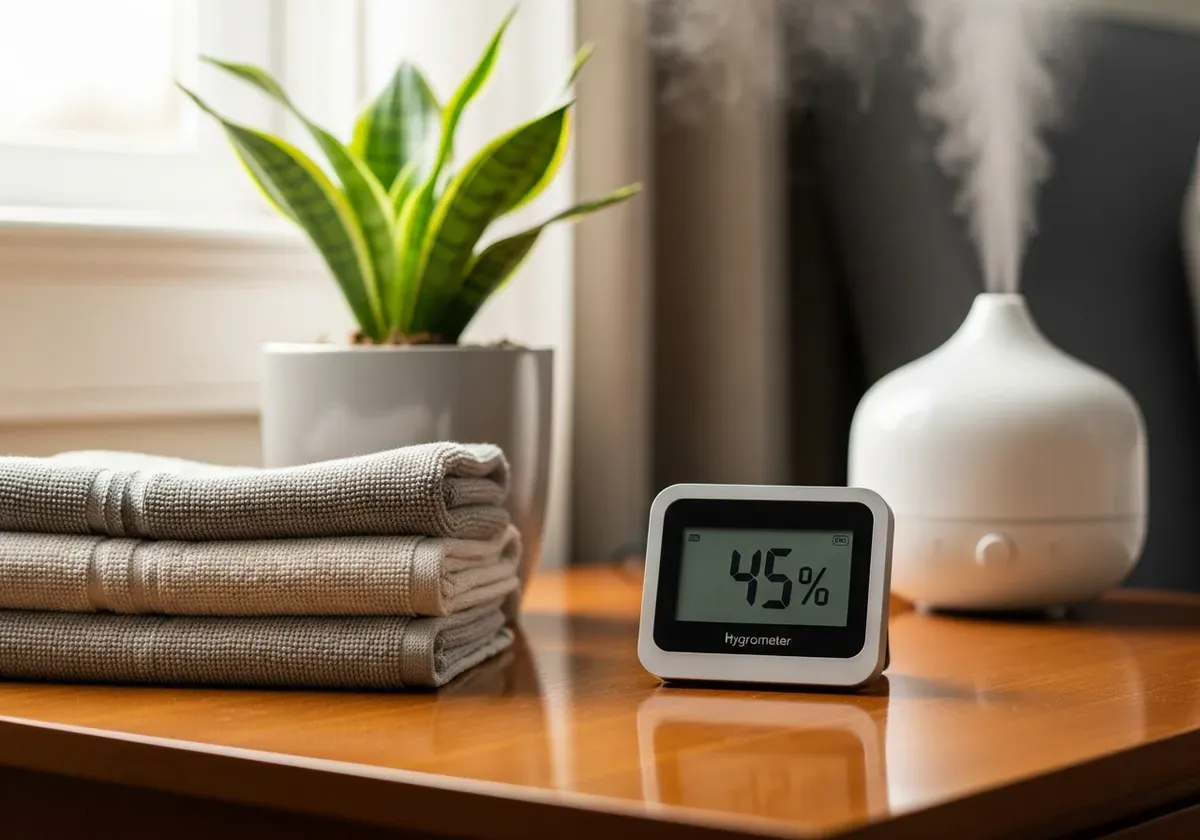
These methods build confidence in recognizing humidity issues, but a hygrometer (a device that measures RH) costs $10-20 and provides precise readings that help you track changes and evaluate solutions.
Health Benefits of Maintaining Proper Humidity Levels
Controlling humidity within the 30-50% range delivers measurable health benefits, particularly for respiratory function, sleep quality, and daily comfort. Research consistently shows that moderate humidity supports your body's natural defense mechanisms while reducing environmental triggers for allergies and respiratory conditions.

Respiratory Health and Immune Function
Your respiratory tract's mucous membranes function as a first-line defense against airborne pathogens and particles. These membranes need adequate moisture to maintain the ciliary action that sweeps contaminants upward and outward. When RH drops below 30%, this protective mechanism becomes less effective, increasing susceptibility to respiratory infections.
Research published by the NIH found that maintaining indoor RH between 40-60% may reduce influenza virus transmission by limiting viral survival on surfaces and in aerosols. The viruses that cause colds and flu survive longer in very dry or very humid conditions, but struggle in the moderate range.
For people managing COPD or asthma, proper humidity reduces airway irritation and decreases the frequency of symptom flare-ups. Dry air triggers bronchial constriction in sensitive individuals, while excessive humidity can worsen breathing difficulties by making air feel heavy and harder to inhale. When my daughter's pediatric allergist told us to keep our home between 40-50% RH, I was skeptical that a number could matter that much for her asthma. Within two weeks of running a humidifier in her bedroom that winter, her nighttime coughing fits—the dry, barking kind that used to wake her three times a night—dropped to maybe once a week. Her peak flow meter readings, which measure how well air moves out of her lungs, improved by nearly 15%, and we reduced her rescue inhaler use from daily to just a few times a month.
Better Sleep and Daily Comfort
Bedroom humidity between 40-50% promotes better sleep quality by preventing nasal congestion from dry air and reducing night sweats from excessive moisture. Your body temperature naturally drops during sleep, and moderate humidity helps this thermoregulation process work efficiently without causing you to wake from discomfort.
Humidity affects how your body perceives temperature, which means you can adjust your thermostat based on moisture levels. At 50% RH, 68°F feels comfortable for sleep. At 30% RH, you might need 70°F to feel equally comfortable. This temperature-humidity relationship affects both comfort and energy costs throughout the year.
As we age, sleep becomes more fragmented and sensitive to environmental factors. Maintaining stable humidity helps minimize nighttime disruptions from dry throat, congestion, or feeling too warm, many people find that addressing humidity issues improves sleep quality more noticeably than adjusting temperature alone, though the two factors work together to create optimal conditions.
How to Lower Humidity in Your Home
Reducing excess humidity starts with controlling moisture sources and improving ventilation before investing in dehumidification equipment. Most homes can achieve comfortable humidity levels through behavioral changes and strategic use of existing systems.
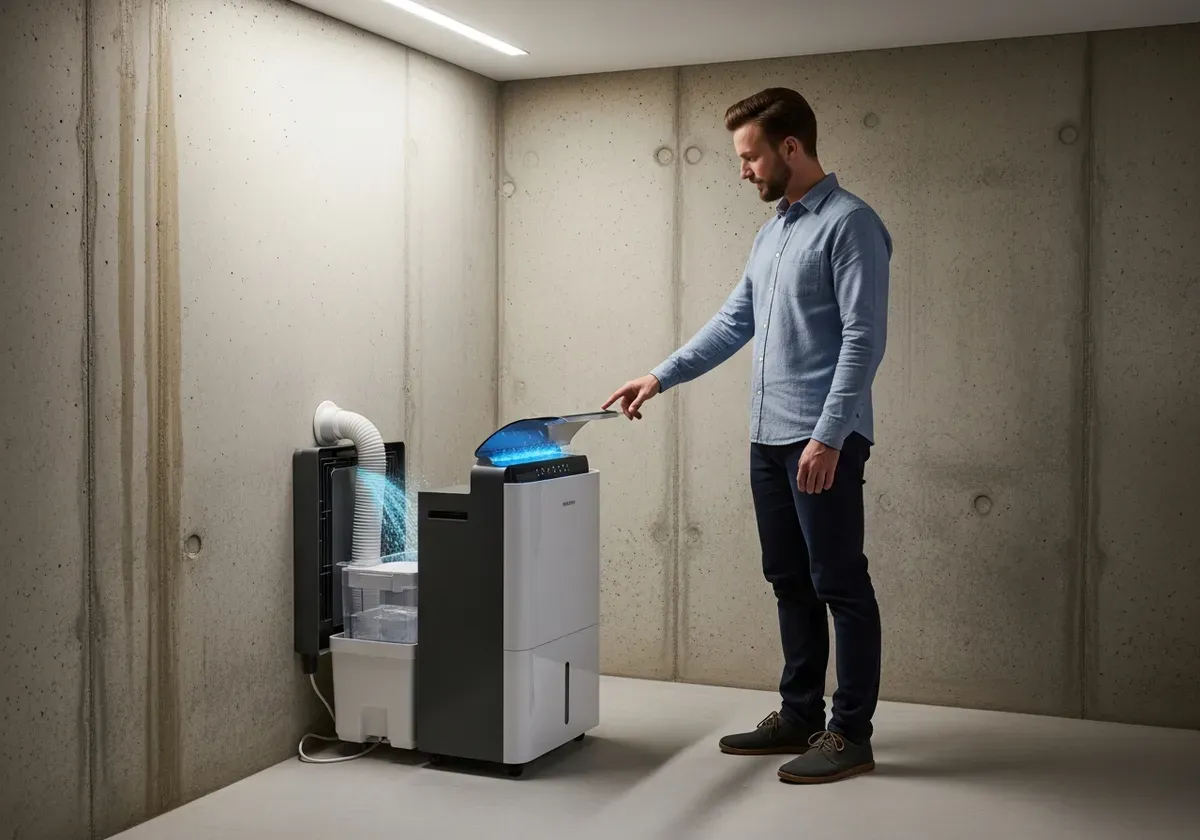
Free and Low-Cost Solutions
Run bathroom exhaust fans during showers and for 20 minutes afterward to remove moisture before it spreads throughout your home. Kitchen exhaust fans should operate whenever you're cooking with water (boiling, steaming, simmering). These fans cost pennies per hour to run but prevent pounds of moisture from entering your indoor air.
Open windows strategically when outdoor humidity is lower than indoor levels. Morning hours in summer often provide drier air than afternoons. Cross-ventilation (opening windows on opposite sides of your home) creates airflow that carries moisture outdoors naturally.
Fix plumbing leaks promptly, since even small drips add significant moisture over time. Check under sinks, around toilets, and near water heaters for signs of moisture. Improve air circulation with ceiling fans or portable fans to prevent stagnant air pockets where humidity concentrates. Take shorter showers, cover pots while cooking, and avoid drying laundry indoors during humid months.
When and How to Use a Dehumidifier
Consider a dehumidifier when free methods don't bring humidity below 50% or when you live in a naturally humid climate. Choose a unit sized for your space, 30-pint capacity for rooms up to 1,500 square feet, 50-pint for 2,000-2,500 square feet. Place dehumidifiers in central locations away from walls to maximize airflow around the unit.
Empty collection tanks daily or connect a drain hose for continuous operation. Clean filters monthly and wipe down coils every few months to maintain efficiency. Energy costs run $20-40 monthly for continuous operation, though units cycle on and off based on humidity levels once your target is reached.
If you use an air purifier, run both devices simultaneously since they serve different functions. The dehumidifier removes moisture while the purifier captures particles.
Air Conditioner's Role in Humidity Control
Air conditioners naturally remove moisture as they cool air. The evaporator coil inside your AC unit causes water vapor to condense, which drains outside through a condensate line. This dehumidification happens automatically during cooling cycles.
Set your AC to "auto" fan mode rather than "on" to maximize dehumidification. When the fan runs continuously, moisture that condensed on the coil can re-evaporate into your home. Keep your thermostat around 72-76°F for optimal moisture removal without overcooling.
AC alone may not suffice in extremely humid climates or during mild weather when cooling demand is low but humidity remains high. In these situations, a separate dehumidifier provides moisture control without excessive cooling.
How to Increase Humidity in Your Home
Dry winter air requires active moisture addition in most heated homes. Start with simple methods before purchasing humidification equipment, and prioritize safety to prevent mold growth or burns from hot water.
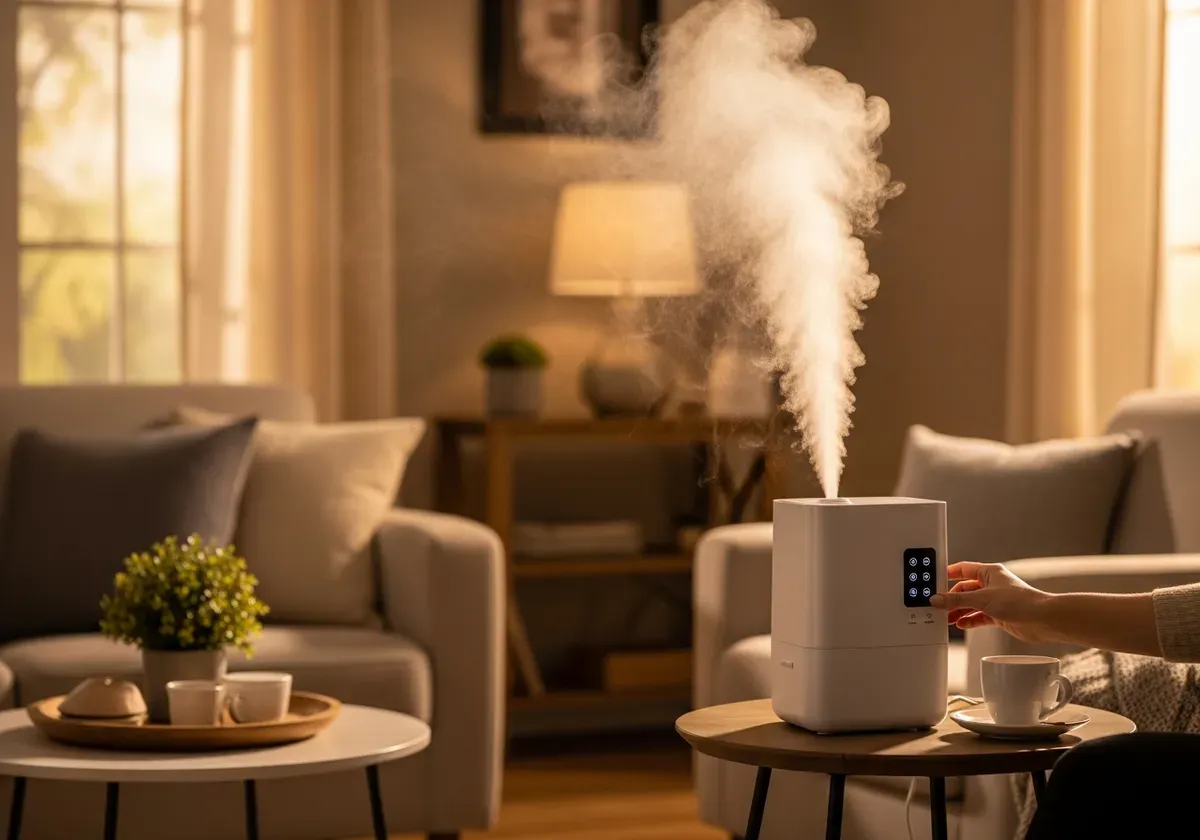
Simple Methods to Add Moisture
Place shallow bowls of water near heat registers or radiators. As air warms, water evaporates and adds moisture to your space. Refill daily and clean bowls weekly to prevent bacterial growth. Air-dry laundry indoors on a drying rack instead of using the dryer, which vents moisture outdoors.
Houseplants release moisture through transpiration, though you'd need many plants to significantly impact whole-home humidity. Leave your bathroom door open after showering to let moisture distribute throughout your home. Simmer water on the stovetop while you're home and awake (never leave unattended).
These methods work best for mild dryness or single rooms. Whole-home solutions require mechanical humidification when heating systems drop RH below 30% consistently.
Choosing and Using a Humidifier Safely
Cool-mist humidifiers are safer for homes with older adults since they eliminate burn risks from hot water or steam. Ultrasonic models operate quietly and efficiently, though they require distilled water to prevent white dust from mineral deposits. Evaporative humidifiers use fans to blow air through wet wicks, naturally limiting output to prevent over-humidification.
Size your humidifier to your space: small units (1-2 gallon tanks) for bedrooms, larger units (3-6 gallons) for living areas. Place humidifiers on waterproof surfaces away from walls and electronics to prevent moisture damage. Run them during waking hours when you can monitor operation, or choose models with automatic shut-off and built-in humidistats.
Clean humidifiers every three days with vinegar to prevent bacterial and mold growth. Replace filters according to manufacturer schedules. The Minnesota Department of Health recommends daily cleaning to prevent harmful microorganism growth, which can become airborne and cause respiratory problems.
Whole-Home Humidifier Systems
Furnace-mounted humidifiers integrate with your HVAC system to add moisture automatically during heating cycles. Bypass humidifiers are most common and cost $150-300 installed. They require annual maintenance (pad replacement, cleaning) but provide consistent whole-home humidification without refilling tanks.
These systems work well for homes with forced-air heating and chronic winter dryness. Professional installation ensures proper sizing and prevents over-humidification, which can cause condensation in ductwork or on windows. Set the humidistat to maintain 30-40% RH during winter, adjusting based on outdoor temperature to prevent window condensation.
Monitor your home for signs of excess moisture (window condensation, musty odors) even with automatic systems. Humidity needs change as outdoor temperatures fluctuate, so check settings monthly during heating season.
Controlling humidity between 30-50% creates a healthier, more comfortable home environment while protecting your space from moisture damage and excessive dryness. Start by measuring your current levels with a hygrometer, then use the simplest effective solution for your situation. Your respiratory system, your sleep quality, and your home's structure will all benefit from maintaining this moderate moisture range year-round.
Related Articles
- Best Indoor Air Quality Monitors: 2024 Buyer's Guide & Reviews
- Home Air Quality Monitoring System: Complete Setup Guide
- Indoor Air Quality Testing: Complete Guide to Testing Your Home
- 9 Science-Backed Air Purifier Benefits for Your Health & Home
- Best Air Purifiers for Home: 2024 Expert Reviews & Buyer's Guide
- Best Air Purifiers for Bedroom: Quiet & Effective 2024 Picks
Frequently Asked Questions
What's the difference between relative humidity and absolute humidity?
Relative humidity (RH) measures moisture as a percentage of the maximum amount air can hold at your current temperature, while absolute humidity measures the actual weight of water vapor in the air. RH is what matters for comfort and health because the same absolute humidity feels different at different temperatures—cold winter air at 30% RH feels drier than summer air at 30% RH.
Can humidity levels that are too low cause health problems?
Yes, humidity below 30% dries out your respiratory system's protective mucus layer, making you more susceptible to colds, sinus infections, and respiratory irritation. Low humidity also causes dry skin, chapped lips, and can worsen conditions like asthma and COPD, which is why winter months often bring increased illness.
How do I measure humidity in my home without buying a device?
While not precise, you can look for visual signs: condensation on windows suggests high humidity (above 50%), while static electricity, cracked wood furniture, and dry skin indicate low humidity (below 30%). For accurate readings, inexpensive digital hygrometers cost $10-20 and are widely available.
Why does my air conditioner not seem to be lowering humidity effectively?
Air conditioners remove some humidity, but they're not designed primarily for dehumidification. In very humid climates, you may need a dedicated dehumidifier running alongside your AC, or ensure your AC unit is properly sized and your home is well-sealed to prevent outside moisture from entering.
Is it safe to run a humidifier and dehumidifier at the same time?
No, running both simultaneously wastes energy and creates an unstable environment. Instead, use a humidifier in winter when heating dries the air, and switch to a dehumidifier in summer or humid seasons. Consider a whole-home humidification system connected to your HVAC for automatic seasonal control.
Can maintaining 30-50% humidity help reduce dust mites and allergies?
Yes, dust mites thrive above 50% humidity and struggle to reproduce below that level. Keeping humidity between 30-50% significantly reduces dust mite populations and their allergenic droppings, which is one of the most common indoor allergens.
What humidity level should I target if I have respiratory conditions like asthma or COPD?
The 30-50% range is still ideal, but consult your pulmonologist for personalized guidance. Some people with COPD find relief at slightly higher humidity (40-50%) to keep airways moist, while others prefer the lower end to prevent mold growth that could trigger symptoms.
Why does condensation on my windows indicate a humidity problem?
Condensation forms when warm, moist indoor air contacts cold window glass, indicating humidity is likely above 50%. This trapped moisture can damage window frames and sills, promoting mold growth. Reducing indoor humidity to 30-40% in winter prevents this damage while maintaining comfort.