Home Air Quality Testers: Types, Accuracy & Buying Guide
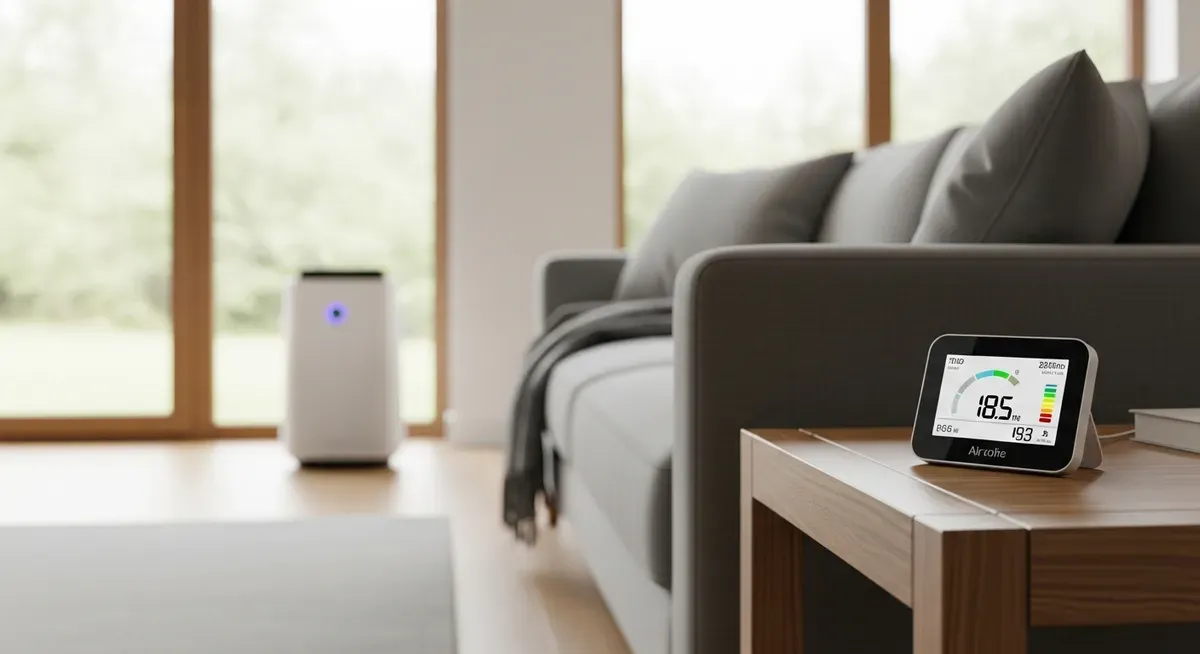
Home air quality testers measure pollutants like PM2.5, VOCs, carbon dioxide, radon, and formaldehyde, giving you numeric data about what you're breathing instead of just guessing based on stuffiness or dust. Consumer monitors typically cost $100-$300 and track multiple pollutants simultaneously, while single-purpose devices like radon test kits focus on one specific threat. The accuracy of consumer devices varies significantly, with most providing useful trend data rather than laboratory-grade precision, but that's usually enough to identify problems and verify whether your air purifier or ventilation changes are working.
Table of Contents
- Understanding Home Air Quality Testers: What They Measure and Why It Matters
- Key Pollutants and Their Health Impact
- How Air Quality Monitors Actually Work
- Types of Home Air Quality Testers: From Basic to Professional-Grade
- Single-Pollutant Test Kits and Detectors
- Multi-Sensor Air Quality Monitors
- Professional and Laboratory-Grade Equipment
- Accuracy Reality Check: What Consumer Monitors Can and Can't Do
- Understanding Accuracy Specifications and Certifications
- Factors That Affect Monitor Performance
- When to Trust Your Monitor vs. Calling Professionals
- Buying Guide: Choosing the Right Air Quality Tester for Your Needs
- Matching Monitor Type to Your Specific Situation
- Must-Have Features vs. Marketing Hype
- Budget Considerations and Long-Term Costs
Understanding Home Air Quality Testers: What They Measure and Why It Matters
Air quality monitors are electronic devices that use sensors to detect and measure specific pollutants floating in your indoor air. Unlike the vague sense that your home feels stuffy, these testers provide actual numbers, telling you whether your PM2.5 levels are at 8 μg/m³ (excellent) or 45 μg/m³ (concerning). Most consumer devices measure three to six different pollutants simultaneously and display results on a screen or smartphone app.
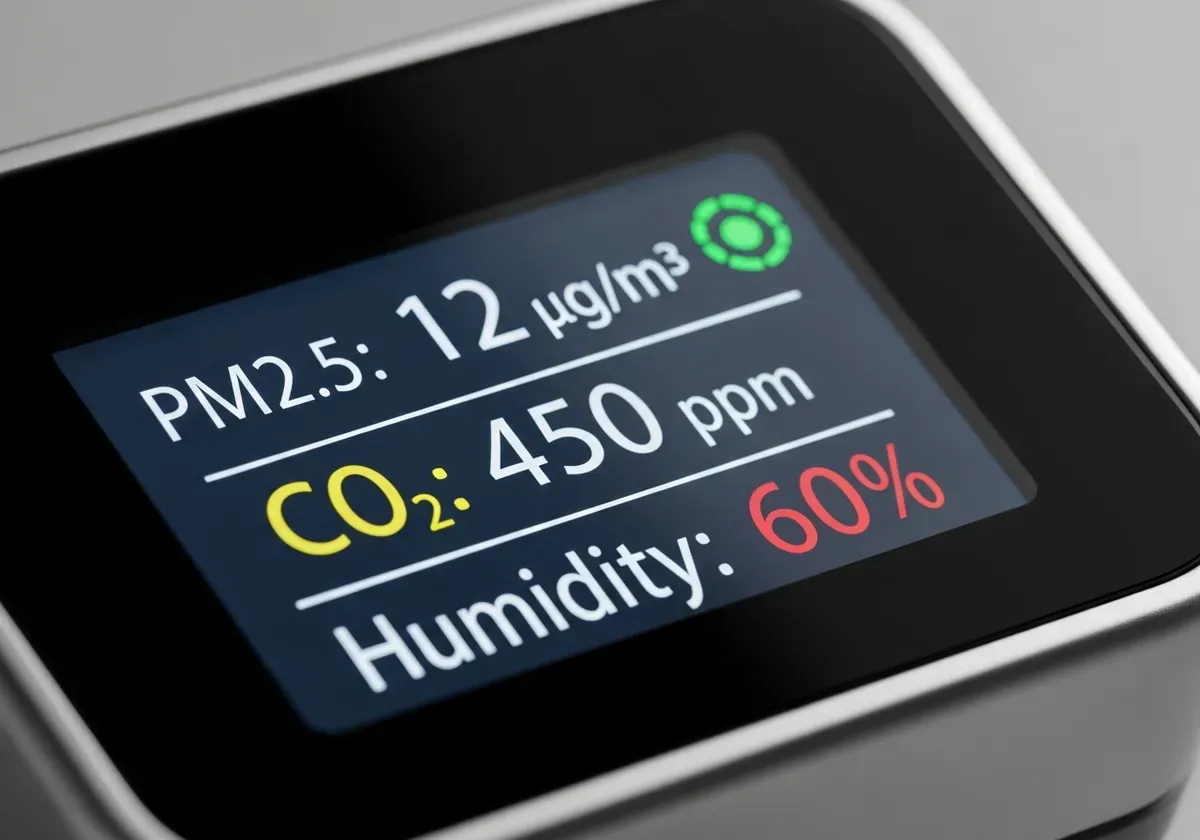
The measurement matters because indoor air pollutants can reach concentrations 2-5 times higher than outdoor levels (according to the EPA), yet you spend roughly 90% of your time indoors. Without measurement, you're making decisions about air purifiers, ventilation, and cleaning routines based on guesswork rather than evidence.
Key Pollutants and Their Health Impact
Particulate matter, specifically PM2.5 (particles smaller than 2.5 micrometers), consists of tiny solid and liquid droplets that penetrate deep into your lungs and even enter your bloodstream. These particles come from cooking smoke, candles, fireplaces, outdoor pollution that seeps indoors, and even vigorous vacuuming that kicks up settled dust. Research suggests keeping PM2.5 below 12 μg/m³ for long-term health, though many homes sit between 15-40 μg/m³.
Volatile organic compounds (VOCs) are gases released from paints, cleaning products, new furniture, air fresheners, and building materials. VOC concentrations indoors typically measure 2-5 times higher than outdoor air (according to the EPA), and levels can spike to 1,000 times normal during activities like painting or using strong cleaners. Common symptoms of elevated VOC exposure include headaches, dizziness, and respiratory irritation.
Carbon dioxide (CO2) isn't toxic at typical indoor levels, but concentrations above 1,000 ppm indicate inadequate ventilation, meaning other pollutants are likely building up too. Well, you might also notice difficulty concentrating or feeling drowsy in rooms where CO2 climbs above 1,500 ppm, even though the gas itself isn't causing direct harm at these levels.
Radon is a radioactive gas seeping up from soil that causes lung cancer, it's the leading cause of lung cancer among non-smokers (according to the EPA). You can't smell or see radon, which is why testing is the only way to know your exposure. The EPA recommends taking action if levels reach 4 pCi/L or higher.
Formaldehyde off-gases from pressed-wood products, certain fabrics, and some insulation materials. It irritates eyes and airways, and long-term exposure to elevated levels raises cancer risk.
How Air Quality Monitors Actually Work
Most consumer monitors use optical particle counters for PM2.5 and PM10, these shine a laser through air and count particles based on how they scatter light. The technology works reasonably well for tracking trends, though accuracy decreases with very small or very large particles.
VOC sensors in consumer devices typically use metal oxide semiconductors that change electrical resistance when exposed to organic compounds. These sensors detect total VOCs rather than identifying specific chemicals, and they can't distinguish between harmless compounds and concerning ones. Professional equipment uses photoionization detectors (PID) that provide more accurate VOC identification.
CO2 sensors use non-dispersive infrared (NDIR) technology that measures how much infrared light carbon dioxide molecules absorb. These sensors are generally reliable in consumer devices and require minimal calibration compared to other sensor types.
"Consumer-grade sensors have improved dramatically, but they still measure proxies rather than direct pollutant concentrations," says Dr. Brent Stephens, Professor of Architectural Engineering at Illinois Institute of Technology and indoor air quality researcher. "A PM2.5 sensor detects light scattering from particles, then estimates mass concentration using assumptions about particle density and shape that may not match your actual indoor conditions."
Types of Home Air Quality Testers: From Basic to Professional-Grade
The market offers everything from $15 radon test kits to $2,000 professional monitors, and the right choice depends on what you're trying to detect and how much precision you need. Single-pollutant testers excel at specific threats, multi-sensor monitors provide convenient overview tracking, and professional equipment delivers courtroom-ready accuracy.

Home Air Quality Tester Types: Features & Best Use Cases
| Monitor Type | Cost Range | Pollutants Measured | Accuracy Level | Best For |
|---|---|---|---|---|
| Single-Pollutant Test Kits | $20-$100 | One specific pollutant (radon, formaldehyde, etc.) | Moderate to high | Identifying one specific concern; radon screening; budget-conscious testing |
| Multi-Sensor Air Quality Monitors | $100-$300 | 3-6 pollutants simultaneously (PM2.5, VOCs, CO2, formaldehyde, radon) | Moderate (trend data rather than lab-grade precision) | Comprehensive home monitoring; tracking air purifier effectiveness; identifying multiple pollution sources |
| Professional/Laboratory-Grade Equipment | $500+ | All pollutants with specialized sensors | High (laboratory precision) | Detailed diagnostics; professional remediation planning; scientific research |
Understanding what types of testers exist helps identify which pollutants you should prioritize monitoring in your home.
Common Indoor Air Pollutants: Health Impact & Safe Levels
| Pollutant | Primary Sources | Health Effects | Safe/Recommended Level |
|---|---|---|---|
| PM2.5 | Cooking smoke, candles, fireplaces, outdoor pollution, vacuuming | Penetrates lungs and bloodstream; long-term respiratory and cardiovascular damage | Below 12 μg/m³ (typical homes: 15-40 μg/m³) |
| Volatile Organic Compounds (VOCs) | Paints, cleaning products, new furniture, air fresheners, building materials | Headaches, dizziness, respiratory irritation | 2-5x higher indoors than outdoors; can spike to 1,000x normal during painting/cleaning |
| Carbon Dioxide (CO2) | Human respiration, inadequate ventilation | Not toxic at typical levels; difficulty concentrating and drowsiness above 1,500 ppm | Below 1,000 ppm (indicates adequate ventilation) |
| Radon | Seeps up from soil and foundation cracks | Leading cause of lung cancer in non-smokers; colorless and odorless | Below 4 pCi/L (EPA action level) |
| Formaldehyde | Pressed-wood products, certain fabrics, some insulation | Eye and airway irritation; elevated cancer risk with long-term exposure | No official EPA indoor limit; minimize exposure |
Single-Pollutant Test Kits and Detectors
Radon test kits remain the most reliable way to check for this radioactive gas because radon-specific testing has been standardized for decades. Short-term charcoal canisters ($15-$30) sit in your basement for 2-7 days, then you mail them to a lab for analysis. Long-term alpha track detectors ($25-$50) provide more accurate annual average readings over 90+ days. Electronic radon monitors ($120-$200) give continuous readings, which is helpful but honestly overkill unless you're actively mitigating radon and want to verify results.
Carbon monoxide detectors are safety devices, not air quality monitors, they only alarm when CO reaches dangerous levels (typically 70+ ppm). Every home needs these near sleeping areas, but they won't help you understand overall air quality.
Formaldehyde test kits ($30-$80) use passive collection badges that absorb formaldehyde over several days before lab analysis. These work well for identifying off-gassing from new furniture or construction materials, situations where multi-sensor monitors often lack the sensitivity to detect formaldehyde specifically.
Multi-Sensor Air Quality Monitors
Consumer monitors in the $100-$400 range typically track PM2.5, VOCs, CO2, temperature, and humidity, the core measurements that reveal most common air quality issues. Devices like these update readings every few minutes and display trends over hours or days, helping you connect air quality changes to specific activities like cooking or opening windows.
The accuracy trade-off in this price range is real. PM2.5 readings might vary ±15-20% compared to professional reference equipment, and VOC sensors respond to total compounds rather than identifying specific chemicals. For most homes, this accuracy level works fine for answering questions like "is my air purifier making a difference" or "does opening windows help more than running the bathroom fan."
Look, the main limitation is sensor lifespan, most VOC and particle sensors drift over 2-3 years, meaning the monitor that read accurately when new might show increasingly questionable numbers after extended use. Few manufacturers offer affordable sensor replacement programs.
Professional and Laboratory-Grade Equipment
Professional monitors ($500-$2,000+) use higher-quality sensors with documented calibration and often provide data logging suitable for legal or insurance documentation. These devices typically measure additional parameters like PM10, PM1.0, specific VOC compounds, and sometimes mold spore counts.
You'd consider professional testing or equipment when you need defensible data, pre-purchase home inspections, suspected mold problems requiring remediation quotes, documenting indoor air quality for health insurance claims, or verifying contractor work after renovation. Professional indoor air quality assessments typically cost $300-$800 depending on the scope, and they include interpretation alongside raw measurements.
Renting professional equipment ($75-$150 per week) makes sense for temporary monitoring during specific events like testing different HVAC configurations or documenting seasonal variation in radon levels.
According to the EPA's 2023 guidance on indoor air quality investigations, professional-grade particulate monitors using light-scattering technology can detect PM2.5 concentrations with accuracy within ±10% when compared to federal reference methods, while consumer devices typically show variance of 20-50%. The American Industrial Hygiene Association reports that certified indoor air quality professionals use calibrated equipment traceable to NIST standards, with sensors recalibrated every 6-12 months to maintain measurement integrity—a maintenance schedule that costs $200-$400 annually per instrument. Research published in Building and Environment (2022) found that professional assessments identified pollution sources missed by consumer monitors in 67% of homes tested, particularly for formaldehyde off-gassing and specific VOC signatures that require laboratory analysis rather than field sensors.
Accuracy Reality Check: What Consumer Monitors Can and Can't Do
Consumer air quality monitors provide useful trend data and relative comparisons, but they're not laboratory instruments. Understanding their limitations helps you interpret readings appropriately and know when to escalate to professional testing instead of trusting a device that cost less than a good air purifier filter.
Understanding Accuracy Specifications and Certifications
When a manufacturer claims ±10% accuracy for PM2.5, that means a true reading of 20 μg/m³ might display anywhere from 18 to 22 μg/m³. This precision works fine for knowing whether your air is "good" (under 12 μg/m³) versus "concerning" (over 35 μg/m³), but it's insufficient for verifying compliance with specific regulatory standards.
Third-party certifications provide some confidence in consumer devices. EPA recognition for radon detectors confirms they meet specific performance standards. RESET Air certification verifies that monitors meet accuracy requirements and undergo regular calibration. ISO 16000 standards govern testing methods for indoor air pollutants, though few consumer devices undergo this level of validation.
Cheaper devices under $100 often lack any independent verification, their sensors may respond to the target pollutant, but you're trusting the manufacturer's calibration without outside confirmation. These budget monitors can still show relative changes (readings going up or down), even if the absolute numbers are questionable.
To be fair, even expensive consumer monitors rarely publish detailed accuracy specifications across the full measurement range. A device might be accurate at moderate pollution levels but increasingly unreliable at very low or very high concentrations.
Factors That Affect Monitor Performance
Temperature and humidity influence sensor readings significantly. VOC sensors particularly drift in high humidity, sometimes showing elevated readings simply because bathroom moisture affects the metal oxide semiconductor. Most quality monitors compensate for temperature and humidity in their algorithms, but extreme conditions (below 40°F or above 95°F, humidity above 85%) can still throw off measurements.
Placement matters enormously.
Monitors placed directly next to air purifier exhaust or heating vents will show artificially good or bad readings. Position your monitor in a central location at breathing height (3-6 feet off the floor), away from direct airflow, at least 3 feet from windows or doors.
Sensor age degrades accuracy gradually. Optical particle sensors accumulate dust on their optics over months, leading to inflated PM2.5 readings. VOC sensors lose sensitivity over time, eventually under-reporting pollution levels. Consumer devices rarely include calibration reminders or sensor replacement programs, so a three-year-old monitor may be giving you increasingly fictional data.
When to Trust Your Monitor vs. Calling Professionals
Consumer monitors excel at ongoing awareness and verifying interventions. Use them to check whether your new air purifier actually reduces PM2.5, whether opening windows during certain hours improves or worsens indoor air, or whether your kitchen range hood effectively removes cooking pollutants. The trend data over days and weeks reveals patterns that matter more than absolute accuracy.
Call professionals when you need documentation or face persistent health symptoms despite reasonable air quality readings. Pre-purchase home inspections should include professional radon testing and may warrant VOC assessment if the home has recent renovations. Suspected mold problems require professional air sampling that identifies specific species and spore counts, consumer monitors can't do this.
If family members experience ongoing respiratory symptoms, headaches, or allergic reactions that seem connected to indoor air but your monitor shows acceptable readings, professional testing can identify pollutants your consumer device doesn't measure, specific VOC compounds, biological contaminants, or particulates outside the PM2.5 range.
Legal or insurance documentation requires professionally calibrated equipment with certified operators. Your $200 consumer monitor won't satisfy requirements for documenting workplace air quality, proving contractor negligence, or supporting health-related insurance claims.
I watched my daughter's nighttime coughing worsen over three months while my air quality monitor consistently showed PM2.5 levels around 8 μg/m³—well within the safe range. A professional indoor air quality assessment revealed elevated levels of specific mold spores (which my monitor couldn't detect) coming from a hidden leak behind our bathroom wall. That $400 professional test found what my $180 monitor was never designed to measure, and finally explained why her symptoms persisted despite what looked like clean air on my device.
Buying Guide: Choosing the Right Air Quality Tester for Your Needs
Start by identifying which pollutants matter most in your specific situation, then match monitor capabilities to those priorities. A $150 monitor that measures your actual concerns beats a $400 device loaded with sensors you don't need.
Matching Monitor Type to Your Specific Situation
Homes built before 1990 warrant radon testing first, especially if you have a basement or live in regions with known radon issues (check EPA radon zone maps). Start with an inexpensive short-term test kit, then invest in continuous radon monitoring only if initial results show levels above 2 pCi/L.
New construction or recent renovations make VOC monitoring a priority because fresh paint, new flooring, cabinets, and furniture off-gas formaldehyde and other compounds for weeks or months. Choose a monitor with specific formaldehyde detection if you've installed laminate flooring or pressed-wood cabinets.
Urban locations with outdoor air pollution should prioritize accurate PM2.5 monitoring. Your indoor levels will track outdoor pollution closely unless you maintain positive pressure with filtered ventilation. Monitors with outdoor air quality integration help you decide when opening windows helps versus when you should keep them closed and run air purifiers.
Homes with gas stoves, fireplaces, or attached garages need carbon monoxide detection (basic safety detectors) plus monitors that track PM2.5 and CO2 to reveal combustion byproduct issues before they reach dangerous levels.
Well, if you're mainly concerned about verifying air purifier performance or HVAC effectiveness, a basic multi-sensor monitor tracking PM2.5, VOCs, and CO2 covers the essential measurements without unnecessary complexity.
Must-Have Features vs. Marketing Hype
Essential features include a clear display showing current readings without requiring an app, you should be able to glance at the device and understand your air quality immediately. Numeric values matter more than vague color-coded lights because you need to know whether PM2.5 is at 8 μg/m³ or 18 μg/m³, not just "green" versus "yellow."
Historical data tracking (at minimum 24-48 hours) helps identify patterns and verify changes after interventions. Smartphone apps add convenience but shouldn't be mandatory, devices that only display data through apps become useless when WiFi fails or smartphones age out of compatibility.
Configurable alerts let you set thresholds for specific pollutants. A monitor that beeps when PM2.5 exceeds 25 μg/m³ or CO2 climbs above 1,200 ppm helps you respond to problems in real-time rather than discovering them hours later in historical data.
Battery backup or portable operation matters if you want to test air quality in different rooms or take measurements to a second home. Monitors requiring constant AC power limit your flexibility.
Skip the hype around "AI-powered analysis" and "predictive algorithms", these features rarely add value beyond basic threshold alerts. Similarly, integration with smart home systems sounds convenient but often proves unreliable as platforms change. Built-in air purifiers in some monitors are universally too small to clean meaningful air volumes.
Budget Considerations and Long-Term Costs
The $50-$100 tier gets you basic PM2.5 and VOC monitoring with questionable accuracy and no certifications. These devices work for rough awareness but expect readings to drift over time and don't trust absolute numbers.
Spending $100-$250 brings meaningful improvements in sensor quality, calibration, and feature completeness. Most homes find good value here, accurate enough for decision-making about air purifiers and ventilation, with multi-pollutant tracking and reasonable longevity.
The $250-$400 range adds better VOC sensors that distinguish between compound types, more accurate PM2.5 detection, formaldehyde-specific sensors, and typically better build quality that extends useful lifespan. Consider this tier if you have specific health concerns or need to monitor multiple pollutants accurately.
Above $400, you're entering professional territory with diminishing returns for typical home use unless you need documented accuracy or are monitoring a home-based business with air quality requirements.
Long-term costs remain minimal for most monitors, they don't require replacement filters or consumables. However, sensor drift means you're effectively renting accuracy that degrades over 2-4 years. Few manufacturers offer sensor replacement services, so plan on the entire device becoming a rough estimator rather than an accurate instrument after several years.
Subscription services for cloud data storage or advanced analytics rarely justify their cost for home use. The data your monitor collects locally provides everything you need for managing indoor air quality.
"The dirty secret of low-cost air quality monitors is sensor drift—most lose accuracy within two to three years of continuous operation," says Dr. Delphine Farmer, atmospheric chemist and Professor at Colorado State University. "Without regular calibration against reference instruments, you're increasingly measuring relative changes rather than absolute concentrations, which limits their usefulness for comparing conditions across time or between locations."
Related Articles
- Best Indoor Air Quality Monitors: 2024 Buyer's Guide & Reviews
- How to Test Air Quality in Your Home: DIY & Professional Methods
- Professional Air Quality Testing Near Me: What to Expect & Cost
- Home Air Quality Monitoring System: Complete Setup Guide
- Indoor Air Quality Testing: Complete Guide to Testing Your Home
- 9 Science-Backed Air Purifier Benefits for Your Health & Home
Frequently Asked Questions
How accurate are home air quality testers compared to professional equipment?
Consumer air quality monitors provide useful trend data rather than laboratory-grade precision, which is usually sufficient to identify problems and verify whether improvements like air purifiers are working. For definitive measurements or health-critical decisions, professional testing is recommended, but consumer devices are accurate enough for most household monitoring needs.
What's the difference between single-pollutant test kits and multi-sensor monitors?
Single-pollutant test kits (like radon kits) focus on detecting one specific threat and are often more affordable and specialized, while multi-sensor monitors track 3-6 different pollutants simultaneously for a comprehensive view. Choose single-pollutant kits if you have a specific concern, or multi-sensor monitors if you want to monitor overall indoor air quality.
What PM2.5 level should I aim for in my home?
Research suggests keeping PM2.5 below 12 μg/m³ for long-term health, though many homes typically sit between 15-40 μg/m³. If your readings consistently exceed 35 μg/m³, consider using an air purifier or improving ventilation to reduce particulate matter.
Why is indoor air quality testing important if I can't see pollutants?
The EPA reports that indoor air pollutants can reach concentrations 2-5 times higher than outdoor levels, yet most people spend about 90% of their time indoors. Without measurement, you're making decisions about air purifiers and ventilation based on guesswork rather than actual data about what you're breathing.
How much should I expect to spend on a home air quality tester?
Consumer air quality monitors typically cost $100-$300 and track multiple pollutants simultaneously, while single-purpose devices like radon test kits are usually more affordable. Your budget should match your specific needs—basic single-pollutant testing costs less than comprehensive multi-sensor monitoring.
What does a CO2 reading above 1,000 ppm mean for my home?
CO2 levels above 1,000 ppm indicate inadequate ventilation, meaning other pollutants are likely building up as well. If CO2 climbs above 1,500 ppm, you may also experience difficulty concentrating or drowsiness, which signals you need to improve air circulation through ventilation.
Why can't I detect radon without testing?
Radon is a colorless, odorless radioactive gas that seeps up from soil, so you cannot smell or see it—testing is the only way to know your exposure. The EPA recommends taking action if radon levels reach 4 pCi/L or higher, as radon is the leading cause of lung cancer among non-smokers.
How do optical particle counters in air quality monitors measure PM2.5?
Optical particle counters shine a laser through the air and count particles based on how they scatter light, which works reasonably well for tracking trends. However, accuracy decreases with very small or very large particles, so these monitors are better for monitoring changes over time than for precise absolute measurements.