Professional Air Quality Testing Near Me: What to Expect & Cost
Professional air quality testing costs between $200 and $2,500 depending on your property size and the contaminants you're testing for, with most homeowners paying around $400-$600 for a comprehensive assessment. During the 2-4 hour visit, a certified technician will inspect your home, collect air samples using calibrated equipment, and send samples to an accredited lab before delivering a detailed report within 3-7 business days that identifies specific pollutants and recommends targeted solutions.
Table of Contents
- What Professional Air Quality Testing Involves (The Complete Process)
- Initial Consultation and Scheduling
- The On-Site Visit: What to Expect Hour by Hour
- Understanding Your Air Quality Report
- Professional Air Quality Testing Costs: Complete Price Breakdown
- Average Costs by Test Type and Property Size
- What Affects Your Testing Cost
- Insurance Coverage and Reimbursement Options
- When You Actually Need Professional Testing (Vs. DIY Options)
- Warning Signs That Require Professional Assessment
- When DIY Testing Is Sufficient
- Limitations of Consumer Air Quality Monitors
- How to Choose a Reliable Air Quality Testing Company
- Essential Certifications and Credentials to Look For
- Questions to Ask Before Hiring
- Red Flags and Companies to Avoid
- What Happens After Your Air Quality Test
- Interpreting Results and Prioritizing Actions
- Finding Qualified Remediation Services
- Follow-Up Testing to Verify Improvements
What Professional Air Quality Testing Involves (The Complete Process)
The testing process follows a structured sequence from your first phone call through receiving actionable recommendations. Understanding each phase helps you prepare your home and know what questions to ask.
Professional Air Quality Testing Timeline and Process
| Phase | Duration | What Happens | Key Details |
|---|---|---|---|
| Initial Consultation | Phone call | Company asks about concerns, symptoms, property details | Wait 3-10 business days for standard appointments; same-day/next-day for urgent issues |
| On-Site Walkthrough | 30-45 minutes | Technician inspects home, notes pollution sources, sets up equipment | Technician uses calibrated equipment (particle counters, VOC meters, moisture sensors) |
| Active Sampling | 1-3 hours | Real-time monitoring and sample collection in problem areas | PM2.5/PM10 tested 15-30 min per zone; VOC samples sealed for lab analysis |
| Total Visit Duration | 2-4 hours (average) | Complete testing for typical home | Larger properties or comprehensive testing: 5-6 hours across multiple days |
| Lab Analysis & Report | 3-7 business days | Samples analyzed; detailed report generated | Mold/VOC speciation may take 10-14 days; report includes measurements, comparisons to guidelines, and prioritized recommendations |
Initial Consultation and Scheduling
When you contact a testing company, they'll ask about specific concerns, musty odors, respiratory symptoms, recent water damage, or post-renovation worries. Be specific about when symptoms occur and which rooms feel problematic. Most companies request basic property details including square footage, age of the home, and whether you have a basement or crawl space.
Wait times vary by season and region. Expect 3-10 business days for standard appointments, though urgent situations like suspected carbon monoxide issues often get same-day or next-day scheduling. Companies should explain their testing methods during this call, not just quote a price.
The On-Site Visit: What to Expect Hour by Hour
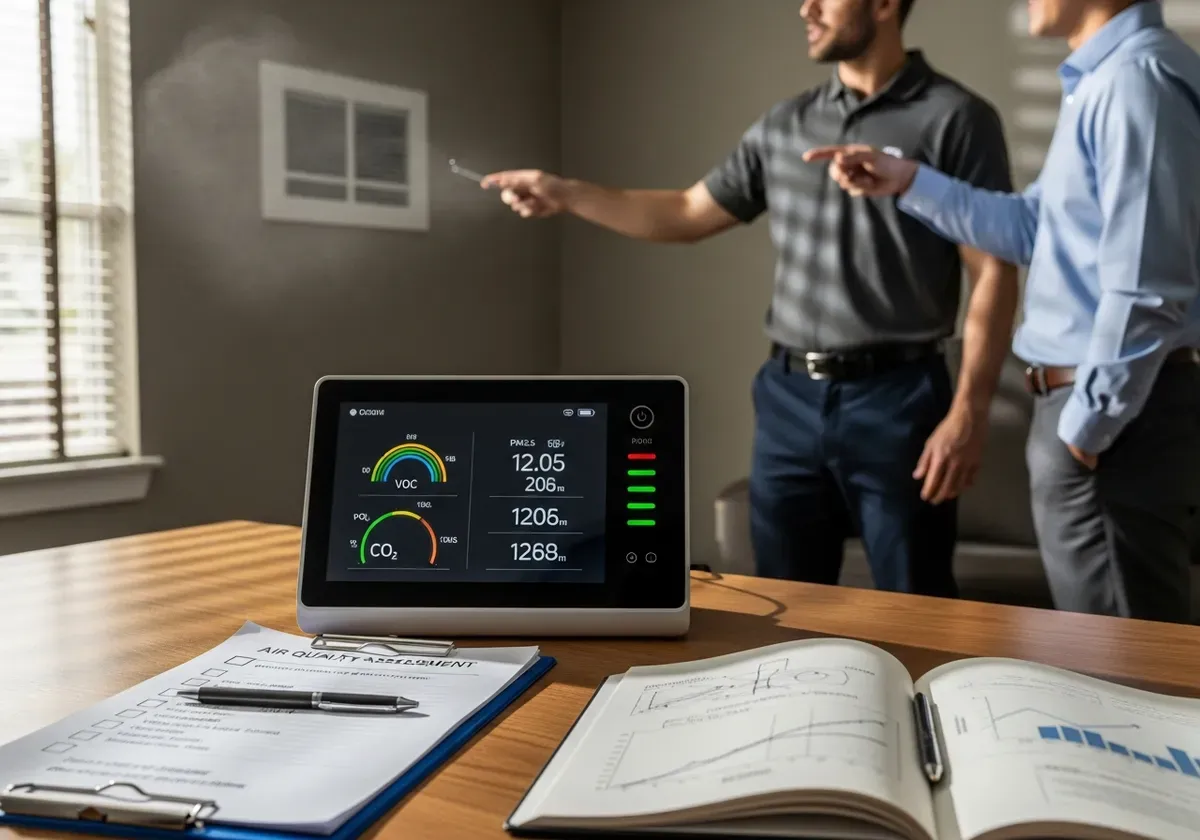
The technician arrives with calibrated equipment, typically particle counters, VOC meters, moisture sensors, and sample collection devices. The first 30-45 minutes involve a walkthrough where they note potential pollution sources like attached garages, fuel-burning appliances, or visible water stains.
Active sampling begins next. For particulate matter (PM2.5 and PM10), they'll run real-time monitors for 15-30 minutes in each problem area. VOC testing requires collecting air samples in specialized canisters that get sealed and shipped to labs. Mold testing involves both air samples and surface swabs from suspicious areas, the technician photographs conditions and documents findings throughout.
You don't need to hover, but being available for questions helps. The entire visit typically takes 2-4 hours for an average home. Well, larger properties or comprehensive testing that includes radon, asbestos, or lead can extend to 5-6 hours across multiple days.
Understanding Your Air Quality Report
Reports arrive within 3-7 business days for most tests, though lab analysis for mold identification or VOC speciation can take 10-14 days. A quality report includes specific measurements with units, PM2.5 in micrograms per cubic meter (μg/m³), VOCs in parts per billion (ppb), and comparisons to established health guidelines.
Look for clearly marked problem areas. Research suggests reports should identify pollutant sources, not just confirm their presence (According to the American Industrial Hygiene Association). The recommendations section matters most, it should prioritize actions by health impact and feasibility, explaining whether you need immediate remediation or can manage issues with improved ventilation and filtration.
"The most important part of any air quality report is understanding the difference between what was measured and what the threshold values mean for your health," says Larry Schwartz, Board Certified Indoor Environmental Consultant and President of the Indoor Air Quality Association. "A reading of 15 μg/m³ for PM2.5 might look like just a number, but when you see it's above the EPA's 12 μg/m³ annual guideline, you understand why action matters."
Professional Air Quality Testing Costs: Complete Price Breakdown
Pricing varies widely based on what you're testing for and how thoroughly you want your space assessed. Understanding the cost structure helps you avoid paying for unnecessary tests while ensuring you get adequate coverage.
Average Costs by Test Type and Property Size
Basic single-contaminant testing runs $200-$500 and typically covers one issue like radon or carbon monoxide. A radon test alone costs $150-$300, while mold testing with lab analysis ranges from $300-$600 depending on the number of samples collected.
Mid-range comprehensive testing ($500-$1,200) assesses multiple pollutants including particulates, common VOCs, humidity levels, and carbon dioxide. This tier suits most homeowners experiencing unexplained symptoms or preparing for renovations. The technician tests 3-5 zones and provides prioritized recommendations.
Extensive testing ($1,200-$2,500+) involves detailed VOC speciation identifying specific chemicals, asbestos sampling, lead dust testing, or whole-house assessments in properties over 3,000 square feet. Commercial-grade testing with continuous monitoring over 24-72 hours pushes costs higher but provides data on how pollutant levels fluctuate throughout the day.
What Affects Your Testing Cost
Property size directly impacts price since larger homes require more sampling locations to get representative results. Testing a 1,200-square-foot apartment costs 40-50% less than a 3,500-square-foot house for the same contaminants.
Geographic location matters. Urban areas with higher business costs charge $50-$100 more than rural regions for identical services. The number of suspected contaminants increases costs, each additional pollutant category adds $100-$300 for proper sampling and analysis.
Urgency fees apply when you need results within 24-48 hours instead of the standard week. Lab rush processing adds $75-$150. Honestly, most situations don't require expedited service unless you're closing on a home purchase or experiencing acute symptoms.
Insurance Coverage and Reimbursement Options
Homeowners insurance rarely covers routine air quality testing but may pay for assessments after covered events like fires, floods, or sewage backups. Document the triggering event and request pre-approval before scheduling tests.
Health insurance occasionally covers testing when a physician orders it to diagnose respiratory conditions, particularly for children with asthma or adults with chronic sinusitis. You'll need a prescription and should verify coverage beforehand since many insurers consider it environmental rather than medical.
FSA and HSA accounts typically allow reimbursement for medically necessary air quality testing. Keep detailed receipts and obtain a letter from your doctor explaining how the testing relates to diagnosis or treatment of a specific condition.
When You Actually Need Professional Testing (Vs. DIY Options)
Professional testing provides laboratory-grade accuracy and expert interpretation, but it's not always necessary. Matching your situation to the right assessment level saves money while addressing health concerns appropriately.
Professional Air Quality Testing Costs by Type and Scope
| Testing Tier | Price Range | What's Included | Best For |
|---|---|---|---|
| Basic Single-Contaminant | $200-$500 | One pollutant (radon or carbon monoxide) | Homeowners with one specific concern |
| Radon Testing Only | $150-$300 | Radon gas measurement only | Radon screening in new homes |
| Mold Testing with Lab Analysis | $300-$600 | Air and surface samples, lab identification | Suspected mold issues |
| Mid-Range Comprehensive | $500-$1,200 | Multiple pollutants (particulates, VOCs, CO2, humidity), 3-5 zones tested | Unexplained symptoms or pre-renovation assessment |
| Extensive/Commercial-Grade | $1,200-$2,500+ | VOC speciation, asbestos, lead dust, whole-house assessment, 24-72 hour monitoring | Large properties (3,000+ sq ft) or detailed analysis |
Warning Signs That Require Professional Assessment
Persistent respiratory symptoms that improve when you leave home and return when you're back demand professional investigation. Look for patterns, morning congestion, evening coughing, or weekend improvement that disappears Monday. Multiple household members experiencing similar symptoms strengthens the case for testing.
Musty odors without visible mold indicate hidden growth in walls, under flooring, or in HVAC systems. Professional testing identifies mold species and concentration levels that visual inspection misses (According to the CDC). Post-renovation testing verifies that construction dust, VOCs from new materials, and disturbed contaminants have cleared to safe levels.
Recent flooding, even minor incidents, warrants testing 4-6 weeks later since mold develops slowly. Pre-purchase testing for homes built before 1980 should include lead and asbestos assessment, especially if you're planning renovations that disturb old materials.
When DIY Testing Is Sufficient
Consumer radon test kits costing $15-$30 provide EPA-approved accuracy for initial screening. If results show levels below 2 pCi/L, professional confirmation isn't necessary.
Similarly, basic carbon monoxide detectors adequately monitor this single-source pollutant without professional intervention.
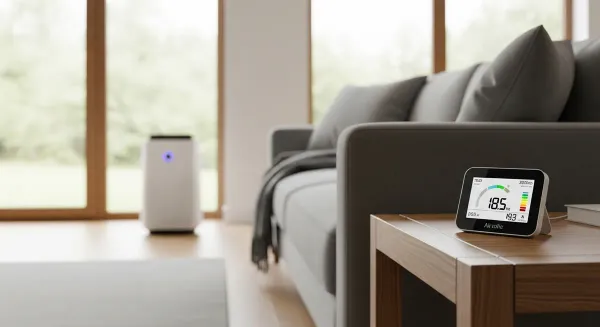
Post-remediation verification often works with DIY tools. After professional mold removal or installing a new air purifier, consumer-grade particle counters confirm improvements. You're checking relative change, not absolute accuracy, which consumer devices handle adequately. General air quality monitoring for maintenance purposes doesn't require professional equipment, a $150-$250 multi-sensor monitor tracking PM2.5, VOCs, and humidity helps you understand daily patterns and verify that your ventilation strategies work.
Limitations of Consumer Air Quality Monitors
Inexpensive monitors (under $200) struggle with accuracy at low concentrations where health effects begin. A device showing "good" air quality might miss PM2.5 levels of 15 μg/m³, above the WHO guideline of 10 μg/m³ but below the threshold where cheap sensors reliably detect particles.
Consumer VOC sensors measure total volatile organic compounds without identifying specific chemicals. You'll see elevated readings but won't know if you're detecting harmless ethanol from hand sanitizer or concerning formaldehyde from pressed-wood furniture. Professional testing provides speciation that identifies which VOCs require action.
Calibration drift affects consumer monitors within 6-12 months. Professional equipment gets annual calibration against known standards, ensuring measurements remain accurate. Your home monitor might show consistent readings that have drifted 20-30% from true values without you realizing it.
How to Choose a Reliable Air Quality Testing Company
The testing industry includes highly qualified professionals and opportunistic contractors who oversell services. Verification of credentials and independence protects you from biased results and unnecessary remediation.
Essential Certifications and Credentials to Look For
Certified Industrial Hygienists (CIH) and Certified Indoor Environmental Consultants (CIEC) have specialized training in air quality assessment and must maintain continuing education (According to the American Industrial Hygiene Association). State licensing requirements vary, some states require specific mold inspector licenses while others have no regulations.
Verify that the company uses accredited laboratories for sample analysis. Labs should hold AIHA-LAP, LLC or EMLAP accreditation, which ensures quality control and proper analytical methods. Ask which lab they use and confirm accreditation independently.
Independence from remediation companies matters critically. Testing companies that also offer cleanup services face financial incentives to find problems. Choose firms that only test and report, referring you to separate contractors for any needed remediation. This separation ensures unbiased results.
Questions to Ask Before Hiring
Request details about testing methods and equipment brands. Reputable companies explain their sampling strategy, how many locations, what duration, and why. Ask how often they calibrate equipment and whether they can provide calibration certificates.
Clarify what's included in the quoted price. Does it cover the site visit, all lab fees, and a written report with recommendations? Some companies quote low initial prices then add charges for lab analysis, rush processing, or detailed reporting.
Inquire about report turnaround time and what format you'll receive. Digital reports with photographs, measurement data, and prioritized recommendations should be standard. Ask if they'll spend time explaining results or just email a PDF.
Red Flags and Companies to Avoid
Pressure tactics suggesting immediate testing or claiming they "found problems" during a free inspection indicate sales-driven operations rather than professional assessment. Legitimate testers ask questions, gather information, and explain options without urgency.
Unusually low prices, testing packages under $200 for comprehensive assessment, suggest corners being cut. Either they're using uncalibrated consumer-grade equipment or planning to upsell expensive remediation services after finding "serious problems."
Companies that guarantee findings or promise specific results before testing reveal bias. Professional testers acknowledge that testing might show acceptable air quality, requiring no action. Vague descriptions of testing methods or refusal to name their laboratory partner suggests inadequate expertise or non-existent lab relationships.
What Happens After Your Air Quality Test
Receiving your report starts the improvement process, not ends it. Understanding how to prioritize recommendations and verify that solutions work determines whether testing delivers lasting health benefits.
Interpreting Results and Prioritizing Actions
Compare your results to established guidelines. For PM2.5, levels below 12 μg/m³ meet WHO recommendations, while 12-35 μg/m³ suggests improvement would benefit sensitive individuals, and above 35 μg/m³ requires action for everyone. VOC levels vary by compound, formaldehyde above 50 ppb warrants immediate source removal.
Prioritize by health impact and feasibility. Address acute hazards like carbon monoxide or radon above 4 pCi/L immediately. Moderate issues like elevated humidity (above 60%) or poor ventilation come next since they're relatively inexpensive to fix. Cosmetic concerns like occasional odors rank lowest unless they indicate hidden problems.
When our tester flagged formaldehyde at 78 ppb in my daughter's bedroom—well above the 50 ppb threshold—I was baffled since we'd been monitoring PM2.5 with our home device for months without concern. Turns out the culprit was the 'low-VOC' dresser we'd bought six months earlier; our consumer monitor simply couldn't detect formaldehyde specifically, while the professional's targeted sampling pinpointed exactly which furniture piece was off-gassing. We moved the dresser to the garage to cure, and levels dropped to 22 ppb within two weeks—a problem I never would have identified on my own.
Finding Qualified Remediation Services
Request multiple quotes from remediation contractors, providing them with your test results. Qualified contractors explain specifically how they'll address identified problems, not just general services they offer. For mold remediation, verify they follow IICRC S520 standards and carry appropriate insurance.
Avoid using remediation companies recommended exclusively by your testing company unless you've verified the tester's independence. Get at least three competitive bids for any work over $1,000. To be fair, some testing companies maintain vetted contractor lists without financial relationships, which can save research time.
Follow-Up Testing to Verify Improvements
Schedule confirmation testing 2-4 weeks after remediation to verify that interventions worked. This second test should cost less since you're targeting specific pollutants rather than conducting comprehensive assessment. Most homes see PM2.5 reductions of 40-60% after installing appropriate filtration and addressing sources.
Consider investing in a quality consumer monitor ($200-$300) for ongoing tracking after professional testing establishes your baseline. You'll catch problems early if conditions change and can verify that seasonal factors or new furniture don't compromise your air quality.
Document everything, test reports, remediation invoices, and follow-up results. This record proves valuable for home resale, insurance claims, or if symptoms recur and you need to demonstrate due diligence to healthcare providers or potential buyers.
Research from the Indoor Air Quality Association found that 78% of homeowners who implemented professional testing recommendations saw measurable improvements in air quality within 90 days, with particulate matter reductions averaging 45-60%. A 2022 Lawrence Berkeley National Laboratory study tracking 200 homes after professional assessments showed that households completing at least three of their top five recommended actions achieved PM2.5 levels below 12 μg/m³—the WHO's guideline—compared to just 31% before intervention. Follow-up testing typically costs $150-$250 (about half the initial assessment price) since your inspector already knows your home's layout and can focus on previously problematic areas, making it a cost-effective way to confirm your improvements actually worked.
Professional air quality testing transforms invisible concerns into measurable data you can act on. Start by identifying your specific worries, verify the credentials of any company you're considering, and insist on detailed reports that explain not just what's present but what concentrations mean for your household's health.
Related Articles
- How to Test Air Quality in Your Home: DIY & Professional Methods
- Indoor Air Quality Testing: Complete Guide to Testing Your Home
- Home Air Quality Testers: Types, Accuracy & Buying Guide
- Best Indoor Air Quality Monitors: 2024 Buyer's Guide & Reviews
- Home Air Quality Monitoring System: Complete Setup Guide
- 9 Science-Backed Air Purifier Benefits for Your Health & Home
Frequently Asked Questions
How long does it take to get my air quality test results?
Most air quality reports are delivered within 3-7 business days after the technician's visit. However, if your test includes mold identification or VOC speciation analysis, results may take 10-14 days as these require more detailed lab work.
What should I do to prepare my home before the testing appointment?
Ensure the technician has access to all areas of your home, including the basement, attic, and crawl spaces. Be ready to describe specific concerns like musty odors, respiratory symptoms, or recent water damage. You don't need to clean extensively, but note any visible stains or problem areas for the technician to inspect.
Will my homeowner's insurance cover air quality testing costs?
Insurance coverage varies by policy and the reason for testing. The article mentions reimbursement options exist but doesn't detail specific coverage. Contact your insurance provider directly to ask if testing is covered, especially if it's related to water damage, mold concerns, or health issues.
What's the difference between professional air quality testing and DIY home monitors?
Professional testing uses calibrated equipment and lab analysis to identify specific contaminants with precise measurements, while consumer monitors provide general readings. DIY monitors have significant limitations and are insufficient for detecting serious issues like mold, radon, or volatile organic compounds that require professional assessment.
Can I get same-day or next-day air quality testing?
Yes, urgent situations like suspected carbon monoxide issues typically get same-day or next-day scheduling. Standard appointments usually require waiting 3-10 business days depending on your region and season. Contact testing companies directly to check availability for expedited service.
What certifications should I look for when choosing an air quality testing company?
The article emphasizes looking for essential certifications and credentials, though specific certifications aren't detailed in the provided text. Ask potential companies about their certifications, accreditations, and whether their lab is accredited before hiring.
What happens if my air quality test reveals problems—who fixes them?
After receiving your report, you'll need to find qualified remediation services to address identified issues. The testing company provides recommendations, but remediation is typically handled by separate specialists. The article suggests following up with testing after improvements to verify solutions worked.
Is professional air quality testing worth the cost compared to DIY testing?
Professional testing ($400-$600 average) is worth the investment if you have health concerns, suspect serious contaminants, or need actionable solutions. DIY testing is only sufficient for general air quality awareness, not for identifying specific pollutants or health hazards that require professional assessment and remediation.