Best Indoor Air Quality Monitors: 2024 Buyer's Guide & Reviews
Indoor air quality monitors measure pollutants in your home, including particulate matter (PM2.5), volatile organic compounds (VOCs), carbon dioxide (CO2), and radon, so you can identify problems before they affect your health. The best monitors display readings clearly without requiring smartphone apps, measure the pollutants most relevant to your situation, and cost between $150 and $300 for reliable accuracy. This guide reviews five top-performing monitors and explains how to choose one that matches your specific concerns, whether that's allergies, respiratory conditions, or simply understanding what you're breathing.
Table of Contents
- Why Indoor Air Quality Monitoring Matters for Your Health
- Common Indoor Air Pollutants and Their Health Effects
- Who Benefits Most from Air Quality Monitoring
- Our Top 5 Indoor Air Quality Monitors for 2024
- Best Overall: Airthings View Plus
- Best for Radon Detection: Airthings Corentium Home
- Best Budget Option: Temtop M2000
- Easiest to Use: Davis Instruments AirLink
- Best for Comprehensive Testing: IQAir AirVisual Pro
- What to Look for When Buying an Air Quality Monitor
- Essential vs. Nice-to-Have Features
- Display and Usability Considerations
- Accuracy and Certification Standards
- How to Use Your Air Quality Monitor Effectively
- Where to Place Your Monitor for Accurate Readings
- Understanding Your Readings: What Levels Mean
- Taking Action Based on Your Readings
- Common Questions About Indoor Air Quality Monitors
- How accurate are consumer air quality monitors compared to professional equipment?
- Do I need WiFi or a smartphone app to use an air quality monitor?
- How often do air quality monitors need calibration or sensor replacement?
- Can air quality monitors detect mold?
- Will an air quality monitor help if I have allergies or asthma?
- Improving Your Indoor Air Quality: Next Steps
Why Indoor Air Quality Monitoring Matters for Your Health
Your indoor air likely contains more pollutants than the air outside. Research shows indoor pollutant levels run 2 to 5 times higher than outdoor levels, and occasionally exceed outdoor air by more than 100 times (EPA). Since most people spend approximately 90 percent of their time indoors, the air inside your home has an outsized impact on your respiratory health, sleep quality, and overall wellbeing.

Monitoring gives you visibility into an otherwise invisible problem. Without measurement, you're guessing whether your stuffiness stems from seasonal allergies, dust accumulation, or elevated VOCs from that new furniture.
Common Indoor Air Pollutants and Their Health Effects
PM2.5 refers to particulate matter smaller than 2.5 micrometers, tiny enough to bypass your nose's natural filters and lodge deep in your lungs. These particles come from cooking, candles, fireplaces, and outdoor air that seeps inside. Exposure causes respiratory irritation and can aggravate asthma or COPD.
VOCs are gases released from paints, cleaning products, new carpets, and pressed-wood furniture. Concentrations typically measure 2 to 5 times higher indoors than outdoors (EPA). Short-term exposure triggers headaches and throat irritation, while long-term exposure can damage your liver and kidneys.
Carbon dioxide builds up in poorly ventilated spaces, causing drowsiness and difficulty concentrating at levels above 1,000 parts per million. Radon, a radioactive gas that seeps through foundation cracks, causes approximately 21,000 lung cancer deaths annually and is the leading cause of lung cancer among non-smokers (EPA). Humidity below 30 percent dries out mucous membranes, while levels above 60 percent encourage mold growth.
Who Benefits Most from Air Quality Monitoring
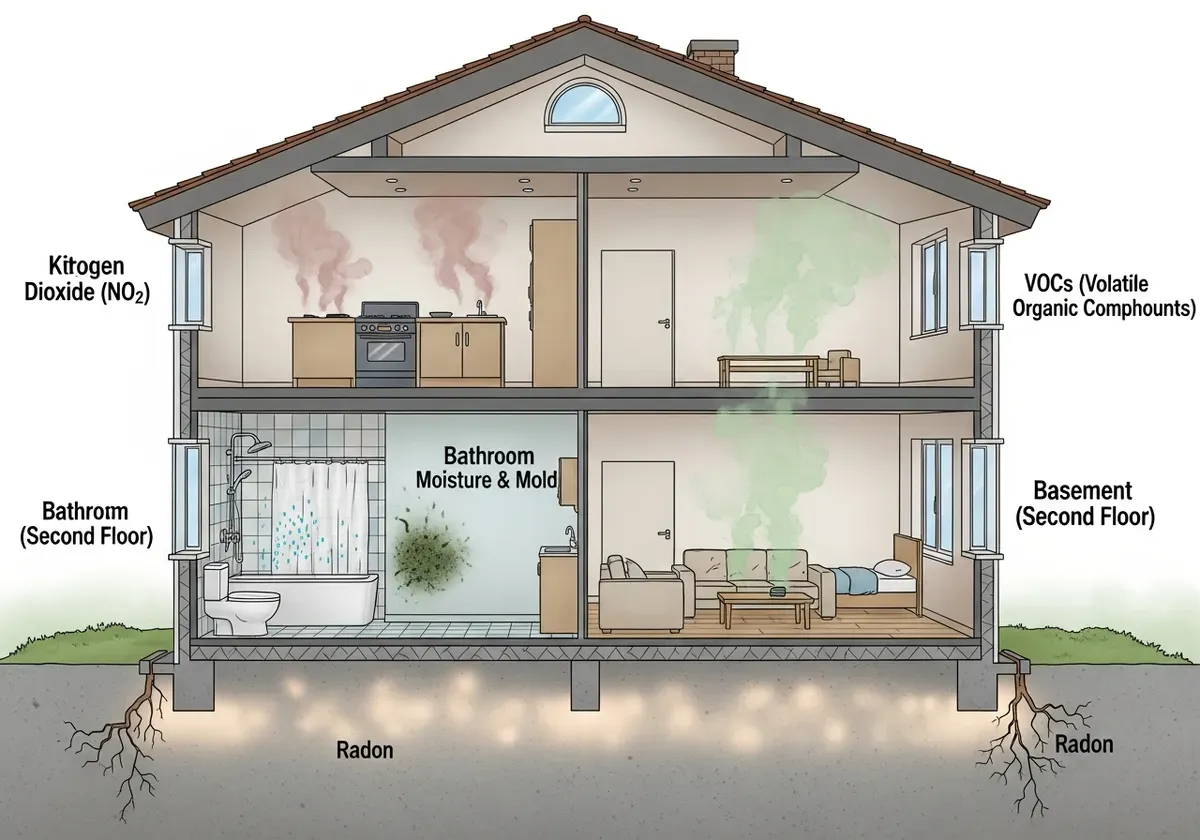
You'll gain the most value from monitoring if you have asthma, allergies, or COPD, conditions where air quality directly affects symptom severity. Recent home renovations release elevated VOCs for months afterward, and monitoring helps you know when levels return to normal. Homes with gas stoves produce nitrogen dioxide during cooking, and basements are prone to radon accumulation.
Well, monitoring also makes sense if you're simply waking up congested without an obvious cause. A monitor transforms "something feels off" into actionable data. You might discover your bedroom CO2 climbs above 1,500 ppm overnight, explaining that groggy feeling, or that your PM2.5 spikes every time you cook.
Our Top 5 Indoor Air Quality Monitors for 2024
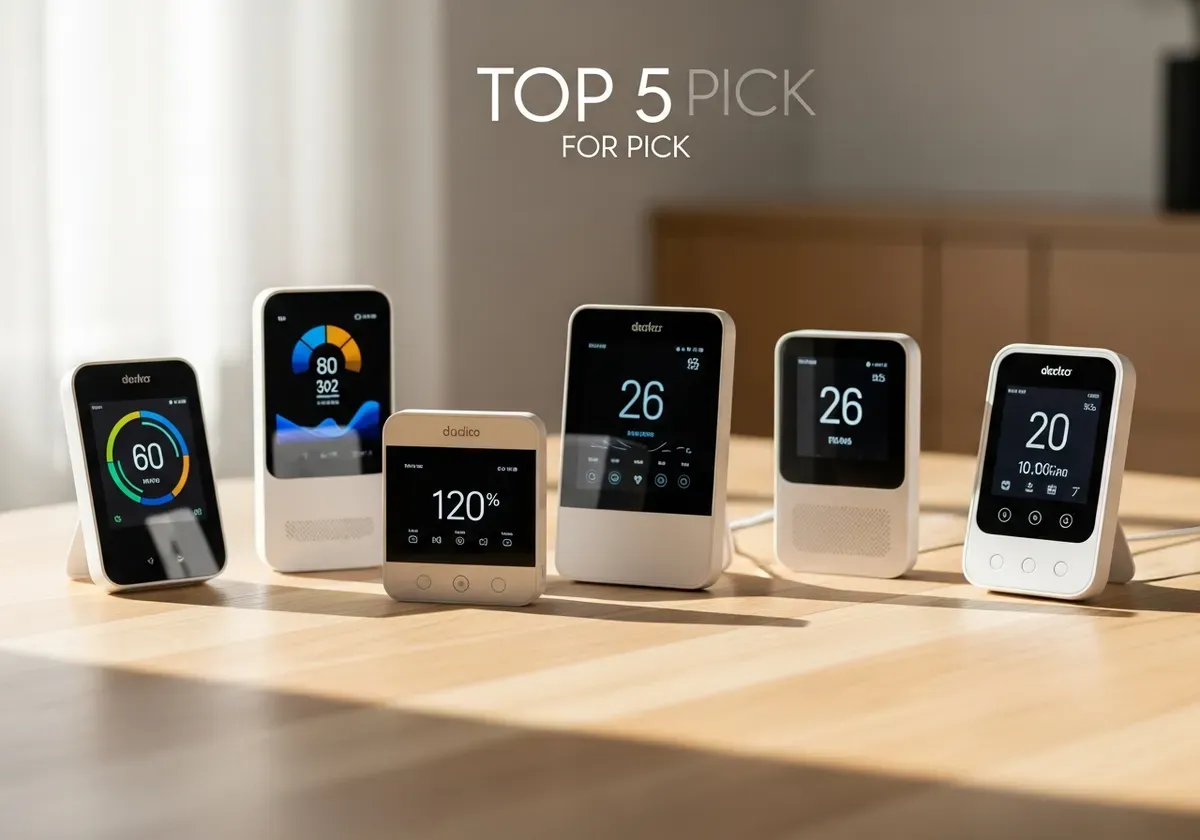
These recommendations prioritize display readability, measurement accuracy, and ease of setup. Each monitor serves a different primary need rather than attempting to be everything to everyone.
Common Indoor Air Pollutants: Health Effects and Safe Levels
| Pollutant | Source | Health Effects | Safe Level / Concern Threshold |
|---|---|---|---|
| PM2.5 (Particulate Matter) | Cooking, candles, fireplaces, outdoor air seepage | Respiratory irritation, asthma/COPD aggravation, lung damage | 0-12 µg/m³ (Good) |
| VOCs (Volatile Organic Compounds) | Paints, cleaning products, new carpets, pressed-wood furniture | Short-term: headaches, throat irritation; Long-term: liver and kidney damage | 2-5x higher indoors than outdoors |
| Carbon Dioxide (CO2) | Human respiration, poor ventilation | Drowsiness, difficulty concentrating, impaired cognitive function | Below 1,000 ppm (Safe); Above 1,000 ppm (Concern) |
| Radon | Foundation cracks, seeps from soil | Lung cancer (21,000 deaths annually), leading cause of lung cancer in non-smokers | Below 2 pCi/L (Safe); Above 4 pCi/L (Action needed) |
| Humidity | Moisture from cooking, bathrooms, outdoor air | Below 30%: dry mucous membranes; Above 60%: mold growth | 30-60% (Optimal) |
Understanding these pollutants and their safe thresholds makes it essential to choose a monitor capable of detecting and measuring them accurately.
Indoor Air Quality Monitors Comparison: 2024 Top Models
| Monitor Model | Primary Strength | Key Measurements | Price Range | Display Type | WiFi Required |
|---|---|---|---|---|---|
| Airthings View Plus | Best Overall | PM2.5, VOCs, CO2, Radon, Humidity, Temperature, Air Pressure | $299 | Color E-Ink (No Cycling) | Optional |
| Airthings Corentium Home | Best for Radon Detection | Radon, CO2, Humidity, Temperature | $150-$200 | LCD Display | No |
| Temtop M2000 | Best Budget Option | PM2.5, PM10, CO2, HCHO, TVOC, Temperature, Humidity | $100-$150 | LCD Display | No |
| Davis Instruments AirLink | Easiest to Use | PM2.5, PM10, CO2, Temperature, Humidity | $200-$250 | Digital Display | Optional |
| IQAir AirVisual Pro | Best for Comprehensive Testing | PM2.5, PM10, CO2, VOCs, Temperature, Humidity | $250-$300 | OLED Display | Yes |
Best Overall: Airthings View Plus
The View Plus measures PM2.5, VOCs, CO2, radon, humidity, temperature, and air pressure for $299. Its color e-ink display shows all readings simultaneously without requiring you to cycle through screens, and the built-in battery means you can move it room-to-room without hunting for outlets.
Setup takes about three minutes, you scan a QR code, connect to WiFi, and readings appear within an hour (radon requires 24 hours for initial data). The optional smartphone app provides historical trends, but the display itself gives you everything needed for daily monitoring. Radon measurement accuracy meets EPA requirements.
Pros: Comprehensive pollutant coverage, excellent display readability, portable battery operation, reliable radon detection. Cons: Premium price point, requires WiFi for full functionality, radon sensor lifespan is approximately 5 years before requiring replacement.
I mounted my View Plus in our bedroom after noticing my partner's morning congestion worsened each winter—within two days, the radon reading climbed to 6.8 pCi/L (well above EPA's 4.0 action level), which explained nothing about the congestion but prompted a mitigation system that dropped us to 1.2 pCi/L. The CO₂ spike to 1,400 ppm by 3 AM, though, explained everything about the stuffy headaches—we now crack a window before bed, and the monitor confirmed levels stay below 800 ppm with that single change.
Best for Radon Detection: Airthings Corentium Home
If radon is your primary concern, particularly if you have a basement or live in a high-radon area, the Corentium Home focuses exclusively on radon measurement for $179. It provides both short-term (7-day) and long-term readings, helping you understand whether elevated levels are temporary or persistent.
The EPA recommends taking action if radon levels reach or exceed 4 picocuries per liter (pCi/L), and this monitor alerts you when readings cross that threshold. Battery-powered operation means you can place it anywhere without worrying about outlet access. No smartphone required, all data displays on the device itself.
Best Budget Option: Temtop M2000
The M2000 measures PM2.5, PM10, CO2, temperature, and humidity for $89. You sacrifice VOC detection and radon monitoring at this price point, but the core measurements remain accurate enough for home use. The backlit LCD screen shows real-time readings and 24-hour averages.
This monitor works best if your main concerns are particle pollution from cooking or poor ventilation leading to CO2 buildup. Setup is literally plug-and-go with no app installation or WiFi connection required. The rechargeable battery lasts about 6 hours, making it semi-portable.
Easiest to Use: Davis Instruments AirLink
The AirLink emphasizes simplicity with its large color-coded display, green for good air quality, yellow for moderate, red for poor. It measures PM2.5, temperature, and humidity for $199. There's no tiny text to squint at, no app required for basic operation, and setup involves plugging it in and waiting 15 minutes for calibration.
This monitor suits anyone who wants straightforward "is my air okay or not" information without diving into specific pollutant concentrations. The tradeoff is limited measurement range, you won't get VOC or CO2 data.
Best for Comprehensive Testing: IQAir AirVisual Pro
The AirVisual Pro measures PM2.5, CO2, temperature, humidity, and pulls outdoor air quality data for comparison, all displayed on a 5-inch touchscreen for $299. The outdoor comparison feature helps you decide whether opening windows will improve or worsen your indoor air. Historical graphing shows how your air quality changes throughout the day.
Setup requires WiFi connection and app installation, which adds complexity but enables features like air quality forecasting and integration with smart home systems. This monitor works best for data-oriented users who want to understand patterns rather than just current conditions.
What to Look for When Buying an Air Quality Monitor
Your decision should start with identifying which pollutants matter most for your situation, then finding a monitor that measures those specific contaminants accurately. Not every home needs every measurement.
Essential vs. Nice-to-Have Features
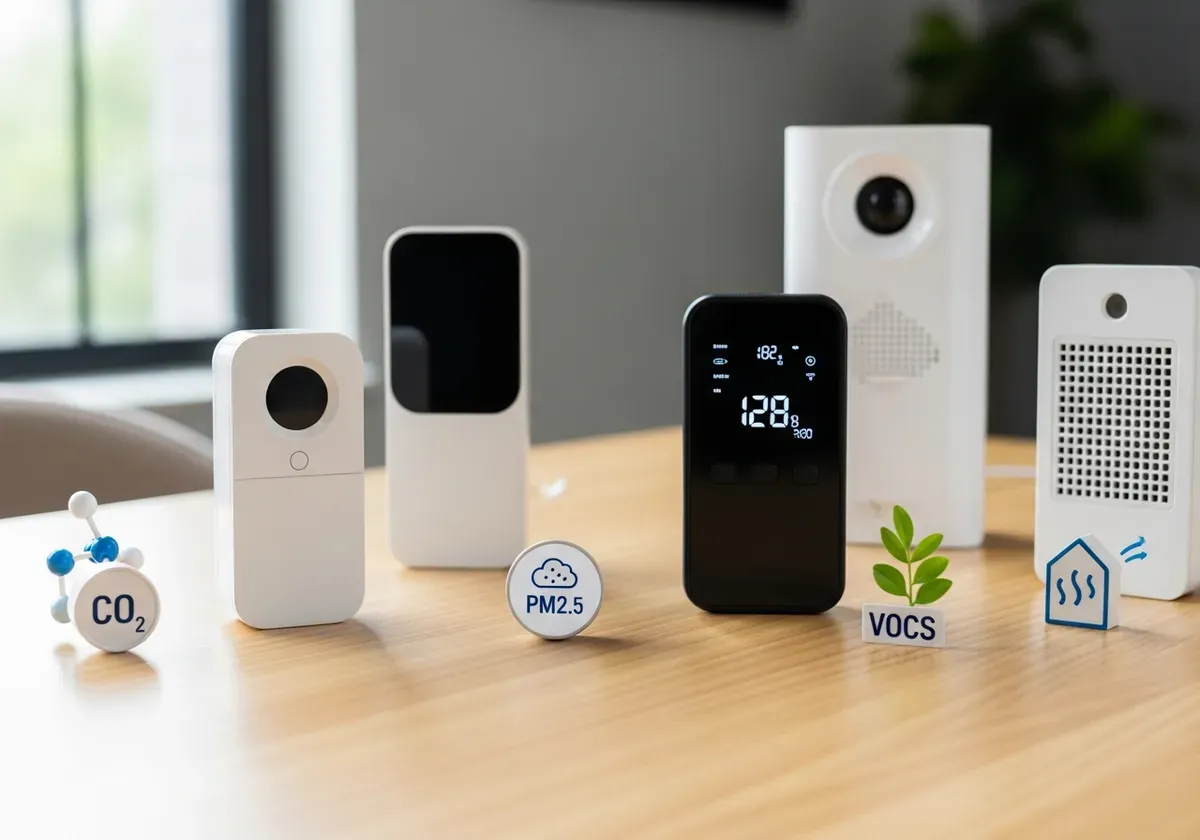
PM2.5 measurement is essential, it's the pollutant most directly linked to respiratory irritation and the one that varies most dramatically based on cooking, cleaning, and outdoor air infiltration. CO2 monitoring helps you identify ventilation problems, especially important in bedrooms where levels climb overnight. Humidity tracking prevents both the dry air that irritates sinuses and the dampness that encourages mold.
VOC detection becomes essential after renovations, new furniture purchases, or if you're sensitive to chemical odors. Radon monitoring matters primarily if you have a basement, live in a high-radon region, or haven't tested for radon in the past two years. Formaldehyde-specific detection is rarely necessary unless you've installed new pressed-wood cabinetry or flooring within the past six months.
Temperature measurement is nice to have but not critical for air quality decisions, you already know when your home feels too hot or cold.
Display and Usability Considerations
A monitor you can't easily read won't change your behavior. Look for displays at least 3 inches diagonal with backlit screens viewable from across the room. Color-coded indicators (green/yellow/red) let you assess air quality at a glance without interpreting numeric values.
Smartphone-dependent monitors create friction, you won't check readings as frequently if you need to open an app first. The best designs display current readings on the device itself while offering optional app access for historical trends. Audible alerts for concerning levels matter most for pollutants like CO that pose immediate health risks.
Battery operation adds flexibility for testing different rooms, but plug-in monitors eliminate the hassle of recharging. Consider whether you'll move the monitor regularly or leave it in one location.
Accuracy and Certification Standards
Consumer air quality monitors typically achieve accuracy within ±10-15% of professional-grade equipment for PM2.5 and CO2, sufficient for identifying problems in your home even if not laboratory-precise. Radon monitors should meet EPA performance standards, which require accuracy within 20% of actual levels.
Here's the thing: perfect accuracy matters less than consistent measurement. If your monitor reads 15% high consistently, you'll still notice when levels double. Look for monitors that specify their accuracy ranges in product documentation rather than making vague "professional-grade" claims without supporting data.
"For home use, you don't need research-grade precision—you need a device that can reliably tell you when levels change and when they're in a range that matters for health," says Dr. Brett Singer, Staff Scientist at Lawrence Berkeley National Laboratory's Indoor Environment Group.
How to Use Your Air Quality Monitor Effectively
Buying a monitor accomplishes nothing if you don't act on what it reveals. Effective monitoring means establishing baselines, identifying patterns, and making specific changes when readings indicate problems.
Where to Place Your Monitor for Accurate Readings
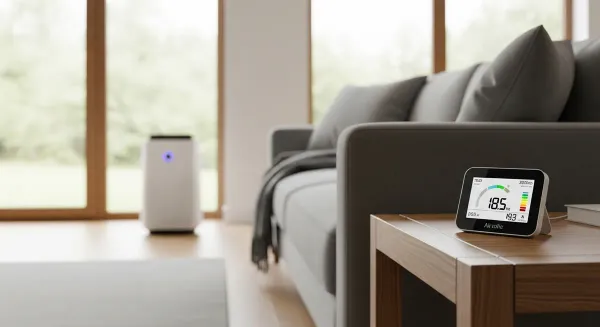
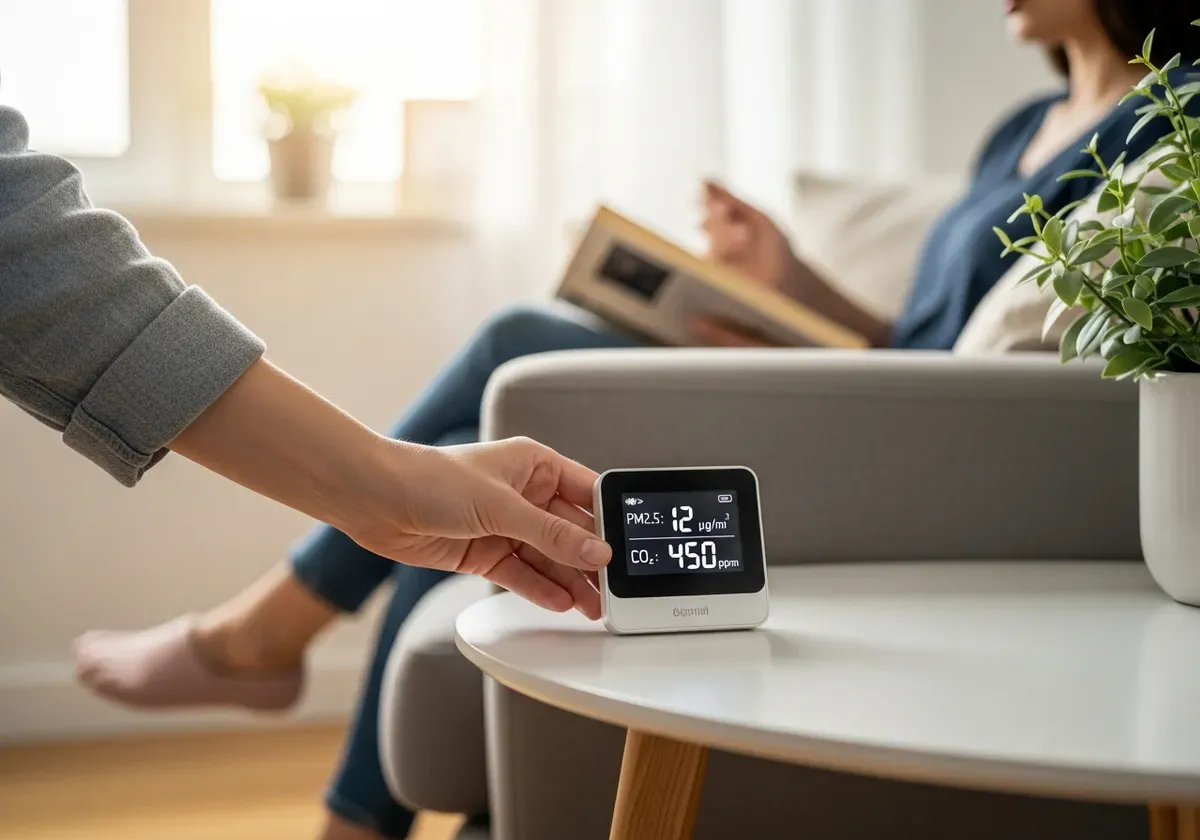
Start in your bedroom, you spend 6-8 hours there nightly, and poor air quality directly impacts sleep quality. Place the monitor on a nightstand or dresser at breathing height (3-6 feet off the floor), away from windows, doors, and air vents that create unrepresentative readings. Don't place monitors directly next to air purifiers, which create artificially low readings in their immediate vicinity.
After establishing bedroom baselines, move the monitor to living areas where you spend the most waking hours. Kitchens show dramatic PM2.5 spikes during cooking but aren't ideal for permanent placement since those spikes are temporary and expected. Basements warrant monitoring if you have finished living space below grade or if radon is a concern.
One monitor moved between rooms works fine for most homes. You'll learn each space's typical patterns within a week of monitoring.
Understanding Your Readings: What Levels Mean
PM2.5 below 12 μg/m³ is ideal, 12-35 μg/m³ is moderate, and above 35 μg/m³ indicates poor air quality that warrants action (opening windows if outdoor air is cleaner, running an air purifier, or identifying the source). CO2 below 1,000 ppm is comfortable, 1,000-2,000 ppm suggests inadequate ventilation, and above 2,000 ppm causes noticeable drowsiness and cognitive impairment.
Humidity should stay between 30-50% year-round. Below 30% dries out your respiratory system, while above 60% creates conditions for mold growth and dust mite proliferation. For radon, the EPA action level is 4 pCi/L, readings at or above this threshold require mitigation.
VOC readings are harder to interpret since monitors measure total VOCs rather than specific compounds. Look for patterns: if VOCs spike after using cleaning products or burning candles, you've identified the source. Baseline VOC readings vary by home, but sustained levels above 500 ppb warrant investigation.
Taking Action Based on Your Readings
Elevated PM2.5 usually responds to three interventions: running a HEPA air purifier, improving ventilation by opening windows (when outdoor air quality is good), or eliminating sources like candles or incense. High CO2 means your space needs more fresh air, open windows, run exhaust fans, or consider a mechanical ventilation system if the problem persists.
VOC reduction requires source control first: stop using the product causing the spike, increase ventilation during and after use, or switch to low-VOC alternatives. Air purifiers with activated carbon filters help, but removing the source works better. Radon above 4 pCi/L requires professional mitigation, DIY fixes don't work reliably.
Humidity problems need different solutions depending on direction. Low humidity responds to humidifiers or reducing air leakage that lets dry winter air infiltrate. High humidity needs dehumidifiers, bathroom/kitchen exhaust fans, or fixing moisture sources like basement seepage.
Common Questions About Indoor Air Quality Monitors
How accurate are consumer air quality monitors compared to professional equipment?
Consumer monitors typically measure within 10-20% of professional-grade equipment for PM2.5 and CO2, which is sufficient accuracy for home use. You're trying to identify problems and track whether interventions work, not conducting EPA compliance testing. The consistency of readings matters more than absolute precision, if your monitor shows PM2.5 doubling when you cook, that pattern remains valid even if the absolute numbers are slightly off.
Do I need WiFi or a smartphone app to use an air quality monitor?
Many quality monitors work standalone without WiFi or apps, displaying all essential information on built-in screens. App connectivity adds features like historical graphing, outdoor air quality comparison, and remote monitoring, but isn't required for effective use. Choose based on your preference: standalone if you want simplicity, app-enabled if you value data trends and remote access.
How often do air quality monitors need calibration or sensor replacement?
Most monitors require no user calibration, they're factory-calibrated and maintain accuracy for 3-5 years depending on the sensor type. Radon sensors typically last 5 years, while PM2.5 and CO2 sensors often function for 7-10 years. Check manufacturer specifications for your specific model. When sensors degrade, readings become erratic or the device displays error messages.
Can air quality monitors detect mold?
Monitors don't detect mold directly, but they measure conditions that promote mold growth, specifically humidity above 60%. Persistent high humidity readings indicate mold risk and warrant visual inspection of bathrooms, basements, and other moisture-prone areas. Some monitors measure VOCs that mold produces, but humidity remains the more reliable mold risk indicator.
Will an air quality monitor help if I have allergies or asthma?
Yes, particularly by revealing PM2.5 levels that trigger respiratory symptoms. You'll identify which activities (cooking, cleaning, burning candles) spike particle levels and can adjust accordingly. CO2 monitoring helps optimize ventilation, which dilutes allergens. However, monitors don't measure specific allergens like pollen or pet dander, they measure the particle pollution that often carries those allergens.
Improving Your Indoor Air Quality: Next Steps
Monitoring reveals problems, but solving them requires action. Start by addressing the highest or most frequent problem your monitor identifies. If PM2.5 regularly exceeds 35 μg/m³, invest in a HEPA air purifier sized appropriately for your room. If CO2 climbs above 1,500 ppm overnight, improve bedroom ventilation by cracking a window or running a bathroom exhaust fan.

Source control beats filtration when possible. If your monitor shows VOC spikes after cleaning, switch to fragrance-free products or increase ventilation during use. If humidity stays above 60%, fix the moisture source rather than just running a dehumidifier continuously.
Track changes after implementing solutions, that's where monitoring proves its value. Run your air purifier for a week and compare PM2.5 readings to pre-purifier levels. Open bedroom windows at night and check whether CO2 stays below 1,000 ppm. Monitoring transforms air quality improvement from guesswork into a measurable process.
A 2019 study published in Environmental Science & Technology found that homes using real-time air quality monitors reduced their average PM2.5 exposure by 32% within three months, compared to just 8% in homes without monitoring feedback. The researchers at the University of Colorado Boulder attributed this difference to what they called 'informed behavioral change'—people who could see their air quality data were three times more likely to adjust ventilation habits, replace furnace filters on schedule, and identify specific pollution sources like gas stoves or scented candles. Your monitor becomes most valuable not in the first week of ownership, but in the months that follow when you've built a baseline and can measure the real-world impact of each improvement you make.
Consider your monitor an ongoing diagnostic tool rather than a one-time test. Air quality changes with seasons, activities, and home modifications. Check readings weekly once you've established baselines, and investigate whenever you notice sustained changes from your typical patterns.
Related Articles
- Indoor Air Quality Testing: Complete Guide to Testing Your Home
- How to Test Air Quality in Your Home: DIY & Professional Methods
- Home Air Quality Testers: Types, Accuracy & Buying Guide
- Home Air Quality Monitoring System: Complete Setup Guide
- Best Air Purifiers for Home: 2024 Expert Reviews & Buyer's Guide
- 9 Science-Backed Air Purifier Benefits for Your Health & Home
Frequently Asked Questions
What's the difference between PM2.5 and other particulate matter, and why does size matter?
PM2.5 refers to particles smaller than 2.5 micrometers that are small enough to bypass your nose's natural filters and lodge deep in your lungs, causing respiratory irritation and aggravating conditions like asthma. Larger particles are typically filtered out by your nose and throat, making PM2.5 particularly harmful to your health.
How much should I expect to spend on a reliable indoor air quality monitor?
The sweet spot for reliable accuracy is between $150 and $300, which balances cost with dependable performance. Budget options exist below this range, but they may sacrifice accuracy or features, while premium models above $300 often add convenience features rather than significantly improved measurements.
Can I use an air quality monitor without a smartphone app or WiFi connection?
Yes, many monitors display readings directly on a built-in screen without requiring WiFi or apps. The article specifically notes that the best monitors display readings clearly without requiring smartphone apps, making them convenient for immediate reference and use in any room.
How often do I need to replace sensors or calibrate my air quality monitor?
The article mentions that sensors require periodic replacement and monitors need calibration, but specific intervals depend on the model and manufacturer recommendations. You should check your monitor's manual for maintenance schedules, as different sensors (PM2.5, CO2, radon) may have different lifespans.
Where should I place my air quality monitor for the most accurate readings?
The article indicates that placement location affects accuracy, with guidance provided in the 'Where to Place Your Monitor for Accurate Readings' section. Generally, monitors should be placed in the area where you spend the most time and away from direct sources of pollution to get representative readings of the air you're actually breathing.
Will monitoring my indoor air quality actually help reduce my allergy or asthma symptoms?
Monitoring alone doesn't reduce symptoms, but it provides the data needed to take action. By identifying triggers like PM2.5 spikes during cooking or elevated CO2 in bedrooms, you can make targeted improvements—such as better ventilation or air filtration—that directly address your specific air quality problems.
What CO2 levels should I be concerned about, and how does it affect me?
Carbon dioxide levels above 1,000 parts per million (ppm) cause drowsiness and difficulty concentrating. The article notes that bedroom CO2 can climb above 1,500 ppm overnight in poorly ventilated spaces, which may explain grogginess upon waking.
Can an indoor air quality monitor detect mold in my home?
While some monitors measure humidity levels (which contribute to mold growth when above 60 percent), they cannot directly detect mold itself. However, elevated humidity readings can alert you to conditions favorable for mold growth, prompting you to investigate and improve ventilation.