Where to Place Your Air Purifier: Room-by-Room Placement Guide
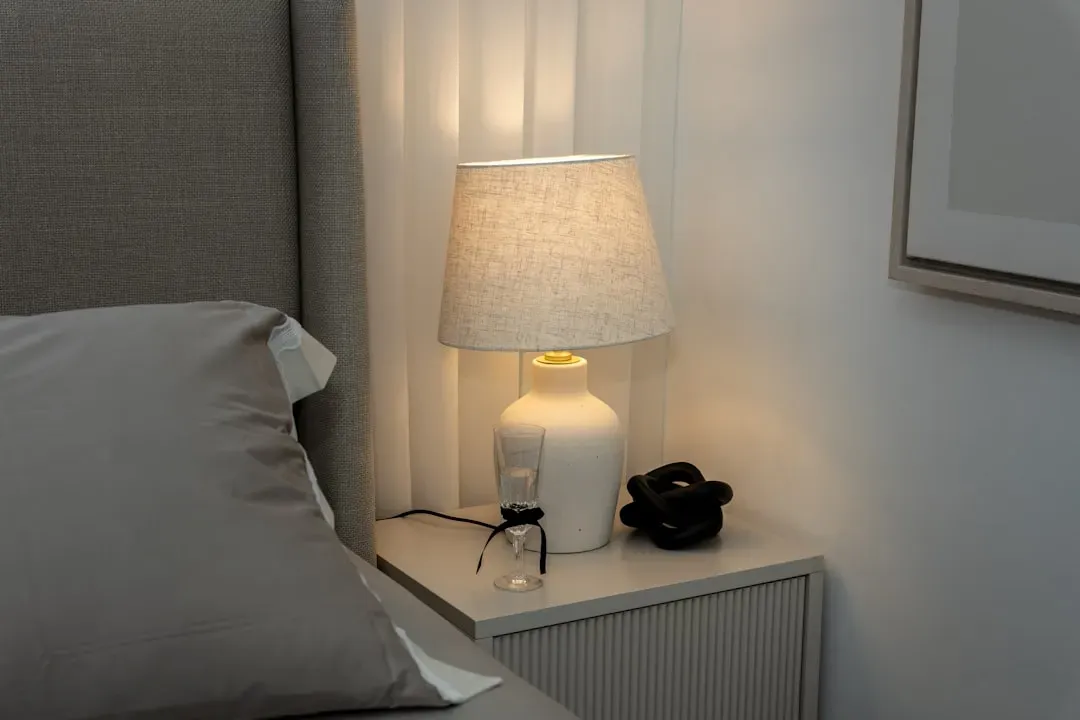
Place your air purifier 6-12 inches from walls in the room where you spend the most time, elevated 3-5 feet when possible, with clean airflow directed toward your breathing zone. The EPA confirms that air cleaners work best when positioned in spaces with the greatest need for air cleaning, but effectiveness drops significantly when units sit in corners, behind furniture, or too close to obstacles that block air intake and output. Your purifier pulls contaminated air through filters and expels cleaned air back into the room, so placement directly affects how well it circulates and processes the air you actually breathe.
Table of Contents
- How Air Purifier Placement Affects Performance and Safety
- The Science of Air Circulation and Purifier Effectiveness
- Universal Placement Rules for All Rooms
- Safety and Accessibility Considerations
- Bedroom Air Purifier Placement: Optimizing for Sleep Quality
- Best Bedroom Locations by Room Size
- Managing Noise and Light for Better Sleep
- Dealing with Limited Bedroom Space
- Living Room and Common Area Placement Strategies
- Balancing Central Placement with Furniture Arrangements
- High-Traffic and Open Concept Considerations
- Avoiding Electronics and Heat Sources
- Kitchen, Bathroom, and Special Purpose Room Placement
- Kitchen Placement for Cooking Odors and Particles
- Bathroom and Laundry Room Considerations
- Home Office and Nursery Specific Guidance
- Common Placement Mistakes and How to Correct Them
- The Corner Trap and How to Escape It
- Blocked Vents and Clearance Issues
- Running Too Many Units or Wrong-Sized Units
How Air Purifier Placement Affects Performance and Safety
Air purifiers create circulation patterns that either work with or against your room's natural airflow. When you position a unit centrally with adequate clearance, it pulls air from all directions, processes it through the filter, and pushes cleaned air outward in a cone-shaped pattern. Obstacles like furniture, walls, or curtains disrupt this pattern, creating dead zones where air barely circulates and pollutants accumulate (according to ASHRAE research on room air distribution). (Source: ASHRAE research on room air distribution)
The Science of Air Circulation and Purifier Effectiveness
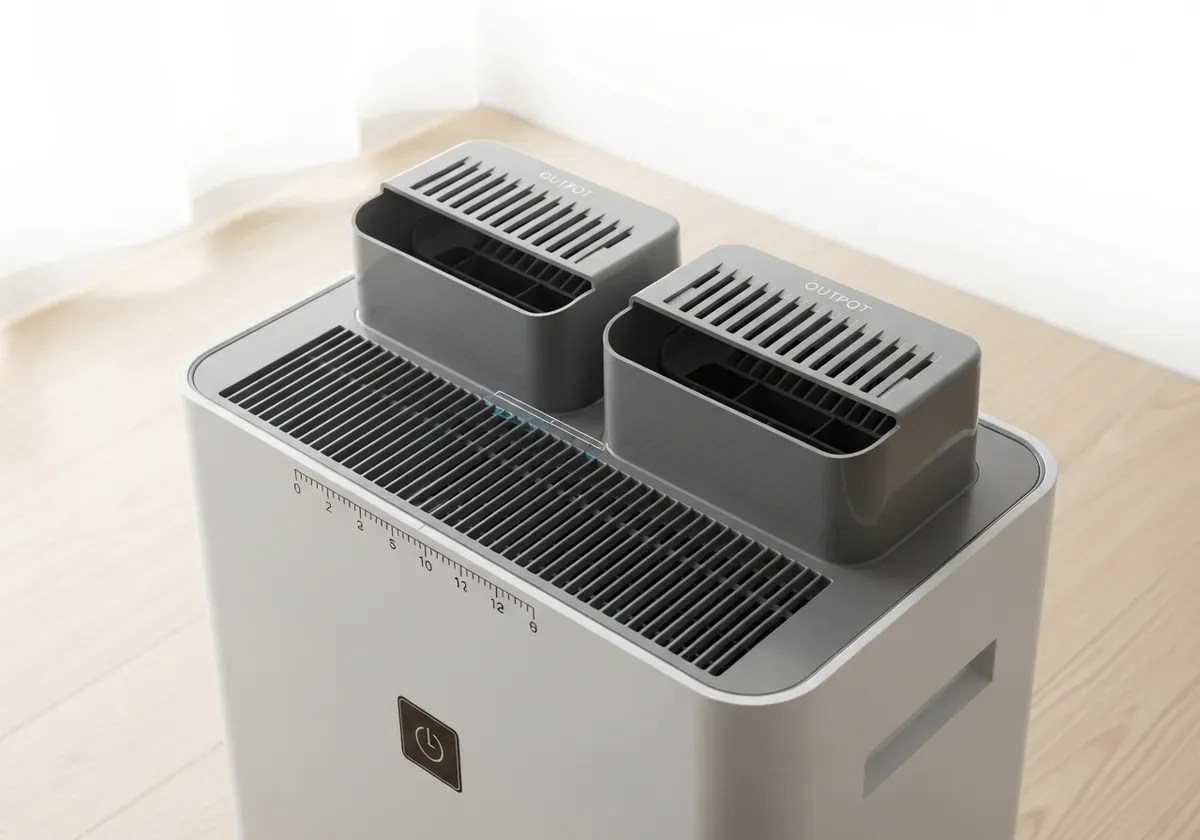
Your purifier's fan draws air through intake vents, usually located on the sides or back of the unit. After filtering, the cleaned air exits through vents at the top or front, creating a circulation loop. This loop works best when nothing blocks the intake or redirects the output stream. Think of it like a fountain, if you place it against a wall, half the water pattern gets interrupted.
Central placement improves this circulation by allowing air to enter from multiple angles and spread cleaned air more evenly across the room. Corner placement, by contrast, traps the unit between two walls that block airflow and create turbulence that reduces efficiency. The difference in coverage can be 30-40% in the same room with the same unit.
Universal Placement Rules for All Rooms
Maintain at least 6 inches of clearance on all sides of your purifier, though 12 inches works better for larger units (according to Wirecutter testing). (Source: Wirecutter testing) This spacing prevents walls from blocking intake vents and allows air to flow freely around the unit. Corners violate this rule by definition, which is why they're the worst placement option in any room.
Elevation between 3-5 feet off the floor can improve effectiveness because air naturally stratifies by temperature and particle weight. (Source: Indoor Air Quality Association) Lighter particles and odors rise while heavier dust settles, so mid-height placement helps your purifier access both layers. That said, floor placement still works, it's more important to maintain clearance and avoid obstacles than to achieve perfect elevation.
Position your purifier away from electronics like TVs, computers, and WiFi routers by at least 3-4 feet. The electromagnetic interference is minimal, but heat from electronics can create localized air currents that pull the purifier's output away from the areas you want to clean.
Safety and Accessibility Considerations
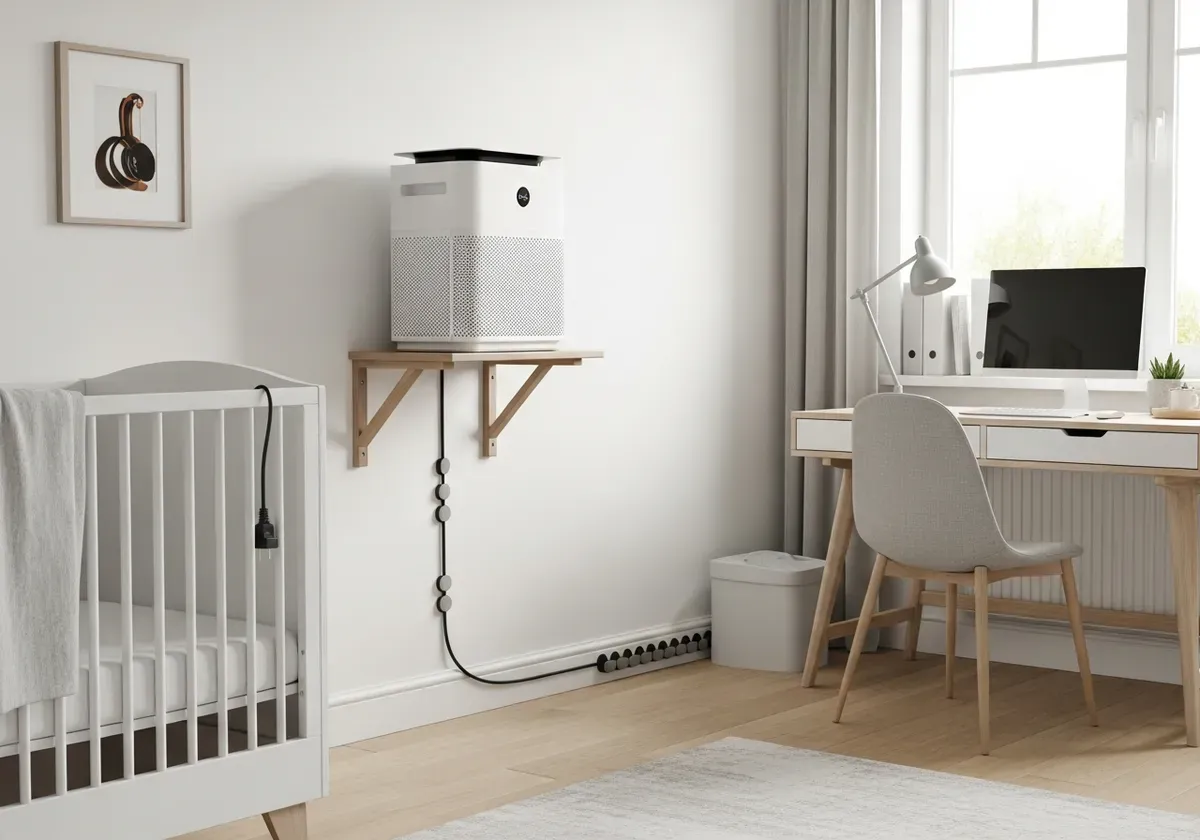
Route power cords along walls or under furniture to prevent tripping hazards, especially in bedrooms where you walk in darkness. Cord covers or cable management clips cost a few dollars and eliminate the most common purifier-related accident risk. Well, honestly, most people skip this step until someone trips, but it takes five minutes to do properly.
Place your unit on stable, level surfaces where it won't tip if bumped. Top-heavy tower purifiers need more stability than compact box-style units.
Filter access matters more than most people realize until they're moving furniture at 11 PM to change a filter. Position your purifier so you can reach the filter compartment without moving other items. Most units need filter changes every 6-12 months, and you'll check them more often if access is convenient.
Bedroom Air Purifier Placement: Optimizing for Sleep Quality
Bedrooms present a unique placement challenge because you need effective air cleaning without noise or light disrupting sleep. The CDC recommends placing portable air cleaners in rooms where you spend the most time, and for most people that's the bedroom during the 7-9 hours of sleep. (Source: CDC) Your breathing zone during sleep stays relatively fixed, which actually makes targeted placement easier than in living areas where you move around.
Air Purifier Placement Guidelines by Room Type
| Room Type | Ideal Distance from Walls | Recommended Height | Key Considerations |
|---|---|---|---|
| Bedroom | 6-12 inches | 3-5 feet (or floor level) | Position near breathing zone during sleep; minimize noise and light disruption |
| Living Room | 6-12 inches | 3-5 feet | Central placement; balance with furniture arrangement; avoid high-traffic obstruction |
| Kitchen | 6-12 inches | 3-5 feet | Position to capture cooking odors and particles; away from heat sources |
| Bathroom/Laundry | 6-12 inches | 3-5 feet | Manage moisture exposure; ensure adequate ventilation |
| Home Office/Nursery | 6-12 inches | 3-5 feet | Optimize for occupied spaces; consider noise levels |
Best Bedroom Locations by Room Size
Small bedrooms under 150 square feet work best with the purifier positioned 6-8 feet from your pillow, either at the foot of the bed or along the opposite wall. This distance provides cleaned air circulation without placing the noise source directly next to your head. A nightstand works if your unit is compact and quiet, but most people find the white noise disruptive at close range.
Medium bedrooms between 150-250 square feet benefit from placement across from the bed, elevated on a dresser or low bookshelf 3-4 feet off the ground. This position allows the purifier to draw air from the center of the room while directing output toward your sleeping area. Keep at least 10-12 inches between the unit and the wall behind it for proper intake clearance.
Large bedrooms over 250 square feet might need two smaller units or one high-capacity unit positioned centrally. If you can only use one purifier, place it on the side of the room where you sleep in a couple's bed, or in the geometric center if sleeping alone.
Managing Noise and Light for Better Sleep
Position your purifier so the air output doesn't blow directly on your face, which creates a wind-tunnel effect that amplifies perceived noise. Angling the unit 30-45 degrees away from the bed maintains airflow to your breathing zone without the direct blast. Using furniture as a partial sound buffer, placing the purifier behind a dresser or chair, can reduce noise by 2-3 decibels without significantly blocking airflow.
LED indicator lights seem minor until you're trying to sleep in a room with three glowing dots at eye level. Place light-producing purifiers where something blocks your direct line of sight to the display, or use electrical tape to cover LEDs if your unit lacks a display-off mode.
Run your purifier on higher speeds during waking hours, then drop to low or sleep mode at night. This strategy cleans air aggressively when noise doesn't matter, then maintains quality quietly during sleep.
Dealing with Limited Bedroom Space
Small bedrooms and studio apartments force placement compromises, but corners remain the last resort even when space is tight. Look for narrow wall spaces between furniture pieces, that 18-inch gap between your dresser and closet door might provide better airflow than a corner despite the tight squeeze.
Nightstands and dresser tops work for compact purifiers under 15 pounds, provided you maintain the 6-inch clearance rule from the wall behind. Just ensure the furniture can handle the weight and vibration without wobbling, and that you're not blocking the purifier's intake vents with picture frames or other items.
Living Room and Common Area Placement Strategies
Living rooms and common areas require different placement thinking because people occupy different zones at different times. You're not targeting a fixed sleeping position, you're trying to improve air quality across seating areas, play spaces, and traffic paths.
Balancing Central Placement with Furniture Arrangements
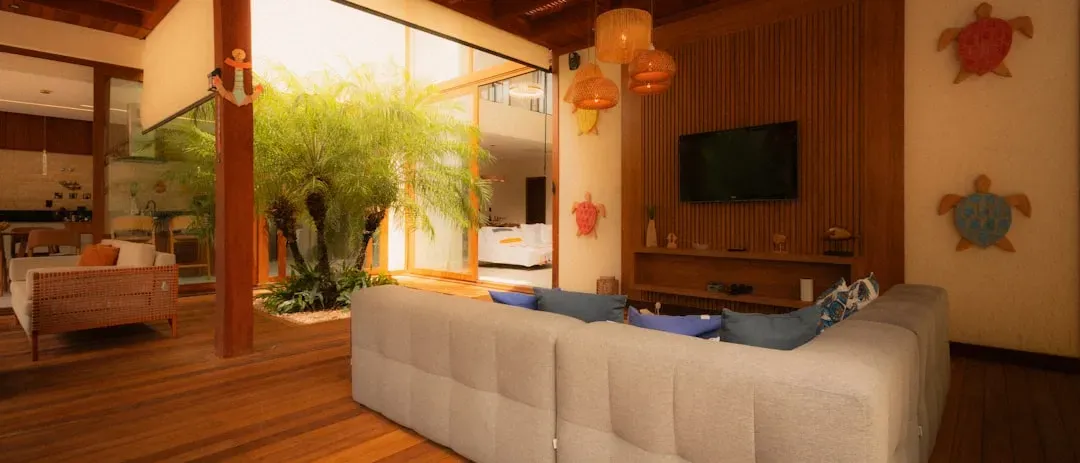
Position your purifier near seating areas rather than in the geometric center of the room, since that's where people spend time and breathe the air you're trying to clean. An end table next to the couch, a console table behind seating, or the space beside an armchair all provide reasonable proximity to breathing zones without blocking traffic flow. The unit should be within 8-10 feet of your primary seating area for noticeable benefit.
Avoid the temptation to hide your purifier behind furniture or in entertainment center cabinets. Yes, it looks cleaner aesthetically, but you'll reduce effectiveness by 40-60% when you block airflow. If appearance matters, look for units with better industrial design rather than compromising placement.
High-Traffic and Open Concept Considerations
Entryways and areas near exterior doors benefit from purifier placement because outdoor air carries pollen, dust, and pollution into your home every time someone enters. Positioning a unit 6-10 feet from your main entrance captures these pollutants before they circulate throughout the house.
Open-concept layouts connecting living, dining, and kitchen areas need strategic thinking about which zone to prioritize. Place your purifier in the zone where you spend the most time, usually the living area, rather than trying to position it to serve all three spaces equally. The ASHRAE research confirms that room air distribution patterns make it nearly impossible for one purifier to effectively serve multiple distinct zones even in open layouts.
Avoiding Electronics and Heat Sources
Keep your purifier at least 4-5 feet away from TVs, stereo speakers, and computer equipment. The heat these electronics generate creates rising air currents that can pull cleaned air upward before it circulates through your breathing zone, this effect is subtle but measurable in rooms where electronics run for hours daily.
Fireplaces, radiators, and heating vents create more dramatic air current disruptions that can completely override your purifier's circulation pattern. Maintain 6-8 feet of distance from active heat sources. The temperature differential creates convection currents strong enough to pull air away from your purifier's intended flow pattern, essentially fighting against the cleaning process you're paying to run.
Kitchen, Bathroom, and Special Purpose Room Placement
Kitchen Placement for Cooking Odors and Particles
Position kitchen purifiers 8-12 feet from your stove or cooktop, not directly adjacent to cooking surfaces. This distance captures cooking odors and particles after they've begun dispersing but before they spread throughout your home, while keeping the unit away from grease splatter and excessive heat that can damage filters and internal components.
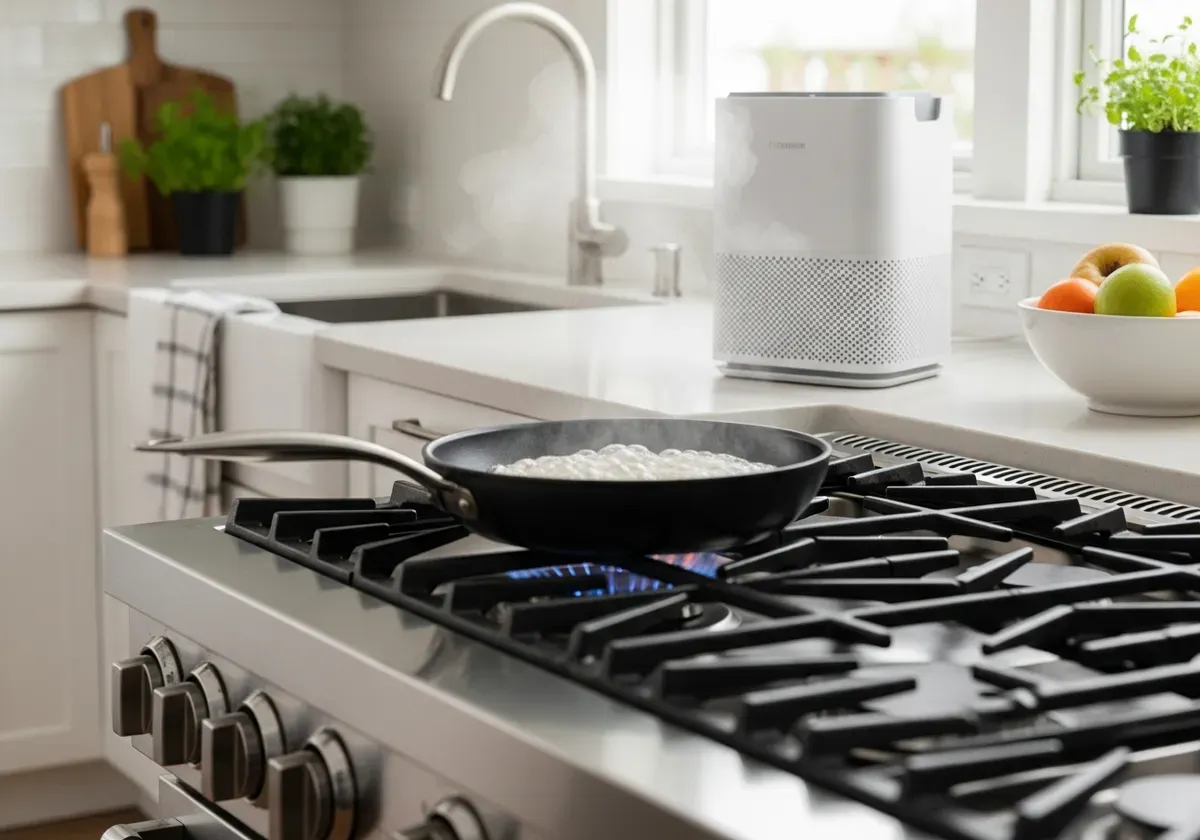
Open kitchen layouts often work better with the purifier placed just outside the kitchen zone, in the adjacent dining or living area, where it catches cooking byproducts as they spread without exposing the unit to moisture and grease. Your range hood should be the primary defense against cooking emissions, with the purifier serving as secondary cleanup for what escapes the hood's capture zone.
Bathroom and Laundry Room Considerations
Bathrooms are generally poor locations for air purifiers due to humidity levels that can exceed 70-80% during showers. This moisture saturates filters, reduces effectiveness, and creates conditions for mold growth inside the purifier itself. Bathroom ventilation fans are the appropriate solution for bathroom air quality, they exhaust humid, odor-laden air outside rather than filtering it.
Laundry rooms make more sense for purifier placement because they generate fabric particles, detergent fragrances, and dryer lint that escape your lint trap. Position the unit 4-6 feet from the dryer, elevated on a shelf or counter to avoid floor-level dust accumulation.
Home Office and Nursery Specific Guidance
Home offices benefit from purifier placement 5-8 feet from your desk, positioned so the clean air output flows toward your seating area without creating papers-flying-everywhere wind. This distance provides cleaned air in your breathing zone without the noise interfering with video calls.
Nurseries require extra attention to safety and noise considerations. Position the purifier where the cord is completely inaccessible to curious toddlers, behind furniture or along walls with cord covers. The unit should be 8-10 feet from the crib to minimize noise while still providing air quality benefits.
Pet areas and rooms where animals spend significant time benefit from purifiers positioned 4-6 feet from litter boxes, pet beds, or cages. This proximity captures dander, odors, and particles at the source before they spread. Just maintain clearance from the actual litter box or cage to prevent the purifier from pulling in litter dust or bedding material that can clog pre-filters rapidly.
Common Placement Mistakes and How to Correct Them
The Corner Trap and How to Escape It
Corners are the single most common placement mistake because they're where we put things we want functional but out of the way. Two walls block airflow from multiple directions, create turbulent air patterns that reduce intake efficiency, and limit the purifier's ability to distribute cleaned air across the room. If you're currently running a purifier in a corner, you're getting roughly 50-60% of its rated performance.
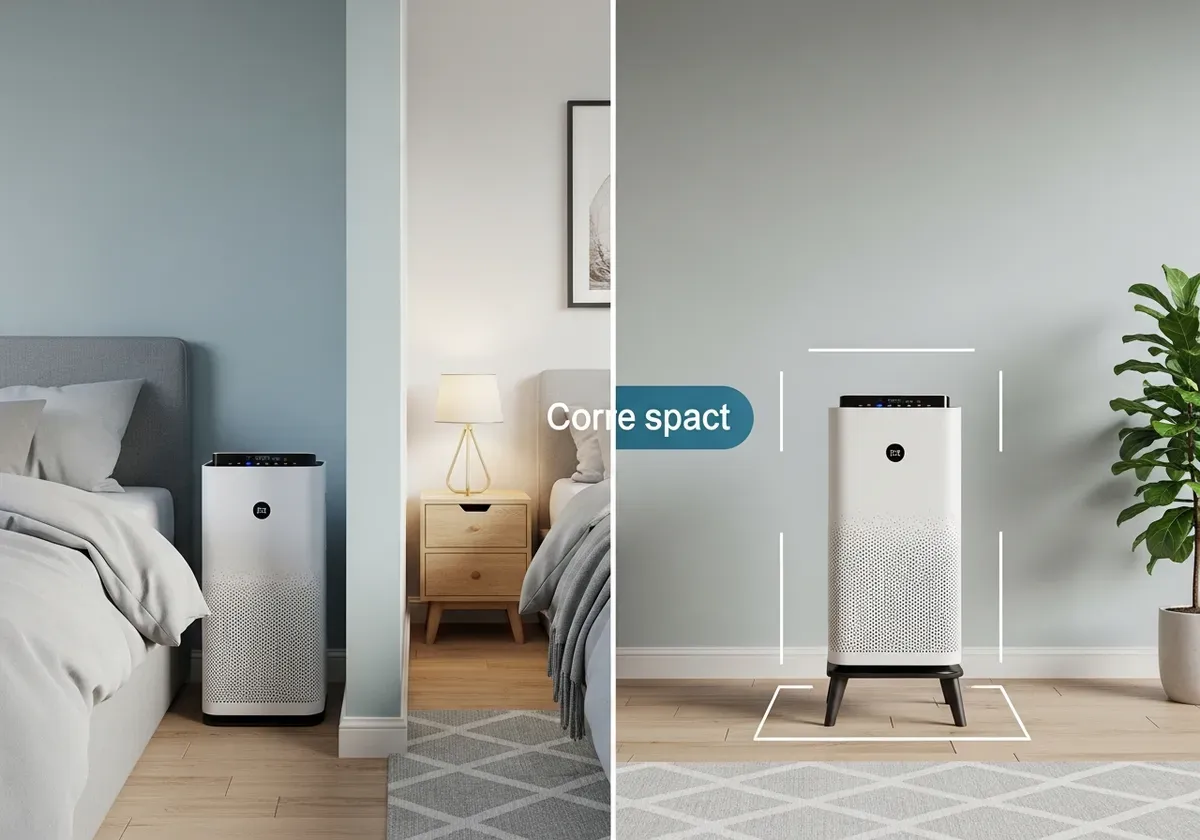
Common Air Purifier Placement Mistakes and Solutions
| Placement Mistake | Efficiency Impact | Why It Happens | Correct Solution |
|---|---|---|---|
| Corner placement | 30-40% efficiency reduction | Perceived as space-saving; out of the way | Place 6-12 inches from all walls in central location |
| Blocked intake/output vents | Significant reduction in circulation | Furniture or obstacles obstruct airflow | Maintain clear 6-12 inch clearance on all sides |
| Placement against single wall | Partial pattern disruption | Limited floor space available | Elevate 3-5 feet off floor; maintain side clearance |
| Too close to electronics | Localized airflow disruption | Convenience or space constraints | Position 3-4 feet away from TVs, computers, routers |
| Poor filter access | Delayed maintenance; reduced effectiveness | Didn't consider maintenance needs during placement | Position so filter compartment is easily reachable |
Move the unit at least 18-24 inches away from the corner along one wall to immediately improve performance. Better yet, position the unit in open floor space 3-4 feet from any wall, even if this feels awkwardly central. Run it in this optimal position for a week and notice the difference in dust accumulation and air freshness, then decide if the aesthetic compromise is worth the performance gain.
Blocked Vents and Clearance Issues
Placing purifiers against curtains, under desks, behind doors, or surrounded by storage boxes blocks the intake and output vents that make the unit function. These obstructions don't just reduce efficiency, they can overheat the motor and shorten the purifier's lifespan by forcing it to work harder to move the same volume of air.
Check your current purifier location and verify you can see all vents clearly with nothing within 6 inches. If you notice curtains moving when the purifier runs, it's too close, that air movement represents cleaned air being immediately sucked back into the intake instead of circulating through the room.
The fix is simple but requires overcoming the instinct to tuck appliances away: pull the purifier into open space.
Running Too Many Units or Wrong-Sized Units
More purifiers don't always mean better air quality, especially if you're running multiple undersized units instead of one properly-sized purifier for your space. Three purifiers rated for 200 square feet won't effectively clean a 600 square foot room because they create competing air circulation patterns that reduce overall efficiency. The CADR ratings (Clean Air Delivery Rate, the volume of clean air a purifier produces per minute) don't simply add together when you run multiple units.
Check your room's square footage and compare it to your purifier's rated coverage area. If your unit is undersized by 30% or more, placement optimization won't overcome the fundamental capacity limitation.
Start by measuring your most-used room, checking your purifier's rated coverage, and ensuring the unit matches the space within 20%. Then apply the placement principles in this guide to that properly-sized unit. This combination of correct sizing and optimal placement delivers the air quality improvements you're expecting when you invested in a purifier in the first place.
I spent two months wondering why my bedroom still felt stuffy despite running a purifier every night—turns out I'd bought a unit rated for 200 square feet in my 340-square-foot master bedroom. Once I measured the actual space and upgraded to a properly sized model, I noticed the difference within three days: that stale morning air smell disappeared, and the dust on my nightstand took twice as long to accumulate.
"The most common mistake I see is people buying multiple small purifiers when one properly sized unit would be more effective," says Dr. Richard Corsi, Dean of the College of Engineering at the University of California, Davis and indoor air quality researcher. "A purifier rated for 150 square feet in a 300-square-foot room will run continuously but never achieve the air changes per hour needed for meaningful particle reduction."
Related Articles
- 9 Science-Backed Air Purifier Benefits for Your Health & Home
- Best Air Purifiers for Home: 2024 Expert Reviews & Buyer's Guide
- Best Air Purifiers for Bedroom: Quiet & Effective 2024 Picks
- How to Test Air Quality in Your Home: DIY & Professional Methods
- Home Air Quality Monitoring System: Complete Setup Guide
- Improve Air Quality as a Renter: No-Permission Solutions
Frequently Asked Questions
How far should an air purifier be from a wall?
Maintain at least 6 inches of clearance from walls on all sides, though 12 inches is better for larger units. This spacing prevents walls from blocking intake vents and allows air to flow freely around the unit for optimal circulation.
Can I place my air purifier in a corner?
No, corner placement is the worst option because two walls block airflow from multiple directions and create turbulence that reduces efficiency by 30-40%. Central placement with adequate clearance significantly improves performance in the same room.
What's the ideal height to place an air purifier?
Position your purifier 3-5 feet off the floor when possible, as air naturally stratifies by temperature and particle weight. This mid-height placement helps the unit access both lighter particles that rise and heavier dust that settles, though floor placement still works if clearance is maintained.
Should I keep my air purifier away from electronics?
Yes, position your purifier at least 3-4 feet away from TVs, computers, and WiFi routers. While electromagnetic interference is minimal, heat from electronics can create localized air currents that pull the purifier's cleaned air output away from the areas you want to clean.
Does air purifier placement matter for bedroom use?
Yes, placement significantly affects sleep quality. Position the unit to direct airflow toward your breathing zone while maintaining adequate clearance, and consider noise and light from the display when placing it near your bed.
What happens if my air purifier's vents are blocked?
Blocked intake or output vents reduce the purifier's ability to circulate air effectively and create dead zones where pollutants accumulate. Always ensure at least 6-12 inches of clearance on all sides and keep the unit away from furniture, curtains, and walls that obstruct airflow.
Is it easier to change filters if I plan placement carefully?
Yes, positioning your purifier with filter access in mind prevents the frustration of moving furniture to change filters later. Place the unit where you can easily reach the filter compartment without rearranging furniture or other obstacles.